A gray sky and a hunch
I wasn’t planning on stopping in Mounds that afternoon. However, the back roads of southeastern Missouri and southwestern Illinois have a way of tugging you off schedule. The weather turned gloomy—one of those late spring days when clouds hang low and the air feels heavy—so I stayed in explorer mode and kept drifting east.
Eventually, a faded town grid appeared through the trees. When I rolled in, it hardly felt like a town at all. Buildings leaned, storefronts gaped, and the streets stayed quiet. Still, the place held a certain pull. Even so, I didn’t see many signs of life—no traffic, no chatter from porches, just the sound of wind cutting along empty blocks.
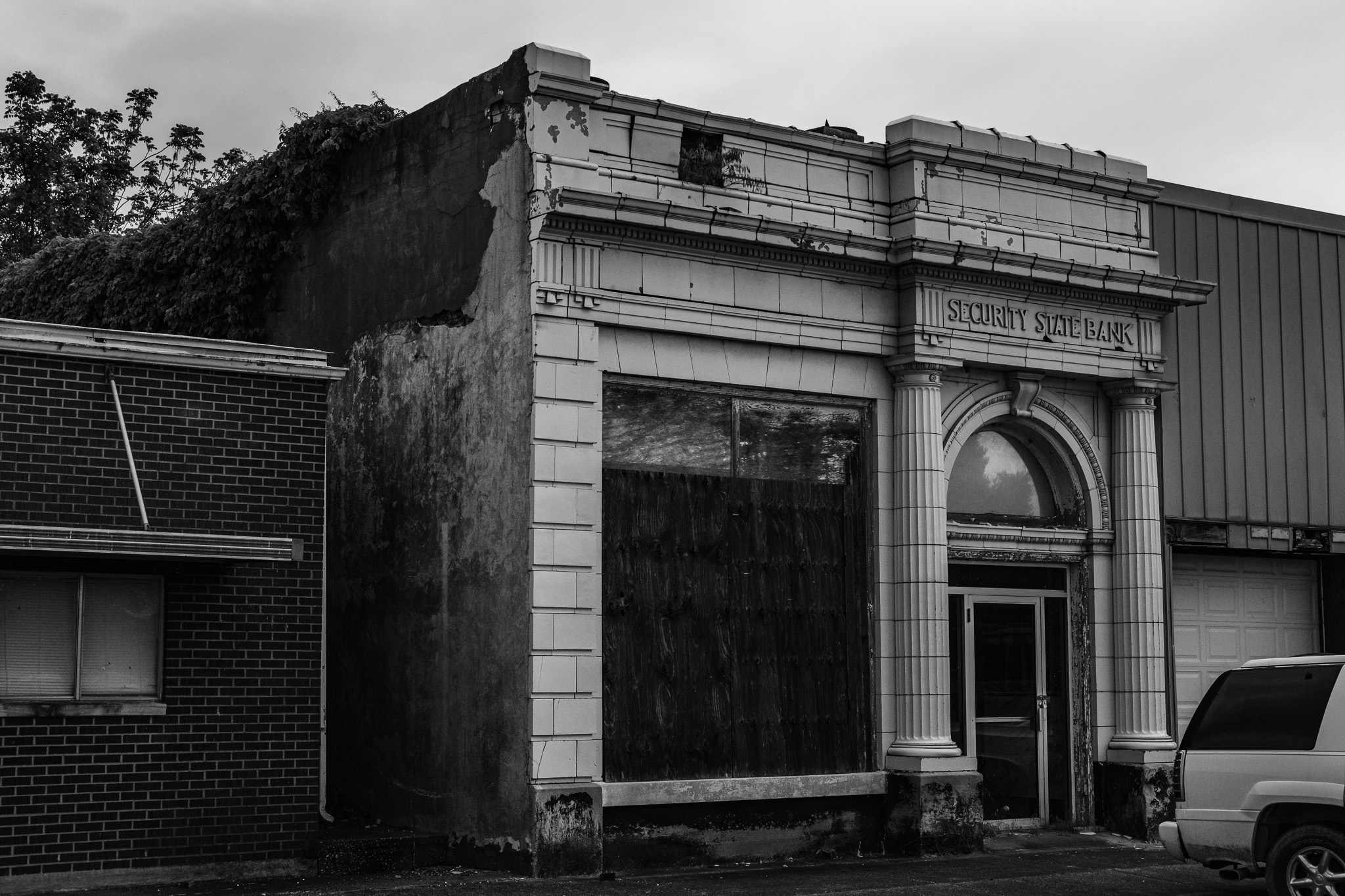
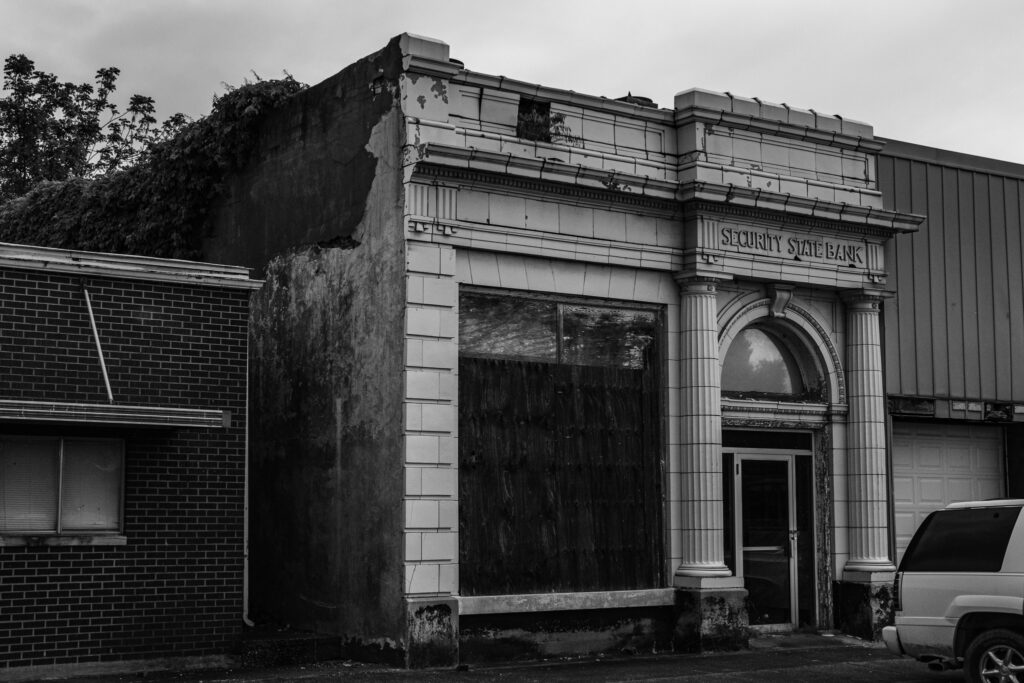
In the end, curiosity won. I stayed on old US 51 until I passed the Stop & Shop at Third Street, the only place in town that seemed open. From there I turned left onto First Street, following it toward the center of town. A right on Front Street brought me past rows of quiet, worn-down buildings, and about halfway down the block I spotted it — the old Security State Bank, small but stately, still holding its ground while the rest of Mounds seemed to be slipping away.
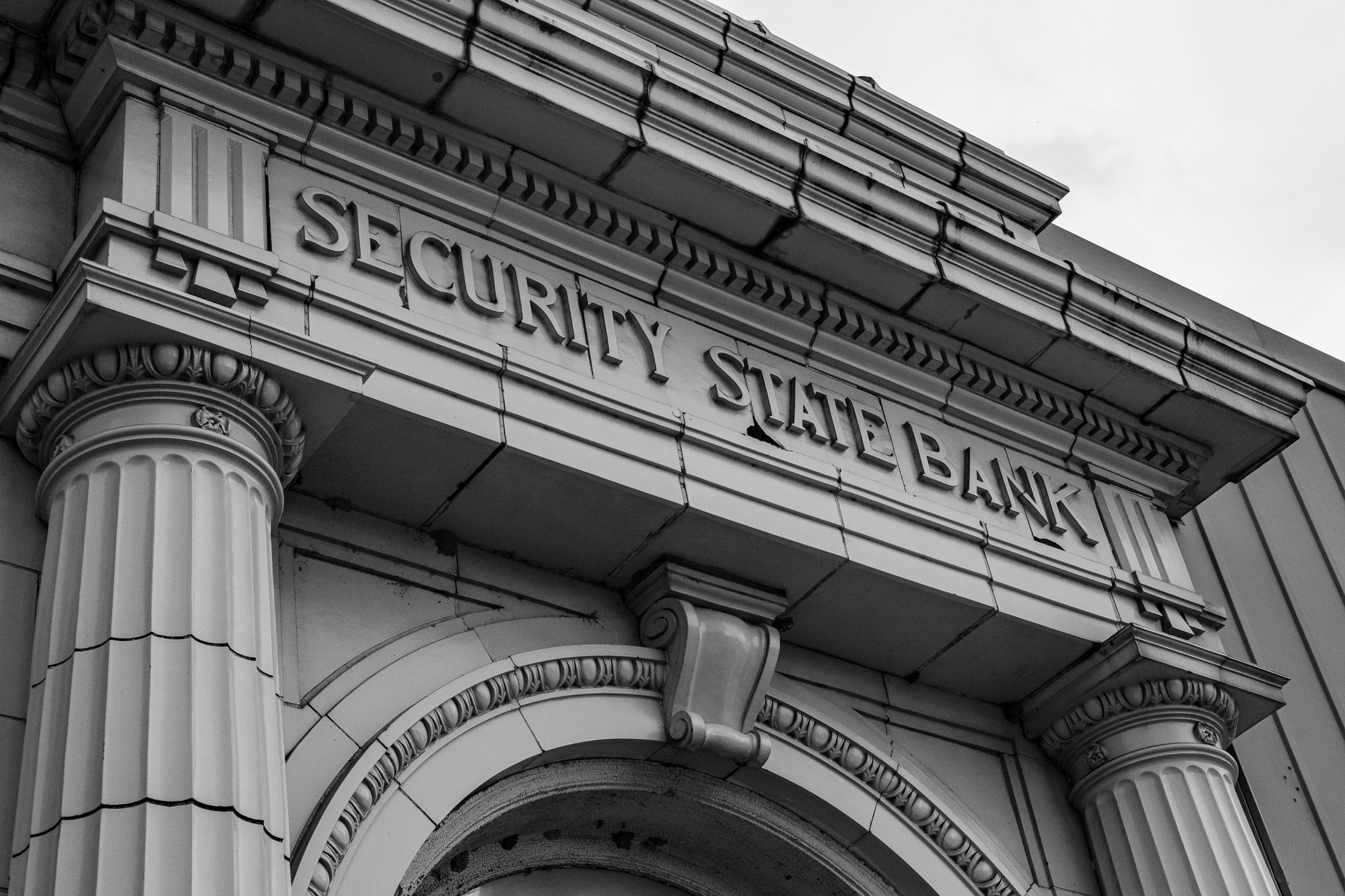
Security State Bank, 120 North Front Street
A pocket-sized temple of finance
The Security State Bank sits at 120 North Front Street, compact but proud, the kind of classical little box that used to promise safety and order. From the sidewalk, the columns still frame the entry like a stage. Meanwhile, time keeps pressing in from every side. Vines spill from the roofline and creep down the walls. Large patches of plaster have fallen away, and the tiles near the parapet break in jagged runs.
Even so, the building holds a quiet dignity. Rather than surrender, it braces. The façade still reads “bank” even if the vault sits empty and the ledger is long gone. In fact, that stubborn stance tells you as much about Mounds as any newspaper clipping could. Years ago, trains once brought goods and paychecks through here, and people needed a place to cash, save, and plan. Today, nature reclaims inches at a time, but the bones remain.
Step closer and you notice small details: a bit of molding that somehow survived, the way the sill stone sheds rain, and the hairline cracks that map the passing seasons. Above all, the building keeps speaking—softly—about the work it once did for a town that trusted it.
107 1st Street and the Quiet Grid
Arches, glass block, and an imagined neon glow
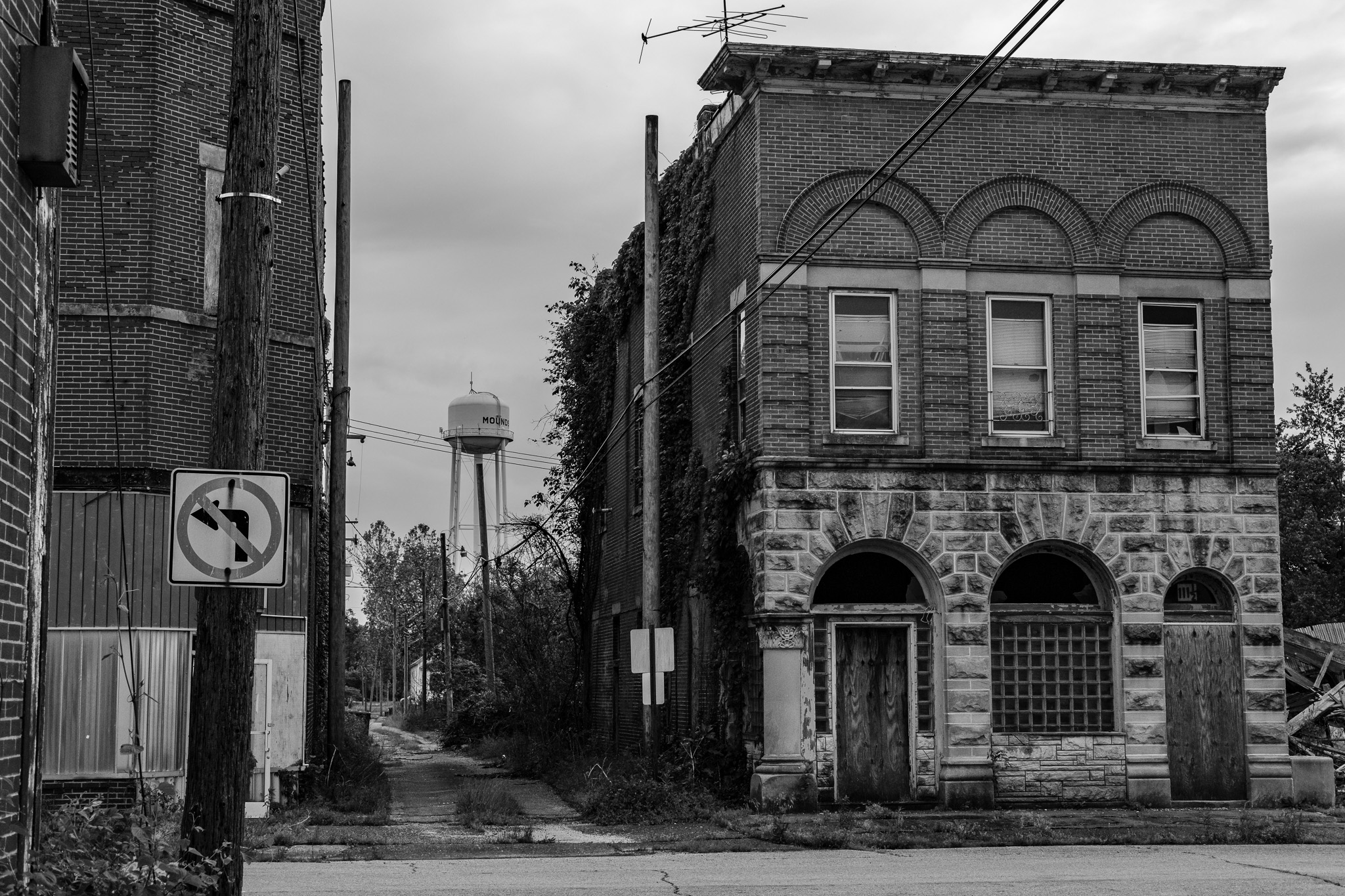
A few blocks over, 107 1st Street caught my eye—a two-story commercial shell with arched openings and rough stone across the lower level. One arch now holds a panel of glass block, a detail you used to see in old taverns and late-night cafés. For example, you can picture a small neon beer sign buzzing in that window,
throwing a thin red halo onto the sidewalk while a radio inside carries a Cardinals game through the room.
Meanwhile, the street keeps its hush. No crowd spills out after closing time, and no door spring snaps shut behind a regular. Still, the architecture hints at a busier past. In fact, façades like this lined up along rail corridors all over the Midwest—storefronts below, rooms or offices above, everything tied to the daily pulse of trains and trucks.
Today, you walk past and hear only gravel under your shoes. Yet the layout remains legible: egress, display, counter, and a back stair. As a result, you can read the building like a faded blueprint for a business that once served a steady line of customers who knew each other by name.
A Town Left Behind, Not Forgotten
Rails, roads, and the memory that stays
Mounds once worked as a railway hub, a connector of towns, goods, and pay envelopes. Later, traffic patterns shifted, and opportunities followed different lines. However, the map still holds the grid, and the grid still holds the stories. The Security State Bank and that arched building on 1st Street stand like bookends for a chapter most travelers skip.
Even so, stopping here changes the drive. The silence makes you notice things: a tile missing where water gathered each winter, a lintel that outlasted a dozen storms, a doorway rubbed smooth by hands that came and went without fuss. Most of all, the place reminds you how quickly fortunes move on—and how long the buildings keep the watch.
If you pass through, take a minute. Stand in front of the bank and let the scene settle—the vines, the stone, the empty street. Then, turn the corner and imagine that soft neon glow. In the end, you’ll leave with more than a picture. You’ll carry the memory of a town that once made plans, and the landmarks that refuse to forget them.
Safe travels, RJ