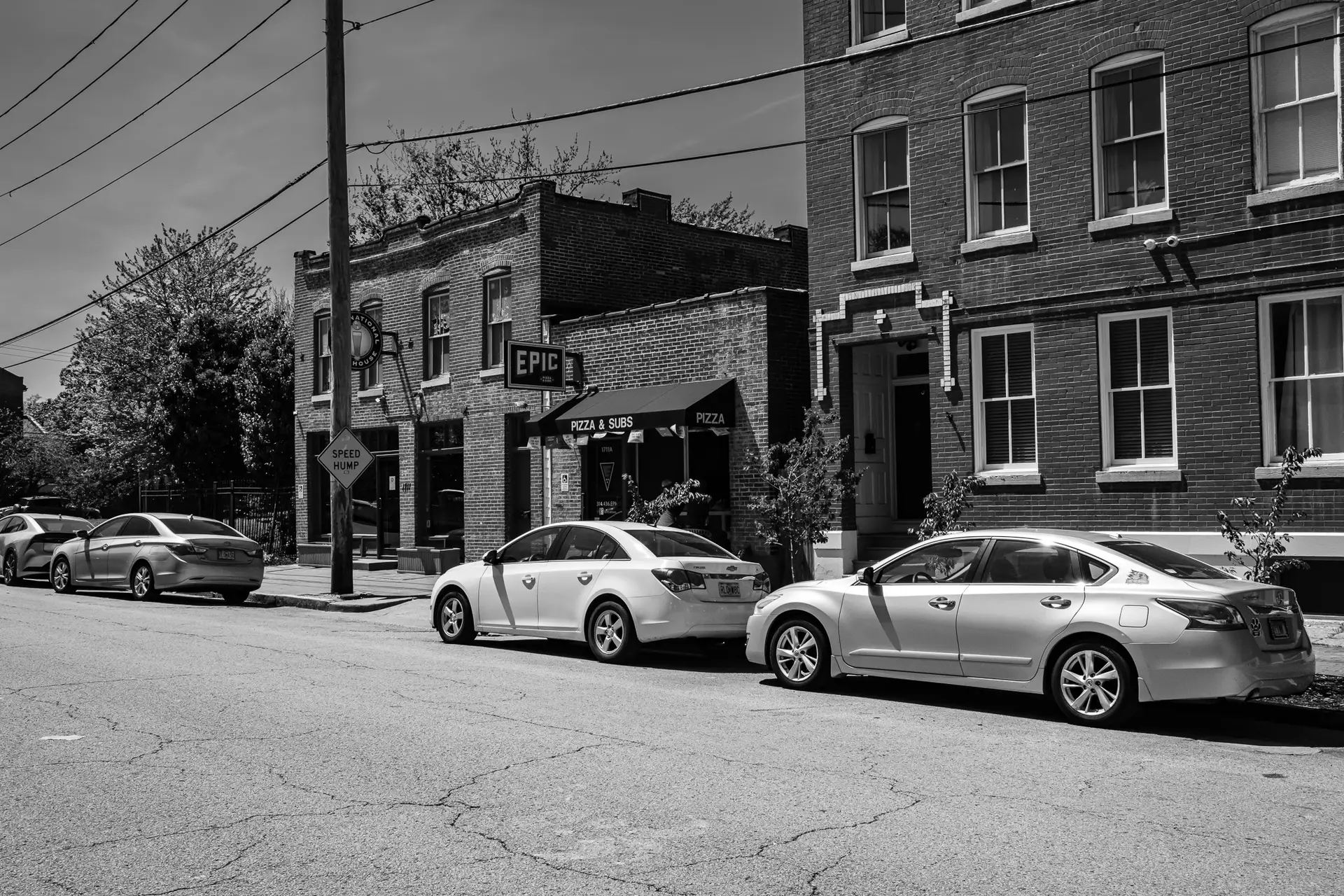
A Neighborhood Story Told in Brick and Neon
South St. Louis has long been a mosaic of working-class streets and storefronts where family-run businesses, corner bakeries, and movie houses stitched together daily life. Many of these places still stand—some serving new generations, others quietly retired behind faded signage and terrazzo entryways. This page highlights four such landmarks that continue to tell that story: Epic Pizza & Subs, Southside Consumer Dairy Company, the Melvin Theatre, and Dad’s Cookie Company.
Epic Pizza & Subs — 3106 South Grand Blvd., St. Louis, Missouri
From Corner Diner to Local Favorite
Tucked along South Grand, Epic Pizza & Subs occupies a vintage storefront that once blended easily into the postwar commercial rhythm of the neighborhood. The building dates to the mid-20th century, with its clean brick lines and recessed entryway reflecting the modest practicality of the period.
Before it became Epic Pizza, the site served generations of small eateries and neighborhood lunch spots—places where workers grabbed sandwiches between shifts and families picked up dinner on the way home. When Epic Pizza took over, the owners embraced that same spirit of no-frills comfort food, keeping the layout simple and the counter service quick.
Preserving the Familiar
Inside, the neon, old tile, and slightly weathered floor tell a story of continuity more than change. Epic Pizza & Subs captures what many South City restaurants once looked like: handwritten specials on the wall, a small dining area glowing under fluorescent light, and the smell of dough and melted cheese rolling through the door. In a neighborhood that has seen waves of turnover, the business has managed to stay firmly rooted—proof that sometimes the best updates are the ones you don’t make.
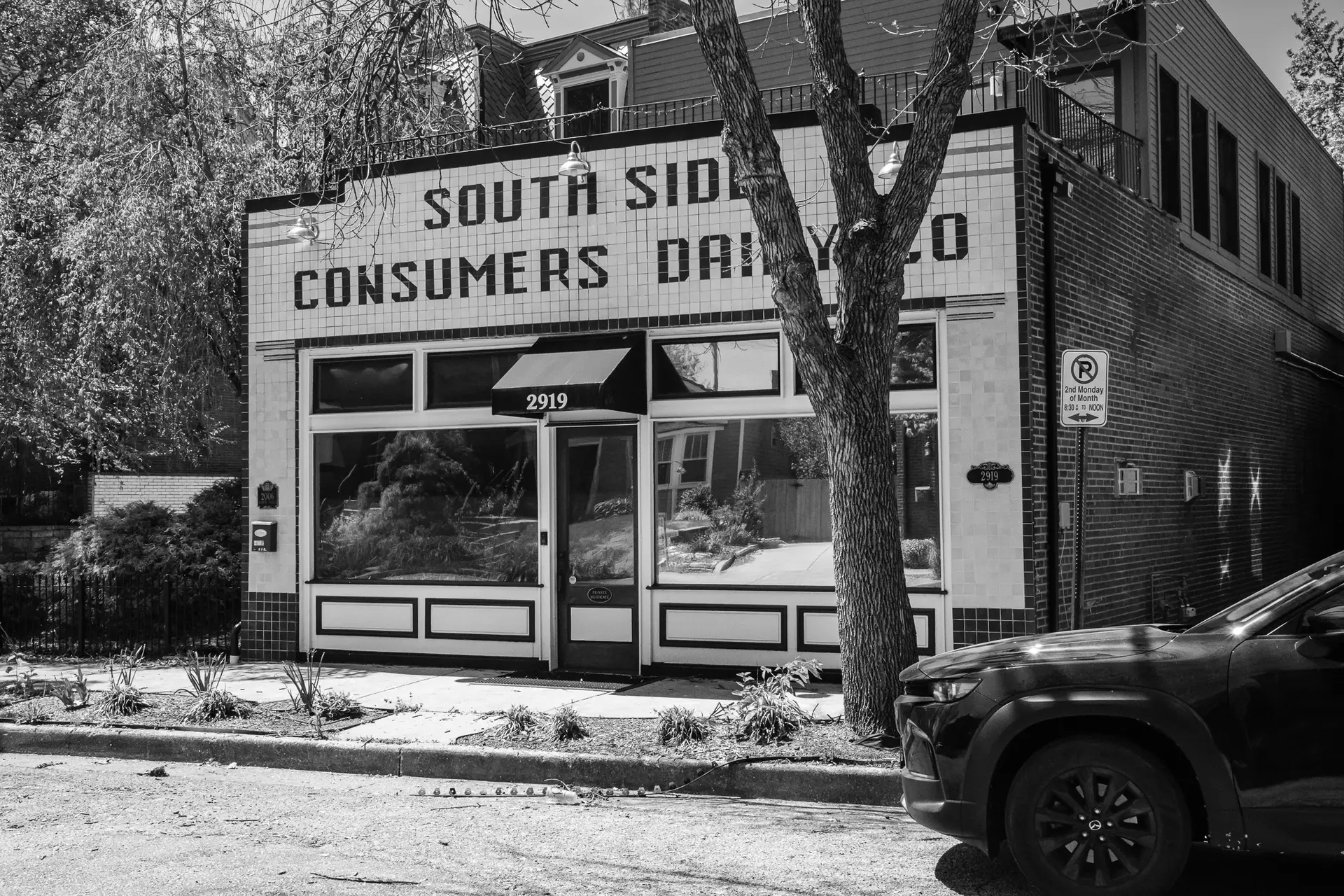
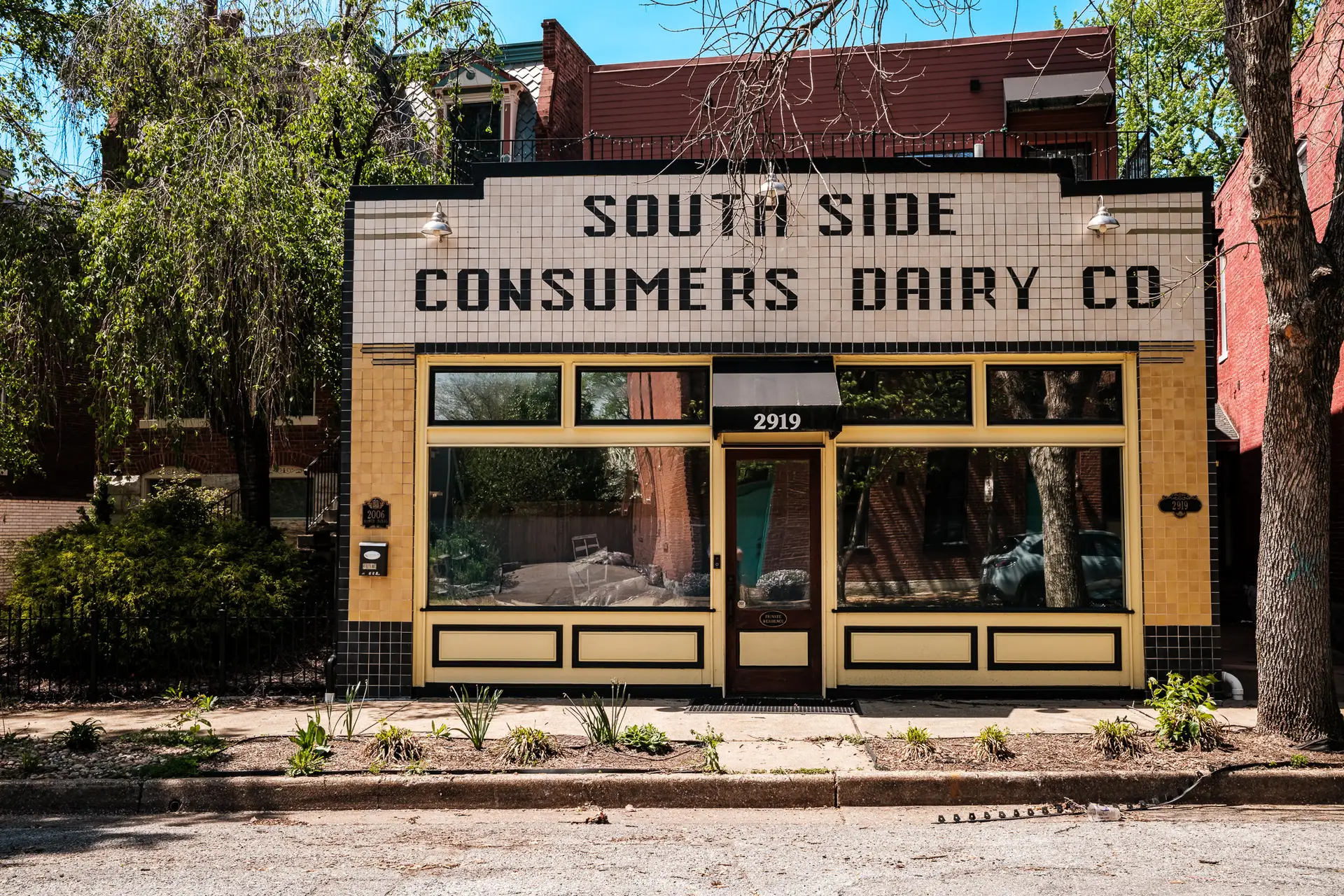
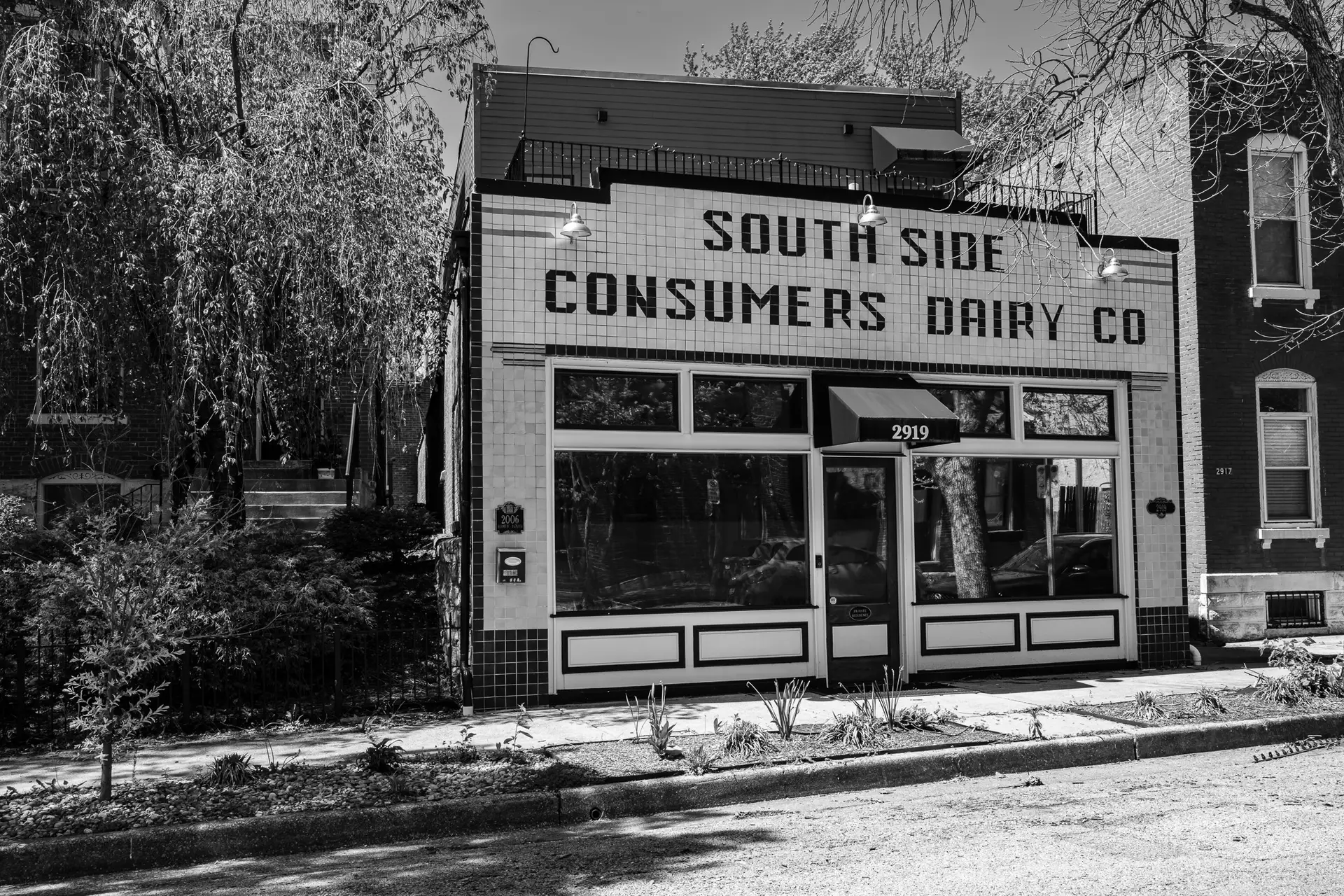
Southside Consumer Dairy Company — 2919 Salena St., St. Louis, Missouri
Built for the Neighborhood
The Southside Consumer Dairy Company was established in the 1930s, when home delivery of milk and cream was still part of everyday city life. The two-story brick structure on Salena Street retains its industrial Art Deco lines—subtle vertical panels, geometric brickwork, and the vestiges of a loading bay that once bustled with delivery trucks.
At its peak, the dairy employed local drivers who knew their customers by name, delivering bottles filled each morning in the plant’s cool interior. The name “Consumer” wasn’t just branding; it reflected a co-operative model meant to keep prices affordable for working families.
Echoes of the Past
Although milk delivery faded by the 1960s, the building itself has survived with much of its original charm intact. Painted signage remains visible beneath layers of time, and the entry doors still bear the proportions typical of Depression-era industrial design. Today the structure houses smaller tenants, but the-
bones of the dairy remain unmistakable—a physical reminder of when South City blocks operated on a first-name basis with the people who made and delivered their food.
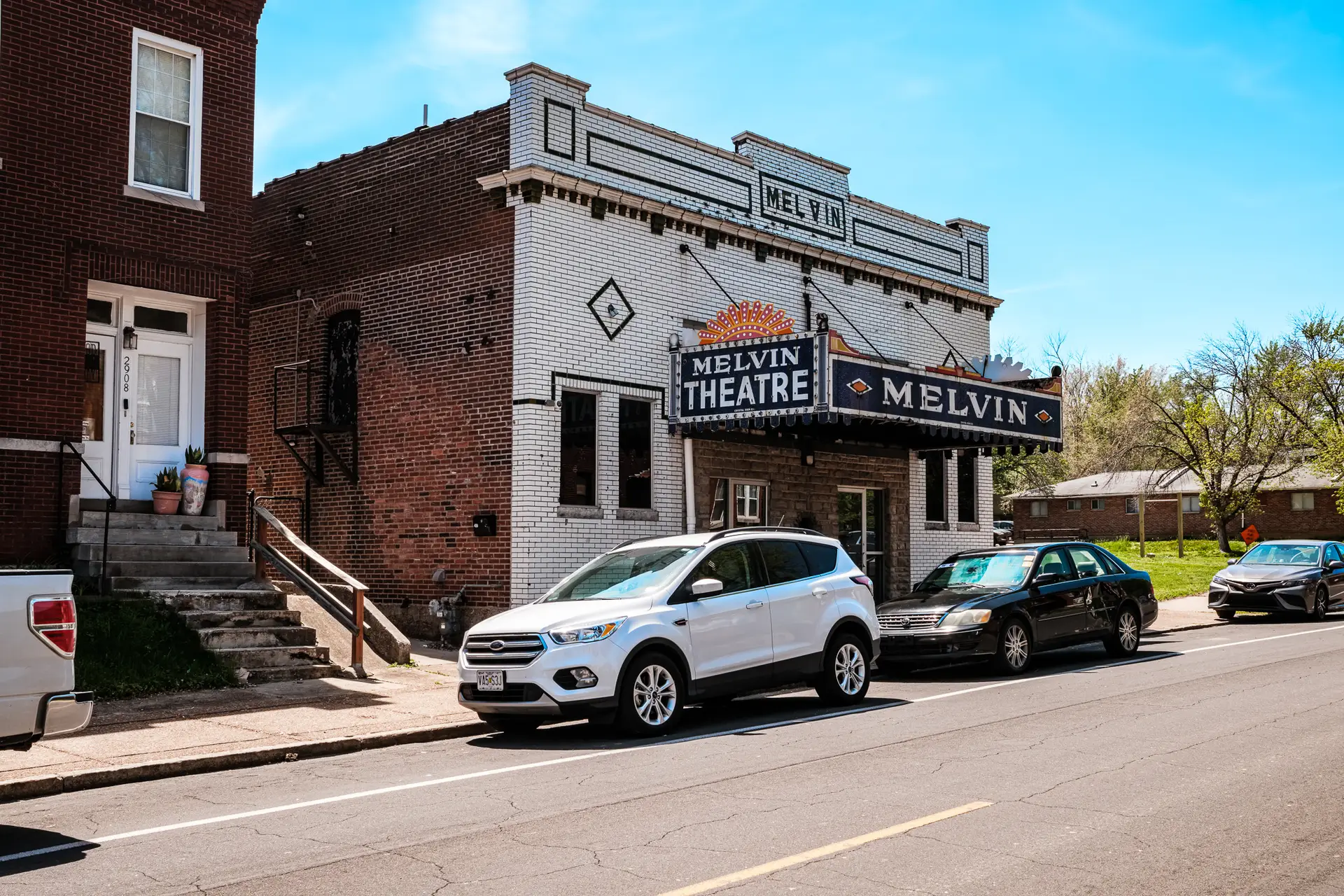
Melvin Theatre — 2912 Chippewa St., St. Louis, Missouri
A Neighborhood Landmark Since 1914
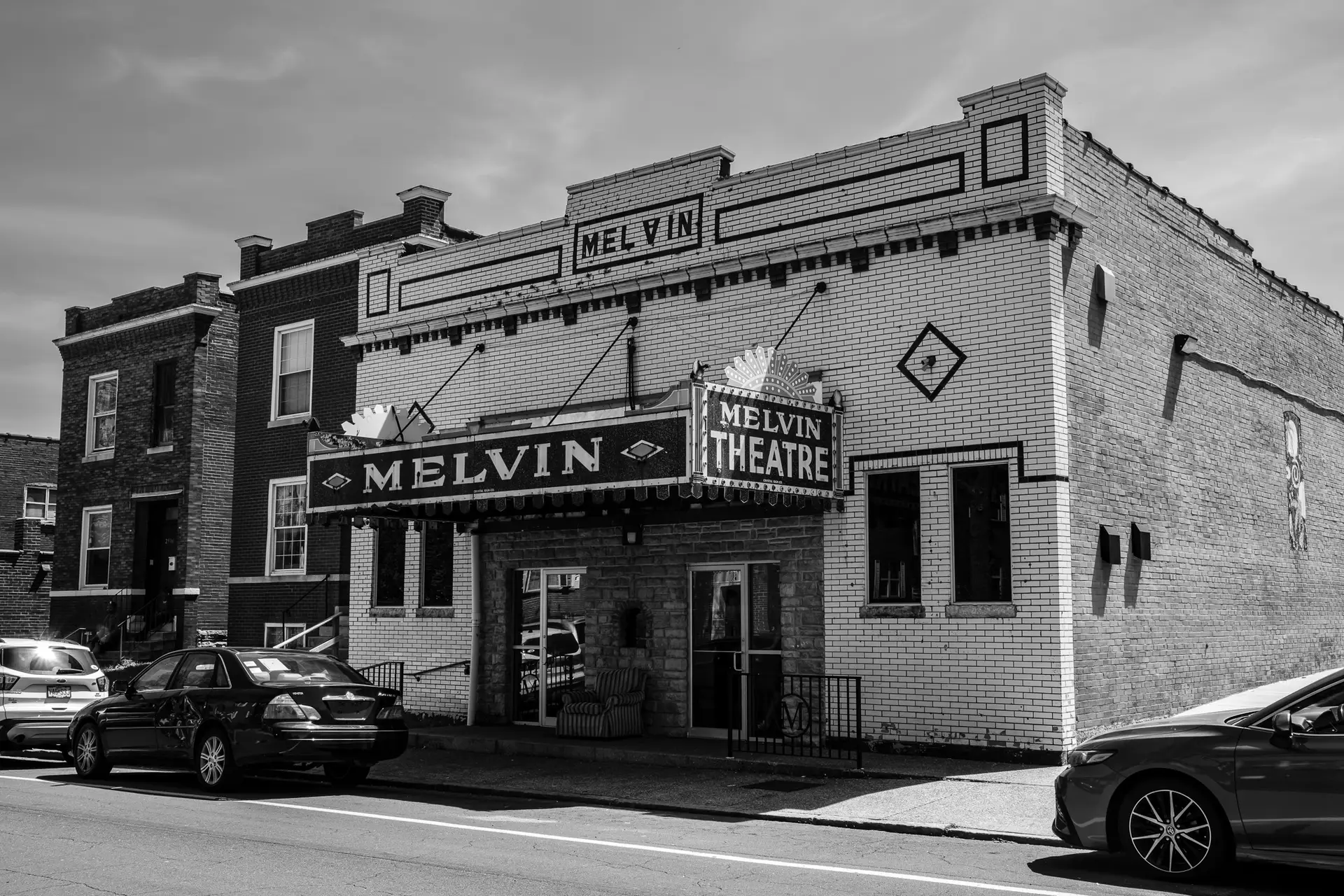
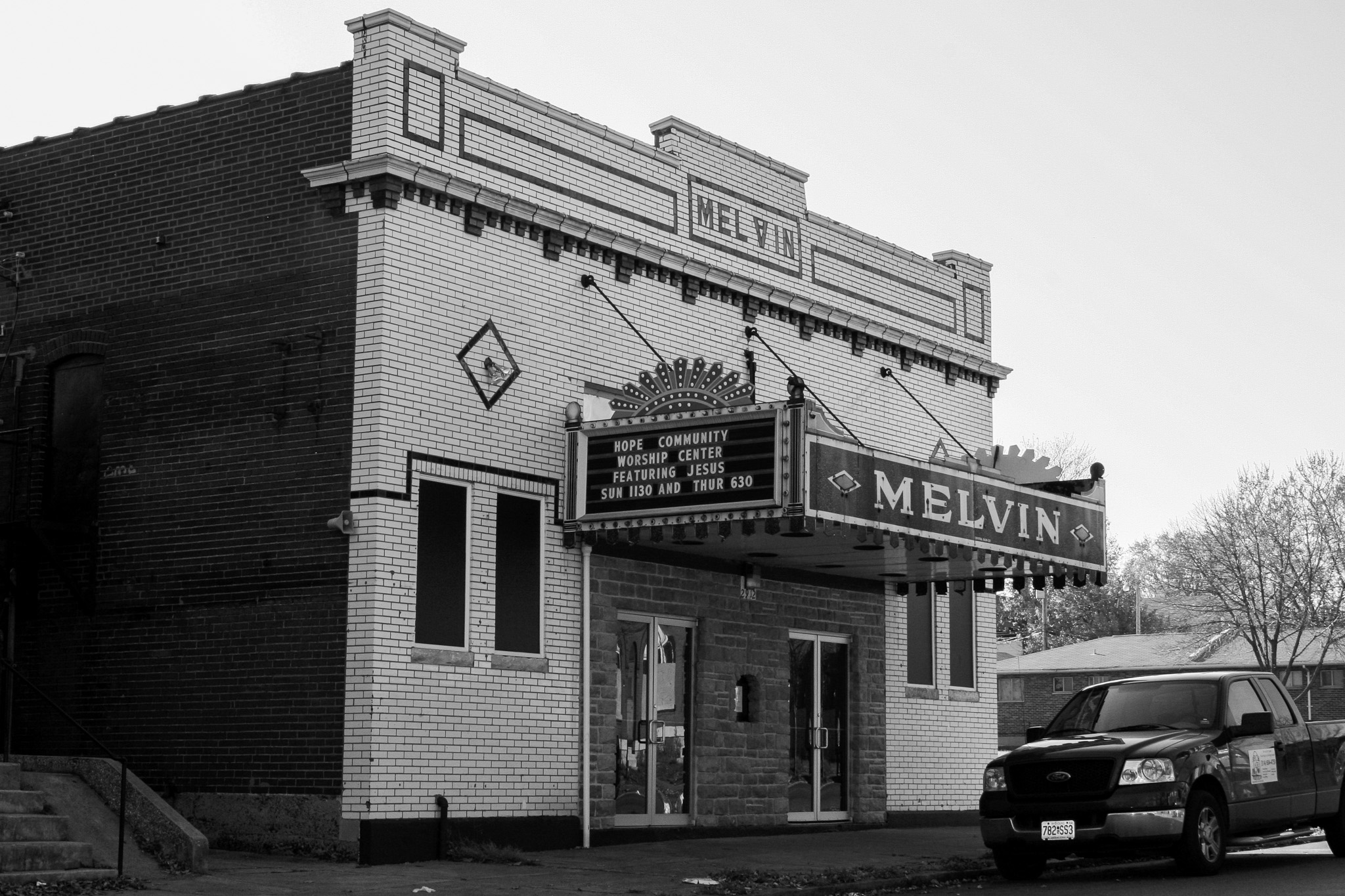
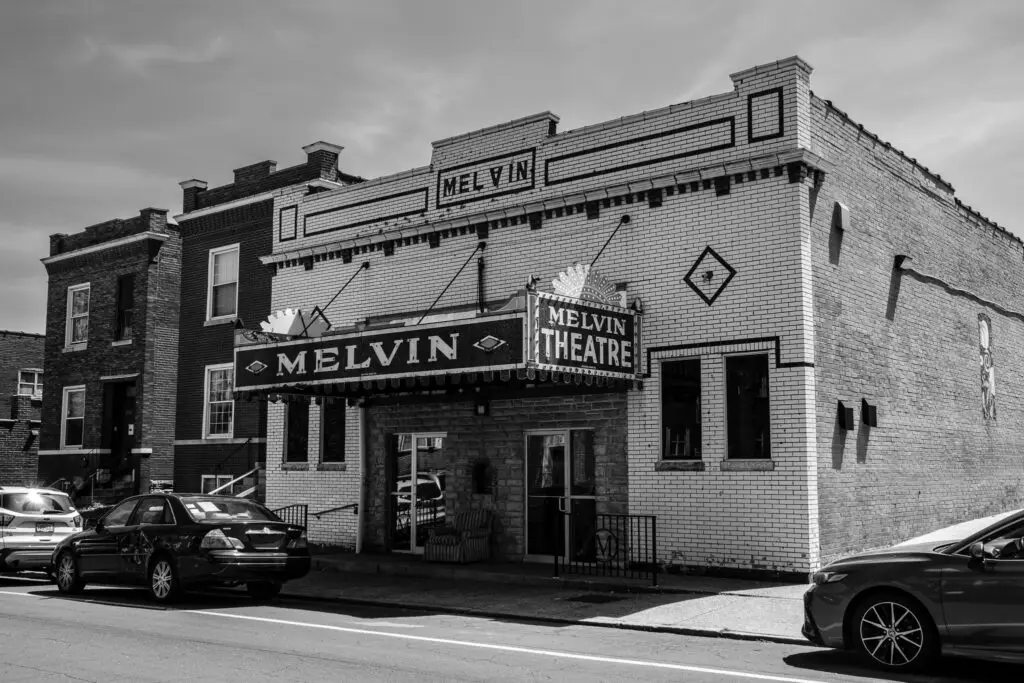
Built in 1914, the Melvin Theatre began as a modest single-screen movie house for the working-class families of the South Side. Local grocer Joseph Halleman commissioned architect Theodore Degenhardt to design the building, spending around $20,000 to create a clean white glazed-brick façade with black geometric trim. The marquee and parapet—still visible today—gave the theater a quiet dignity without resorting to downtown grandeur.
From Silent Films to Sound
Like many early movie houses, the Melvin converted to talkies in the late 1920s and kept pace through the Depression, war years, and television era. It offered double features and weekend matinees long after similar neighborhood theaters had closed. Ownership shifted over the decades, but the goal-
remained constant: to give nearby families an affordable night out. Records note its final show as Stay Tuned on October 18, 1992, closing an extraordinary seventy-eight-year run.
New Purposes for an Old Theater
After the seats were auctioned off in 1993, the building began a second life.
By the mid-2000s it was home to Hope Community Worship Center, the marquee fitted with hand-placed plastic letters announcing weekly services. When those panels were removed years later, the original “Melvin Theatre” lettering was uncovered and restored. Despite a 2017 car crash that damaged the façade, repairs preserved the structure,-
and today it houses Restoration House STL’s “The Rock,” a nonprofit serving young adults in need. The Melvin endures not as a relic but as a living building—still part of the rhythm of Chippewa Street.
Dad’s Cookie Company — 3854 Louisiana Ave., St. Louis, Missouri
A Legacy That Began in 1927
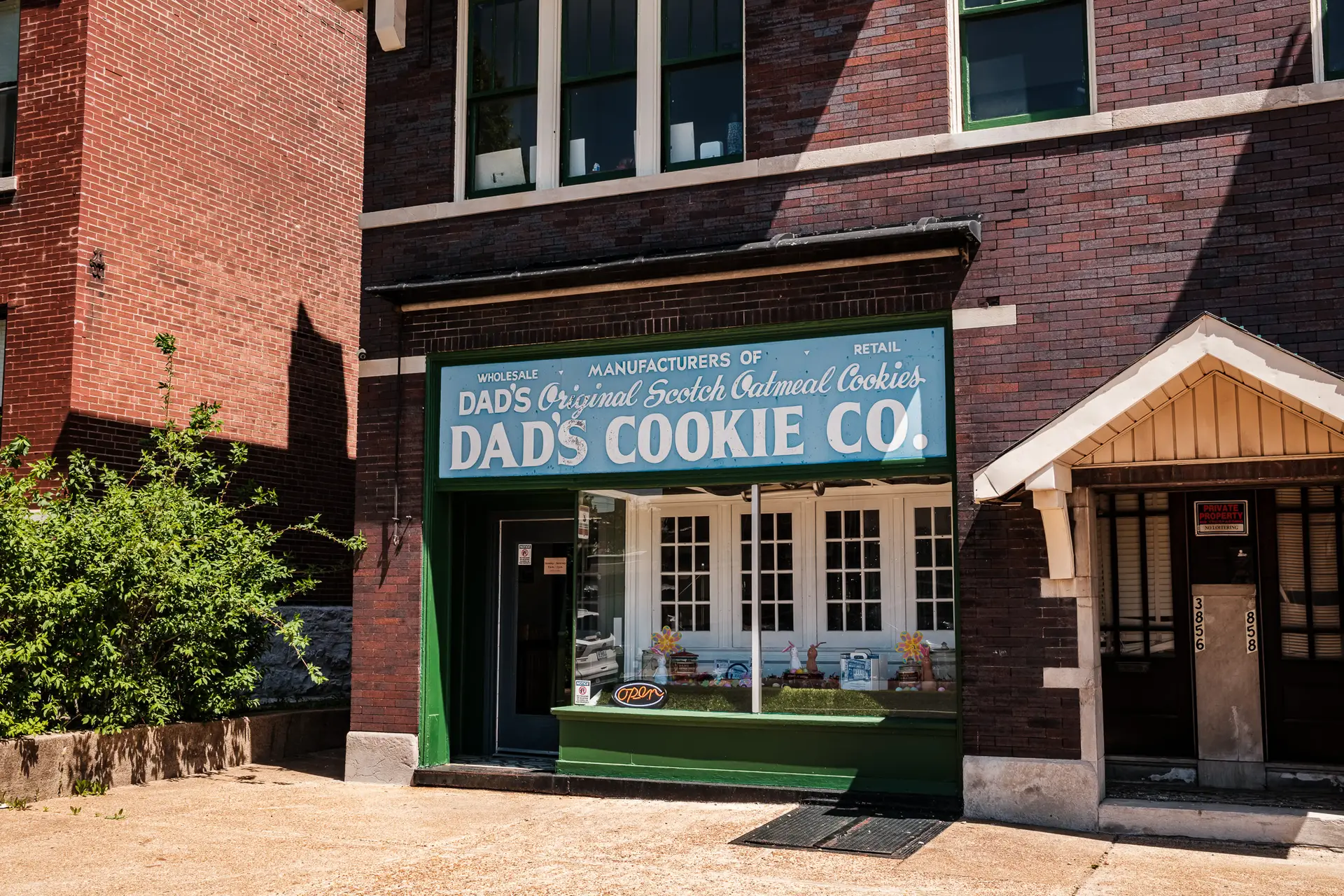
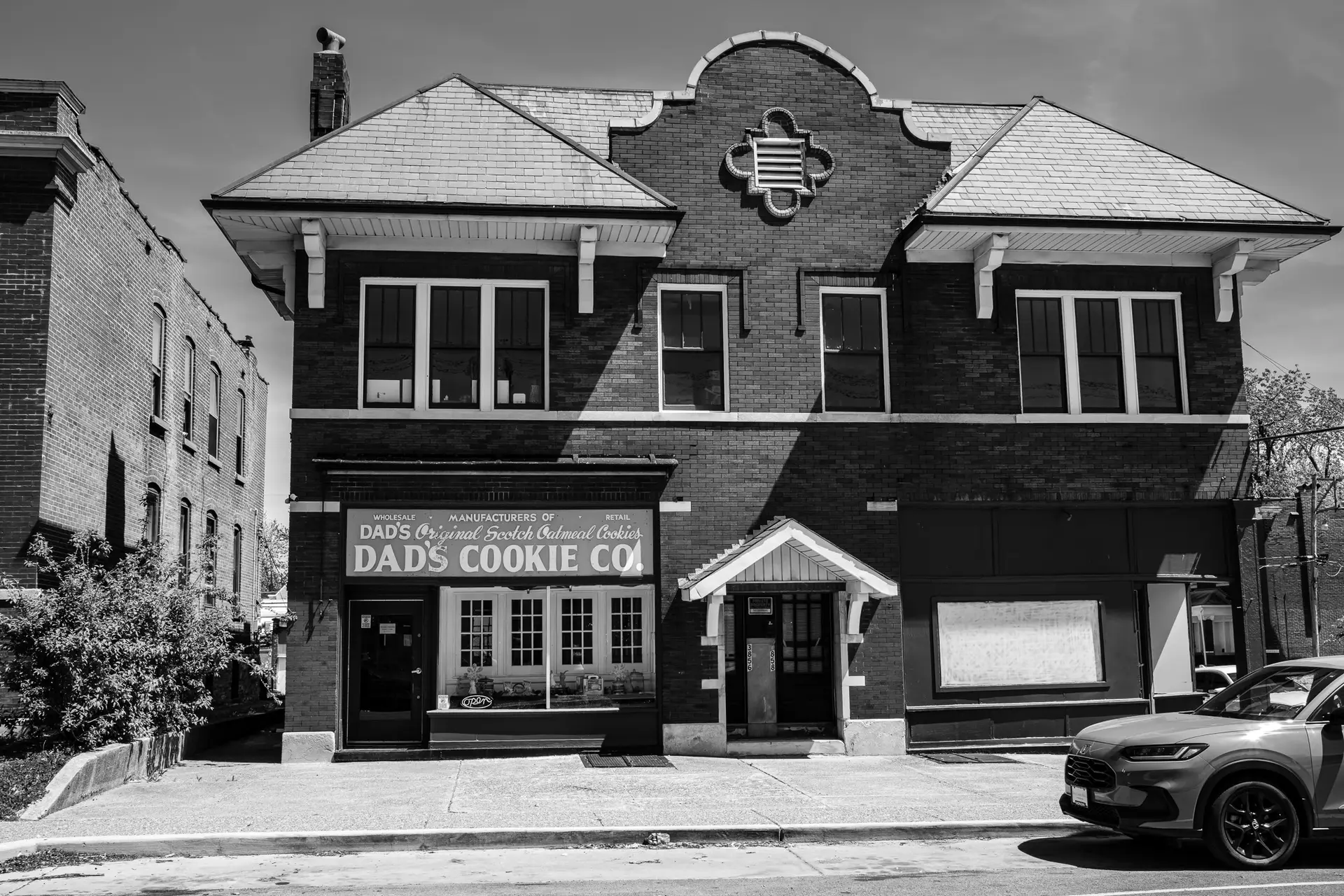
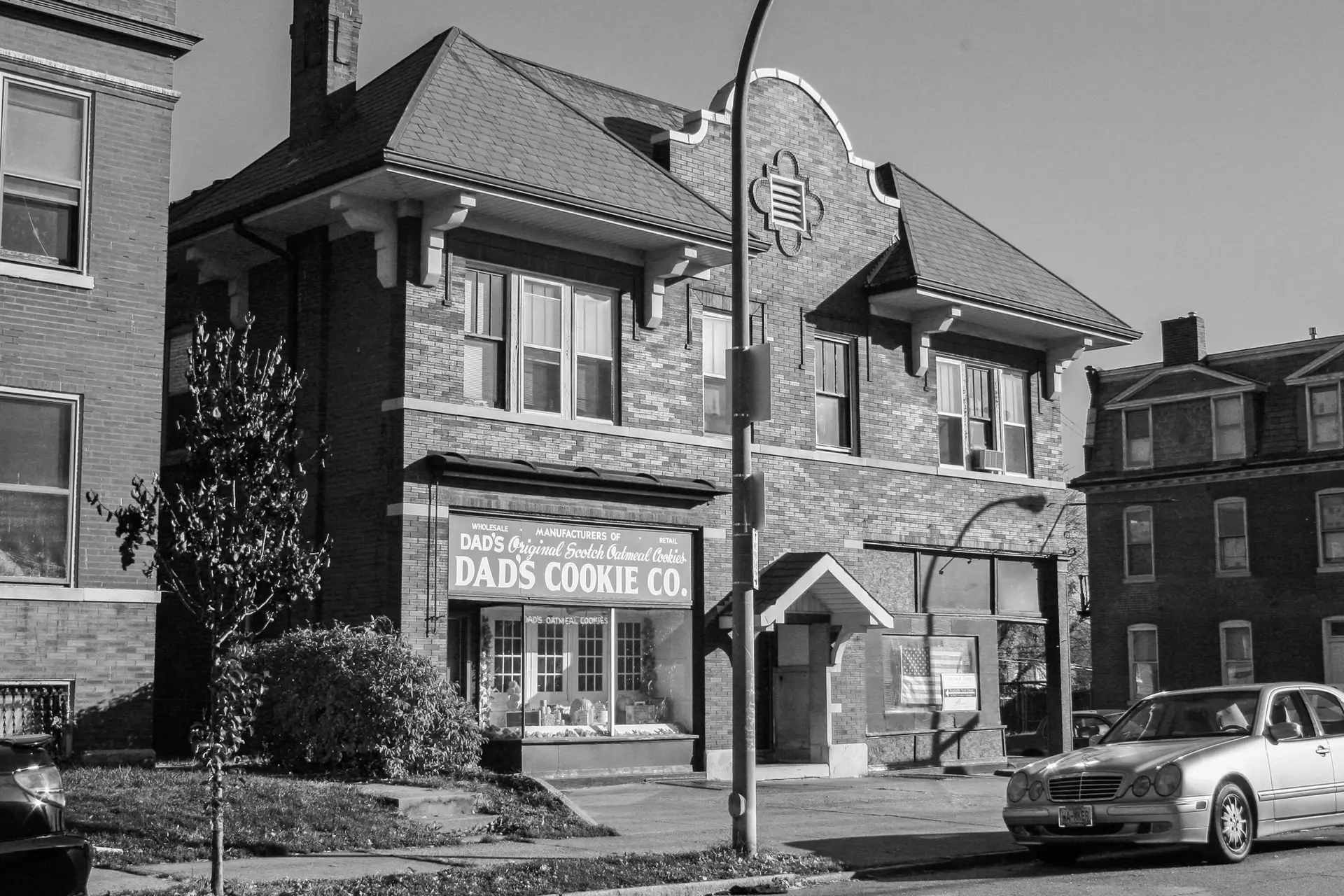
Dad’s Cookie Company started in St. Louis in 1927 with a Scotch oatmeal cookie recipe that had already traveled across the country. In 1938, Henry Renz purchased the local franchise rights and moved the bakery into its current brick building at Louisiana Avenue and Keokuk Street. The store’s original design—with wood trim, marble counters, and glass cases—has changed little since opening day. Walking inside still feels like stepping into a 1930s photograph.
From Family Tradition to Local Icon
Through the decades, Dad’s remained in the Renz family. Henry Jr. took over after the war and kept the small bakery thriving even as others disappeared. For generations, customers bought cookies by the pound, wrapped in brown paper bags tied with white string. In 1988, ownership passed to the-
Hastey brothers—Ken, Jim, and Dan—who expanded local distribution while keeping production methods old-school.
Preserving the Past, One Cookie at a Time
Today, much of that atmosphere endures. The shop still features its 1920s Middleby–Marshall oven-
(now retired beside newer equipment), original display cases, and the same sweet aroma that has filled the air for nearly a century. Only in recent years did packaging shift from paper to plastic for freshness.
In 2024, the business changed hands again when the Huber brothers became owners, promising to maintain every bit of its vintage-
charm while improving efficiency. Dad’s cookies now reach hundreds of area stores, but the storefront itself remains frozen in time—a living museum of South St. Louis craftsmanship and care.
A City That Remembers
Together, these four businesses represent more than longevity—they reflect the soul of South St. Louis. Each place tells a story of persistence, from the smell of fresh dough and the hum of projectors to the clink of a bakery scale weighing cookies by the pound. Time has changed the neighborhoods around them, but these buildings remain stubbornly alive, quietly proving that authenticity never goes out of style.
Safe travels, RJ