From Old Shawneetown to a New Home
When I visited Shawneetown on April 7, 2021, the town carried a quiet air of resilience. The streets were calm, the sky filled with large pillowy clouds, and the Ohio River rolled on just a few miles away. Unlike Old Shawneetown, which sits abandoned, this community was born from survival. Repeated flooding in the 1930s forced residents to rebuild further inland. Federal assistance and a determination to stay close to the river valley gave rise to a brand-new Shawneetown. The move was not simply about relocating homes. It was about ensuring the survival of a way of life.
The Shawnee Chief Motel
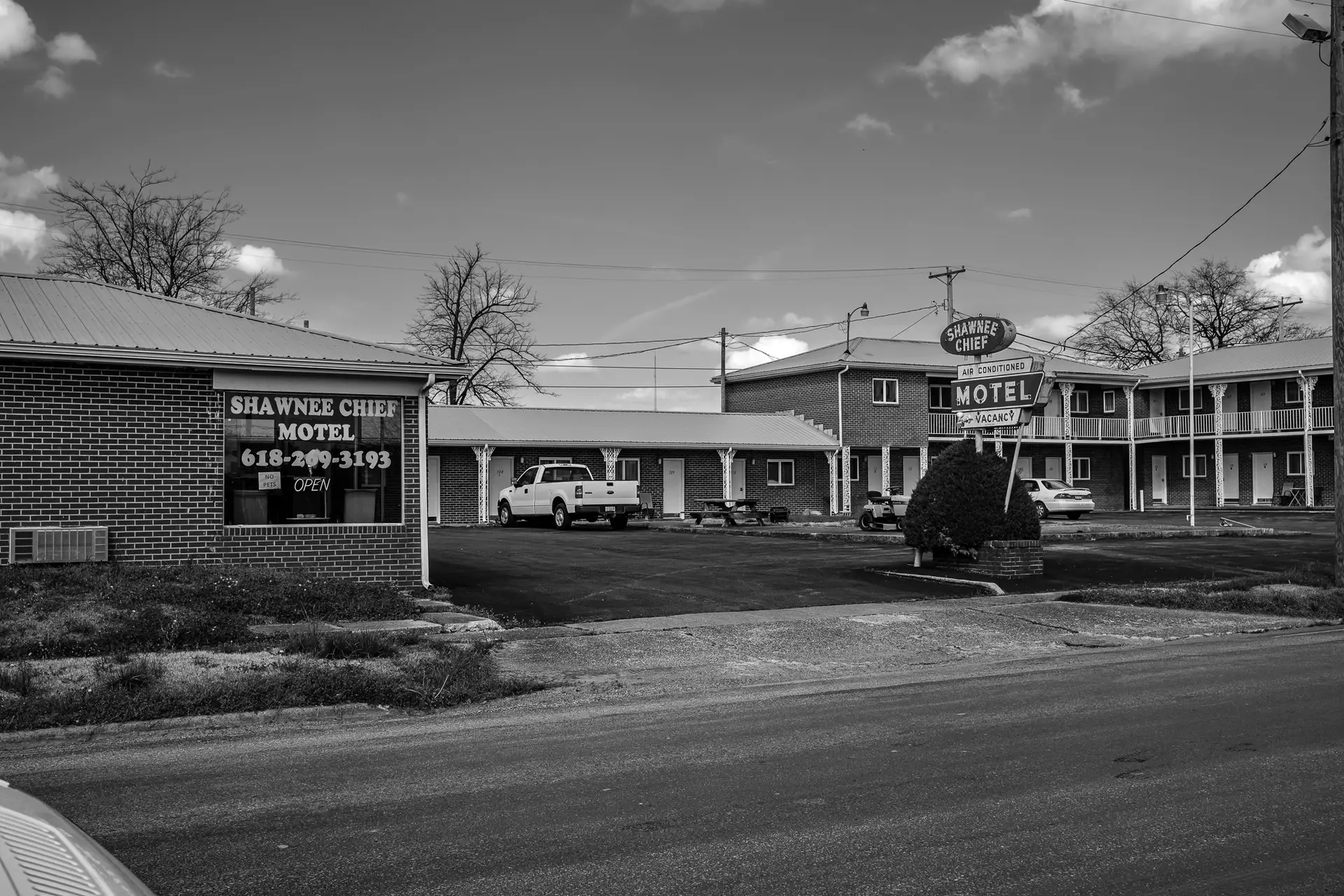
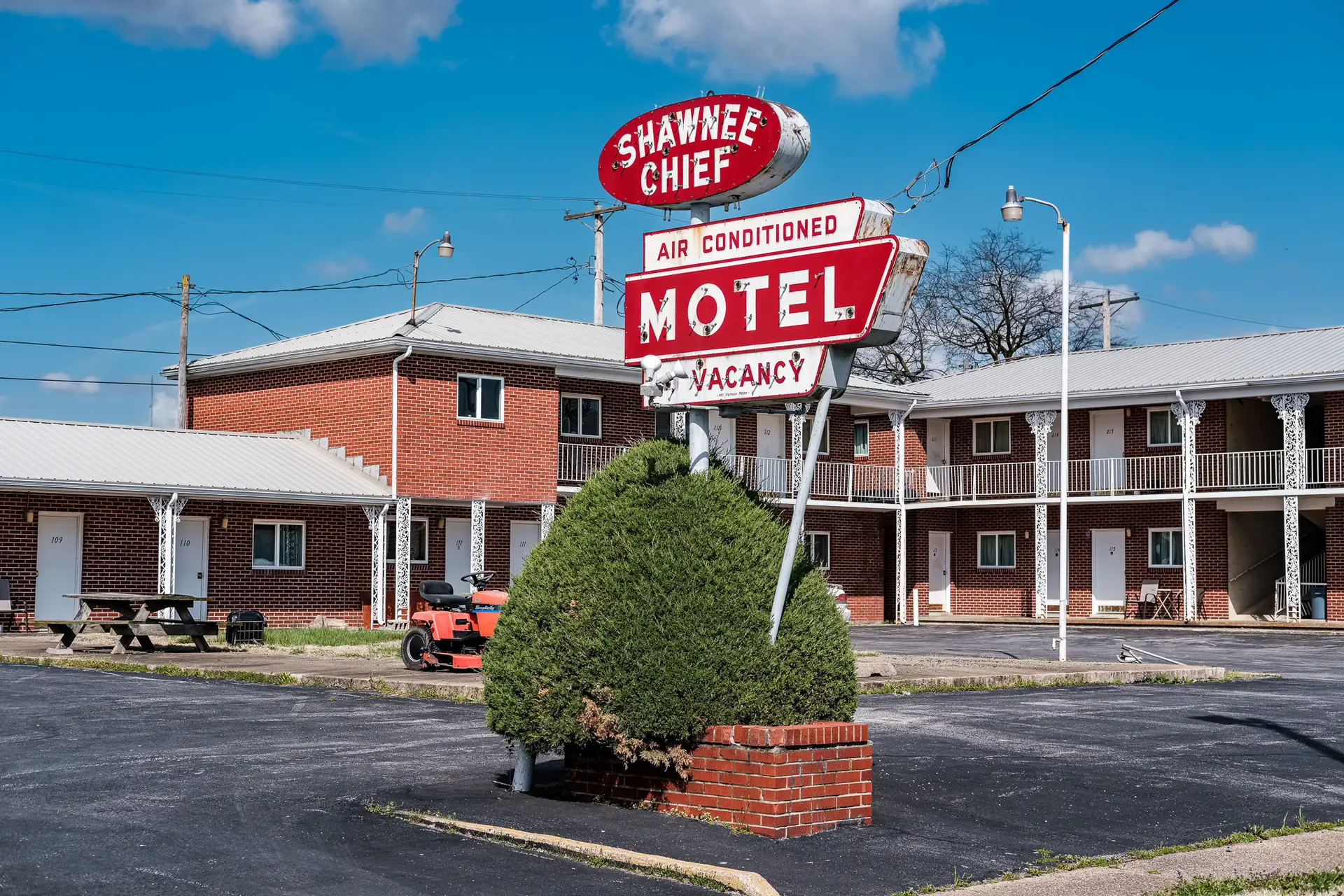
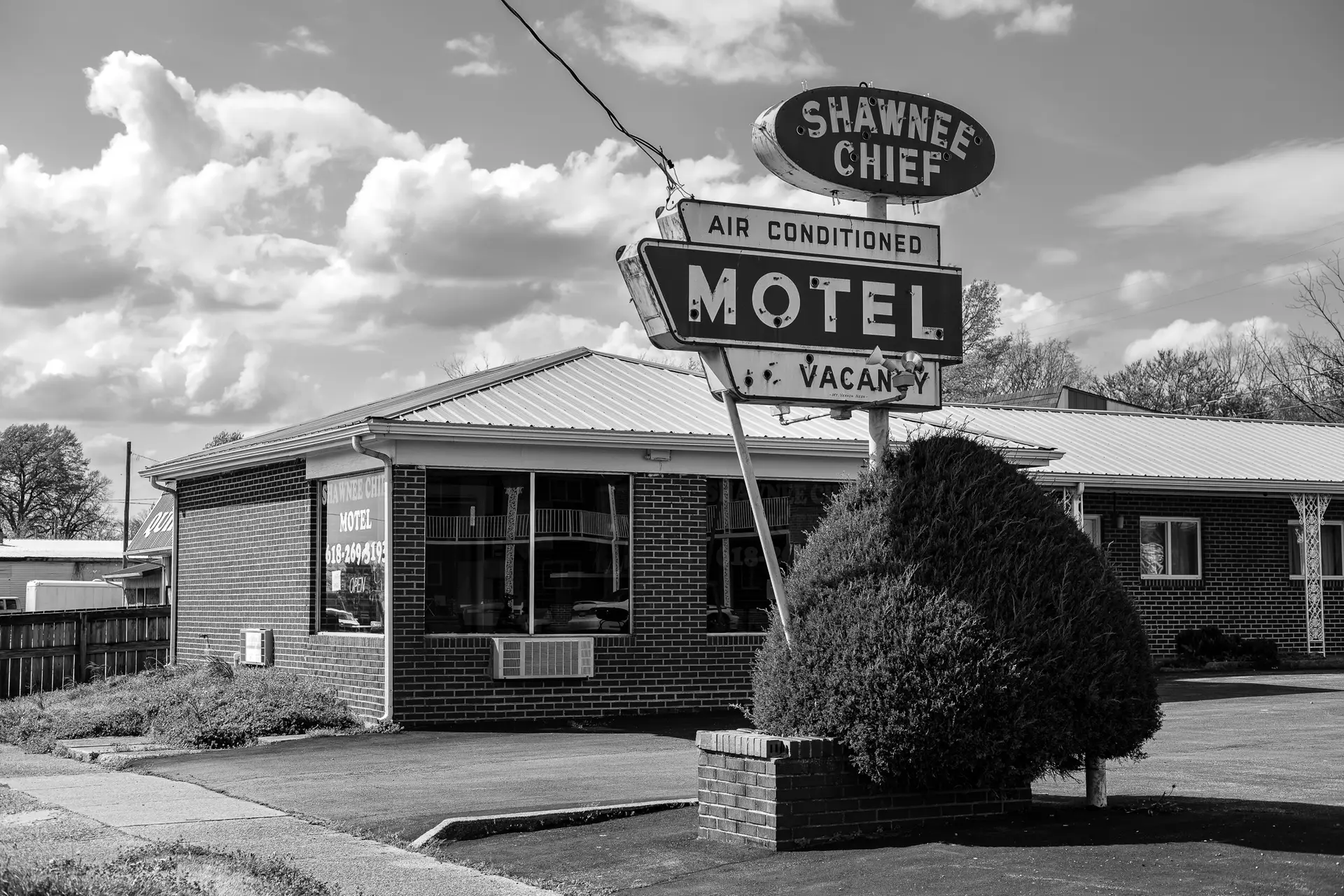
One of the most visible landmarks in the relocated town is the Shawnee Chief Motel. While much of its history is not widely documented, the motel appears to date back to the mid-20th century, when Route 13 carried steady traffic through the region. Family-run motels like this were common in small Midwestern towns. They offered affordable lodging, neon signs to attract motorists, and simple comforts for travelers who were passing through southern Illinois.
A Symbol of Local Pride
The Shawnee Chief Motel still carries an unmistakable charm. Its roadside sign reflects pride in Native heritage while also calling back to the era when motels were personal, rather than corporate. Many guests who stayed here likely worked along the river or were on business tied to agriculture and industry in the region. Today, the motel stands as both a piece of nostalgia and a reminder that even small towns had their share of roadside icons.
Motel Life on the New Main Street
Photographing the Shawnee Chief gave me a sense of how Shawneetown tried to rebuild its identity. Motels were once social centers where travelers mingled, locals gathered for meals, and business was quietly conducted. While many similar properties have closed across the Midwest, this one still signals the determination of Shawneetown to stay relevant despite setbacks.
Industry and the Water Tower
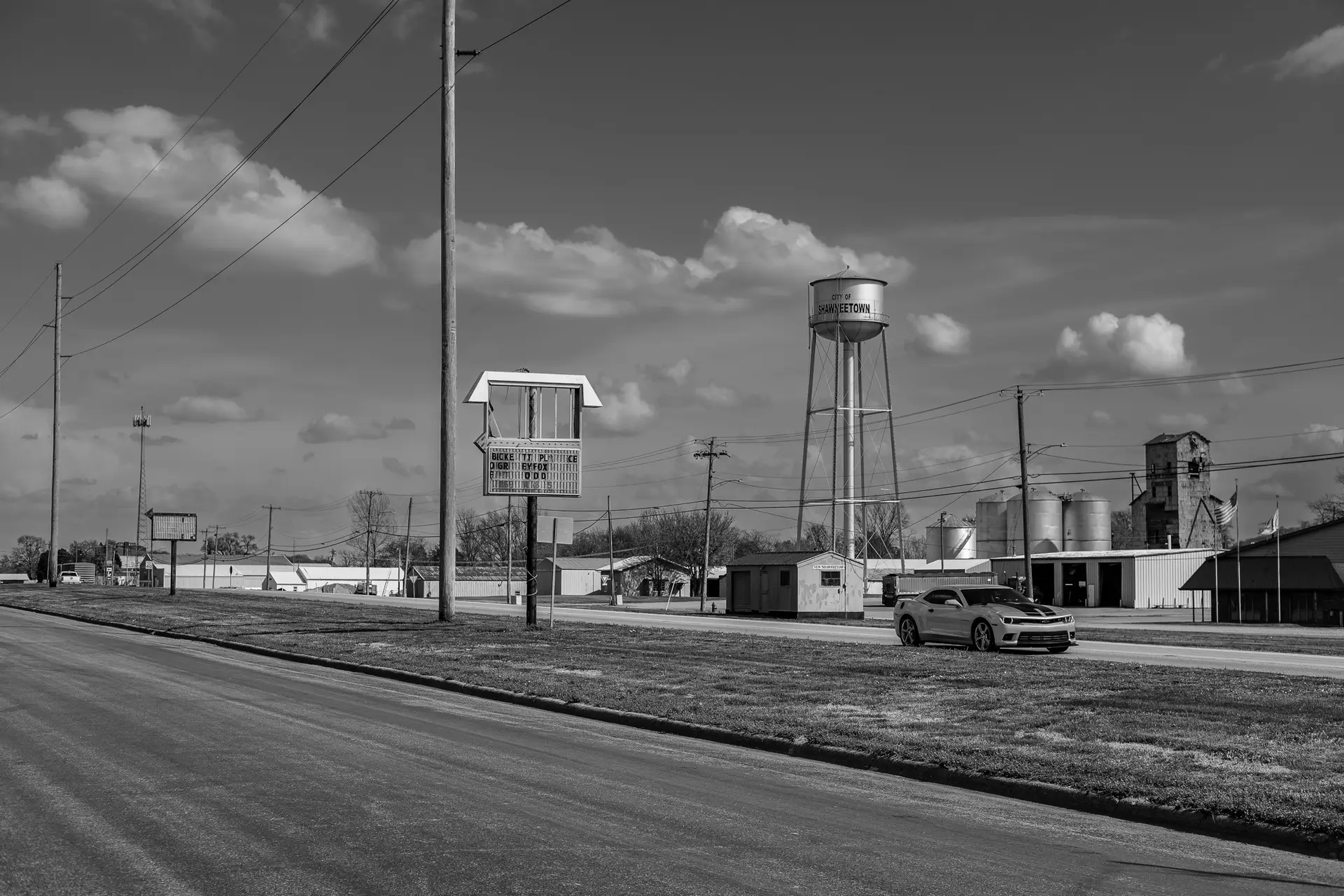
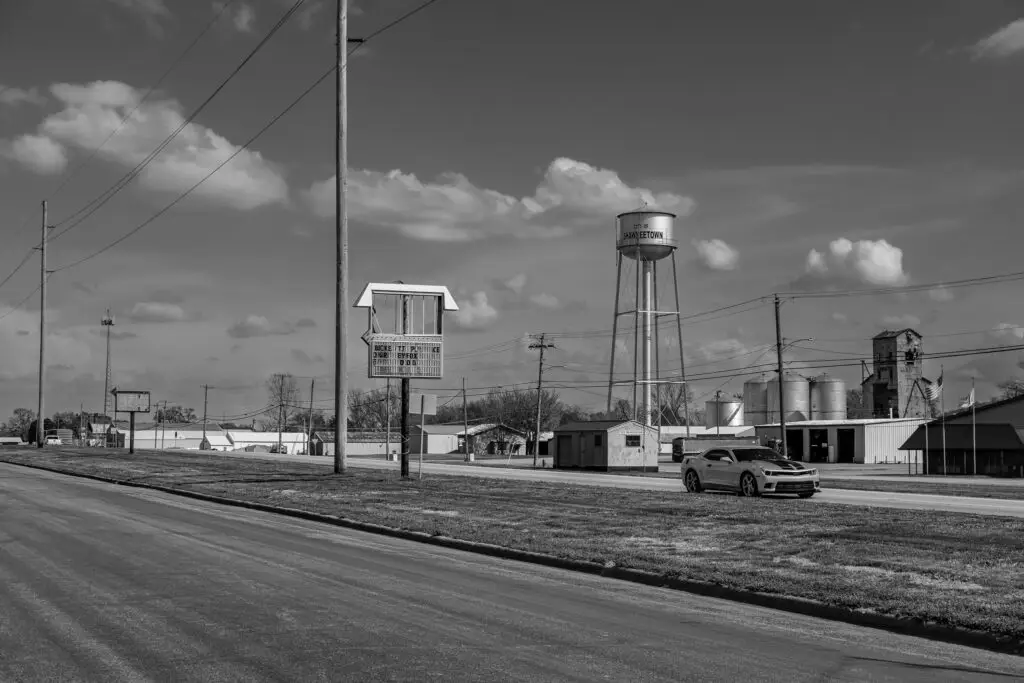
Moving the town inland was about more than protecting homes. It also meant building new infrastructure. The Shawneetown water tower, visible from the industrial area, became a proud marker of stability. For decades, water towers have symbolized permanence in Midwestern towns, rising above fields, factories, and rail yards. In Shawneetown, the tower does more than supply water. It anchors the new community and serves as a daily reminder of the fresh start made possible after disaster.
Industry Along the River Valley
The industrial area near the water tower reflects Shawneetown’s continued reliance on agriculture, shipping, and light manufacturing. While the old town’s economic base was repeatedly threatened by floods, this new location allowed businesses to invest in buildings and infrastructure with greater confidence. Even today, this part of the community tells a story of hard work and perseverance.
A Community That Refused to Disappear
Shawneetown’s story is about adaptation. Where Old Shawneetown became a ghost town, the new community represents endurance. The motel, the water tower, and the surviving businesses show that even when rivers rise and history tries to wash away a town, determination can rebuild it. For travelers, it is easy to overlook Shawneetown on the map. Yet for those who stop, its streets tell a story of survival and a quiet pride rooted in both past and present
Safe travels, RJ.