A Station Steeped in History
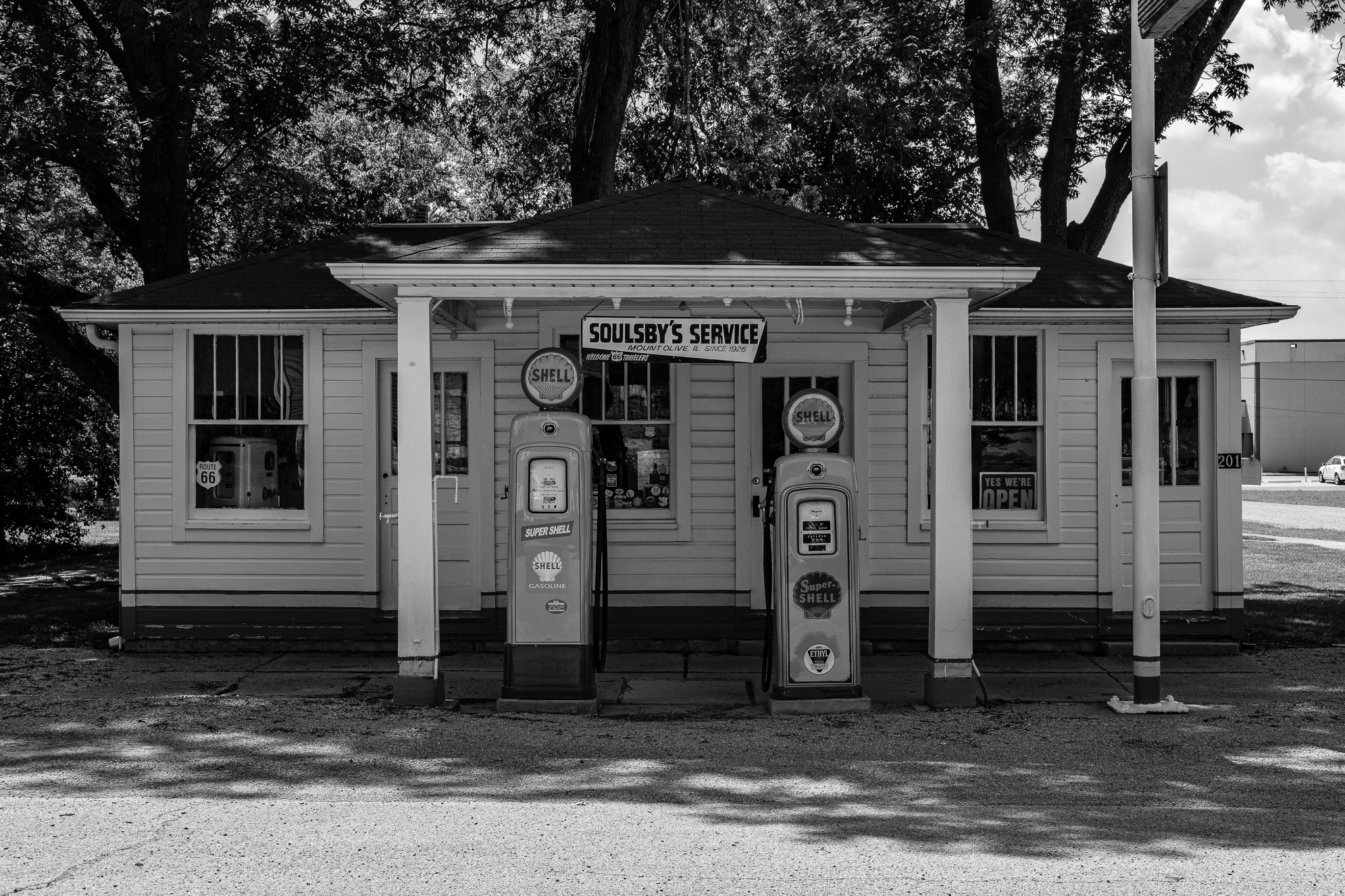
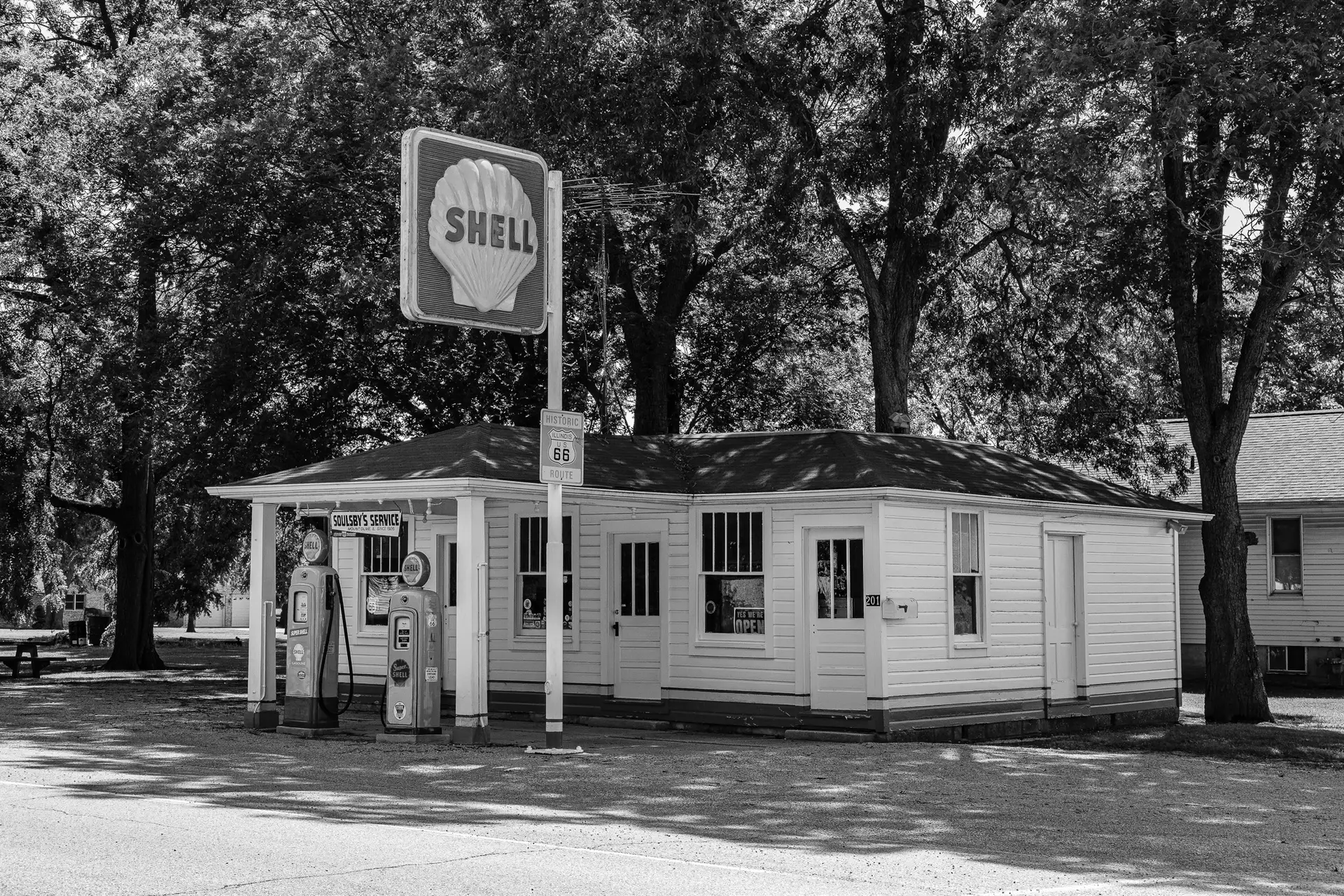
The Soulsby Shell Station in Mount Olive, Illinois, isn’t just a vintage gas stop. It’s a national treasure. Built in 1926 by Henry Soulsby after an injury ended his mining career, the station rose on what was about to become Route 66. Its classic “house-with-canopy” design blended with the town. It was part shop, part roadside beacon, and all business when the highway woke each morning.
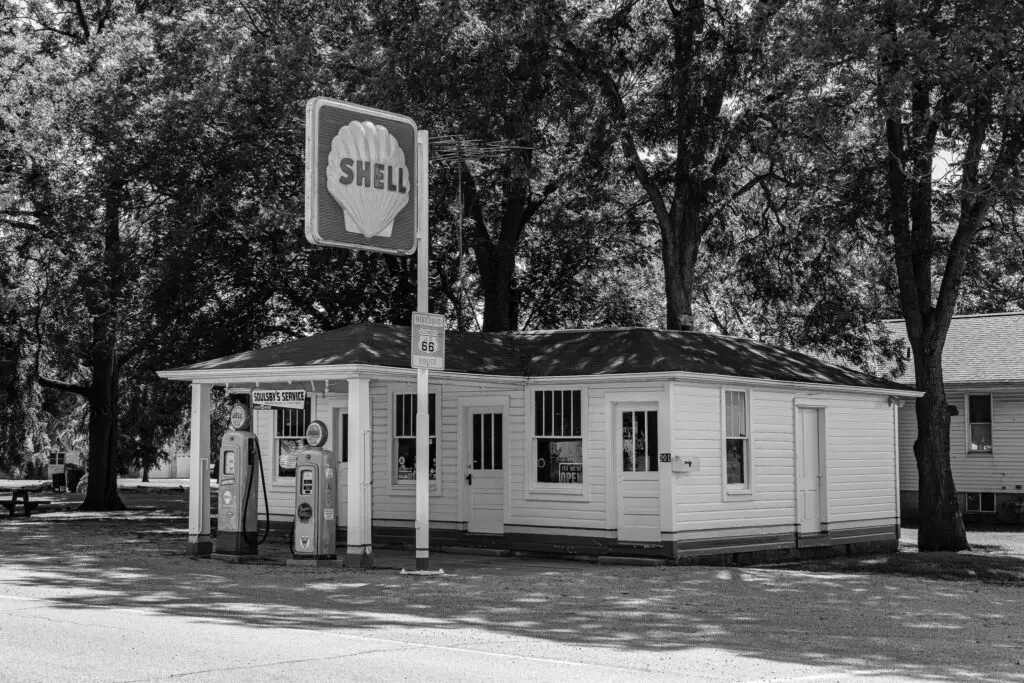
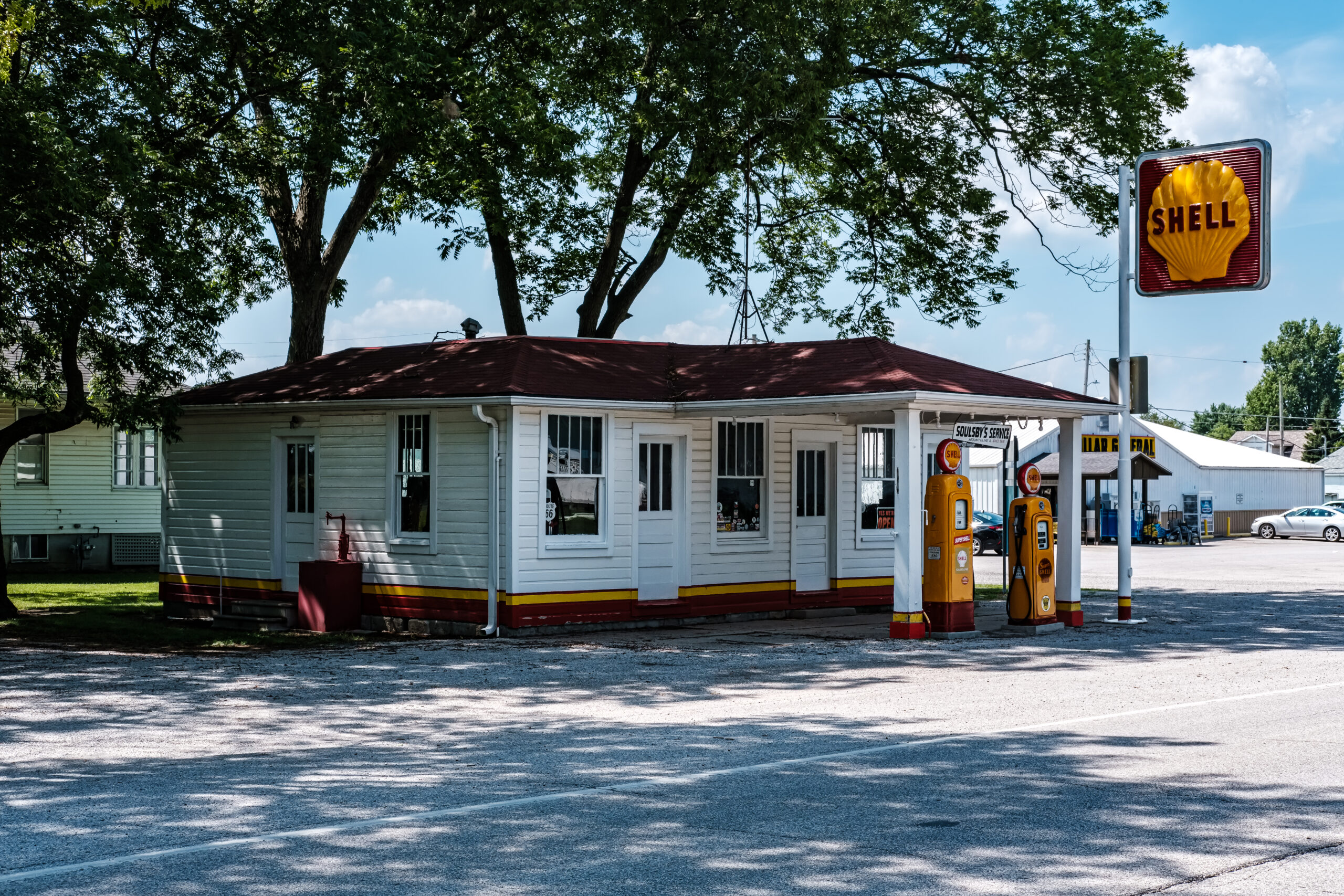
I last visited in July 2022, and stepping into the shaded forecourt felt like traveling back in time. The station’s white clapboard and yellow trim have weathered gracefully. Every line—from the canopy posts to the red Shell logo—reflects decades of family care. You don’t smell gasoline anymore, and no bell rings when a tire rolls over a hose. Still, the place hums with memory.
What began as a modest business has stood fast while Route 66’s traffic faded and many other stations disappeared. There’s something deeply satisfying about seeing the quiet forecourt still perched on its pump island, ready for travelers. Soulsby’s isn’t frozen in amber. Instead, it keeps telling the same story to anyone willing to stop and listen.
A Place Rooted in Family and Community
Family Hands on the Pumps
What makes Soulsby Shell truly special is that it was always family-run. Henry built it with savings and local know-how. His son Russell and daughter Ola carried the business through the lean years of the Great Depression. They never lost the neighborly hospitality that made the stop beloved.
In the mid-1930s, the tiny 13×20-foot building grew with a rear extension, gutters, and a few other practical upgrades. Still, it kept its tidy proportions and small-town charm.
Adapting to Changing Times
After World War II, Russell added a twist that feels wonderfully of its time: a radio and TV repair sideline. He tested signals with an antenna mounted on the roof. That kind of ingenuity helped Soulsby adapt as motoring culture shifted. When the interstate began siphoning traffic from Route 66, many stations closed overnight. The Soulsbys, however, kept theirs useful in every way they could.
A Community Pillar
Fuel sales dwindled, but the station stayed social. Visitors came for oil checks, directions, a cold soda, or a few minutes of talk under the canopy. The pumps finally went quiet in the early 1990s, and the doors closed soon after. Still, the station’s reputation as a community anchor didn’t fade. By then, it had become part of Mount Olive’s identity, woven into the daily rhythm of people who treated it as more than a place to buy gas.
Keeping the Spirit of Route 66 Alive
From Faded Landmark to Living Memory
Today, Soulsby Shell stands not just as a structure but as a story carved into wood and paint. It is a living fragment of Route 66’s soul. Recognition soon followed when the station earned a place on the National Register of Historic Places in the 2000s. It was honored not only for its age and architecture but also for the emotional lineage it represents. Preservation crews and volunteers stripped…
away later materials, repaired the original Dutch-lap siding, tuned up windows and doors, and matched era-correct colors. Now the exterior reads like a mid-century photograph.
The goal was never to create a theme park. Instead, the restoration balanced polish with restraint. It respected the modest scale that made the station approachable in the first place. Stand by the island and you’ll see why travelers come from around the world to take the same photo from slightly different angles. The canopy line, crisp trim, and familiar Shell palette still do what they have done for decades.
Memory on Display
Even without active pumps, Soulsby Shell continues to serve. It sells memory, context, and a sense of place. The little station reminds visitors that the Mother Road was not built solely on motels and neon giants. It was sustained by modest, human-scale businesses like this one. These family operations kept people moving and made the road feel like home.
Mount Olive’s Context and Coal-Town Roots
More Than a Highway Stop
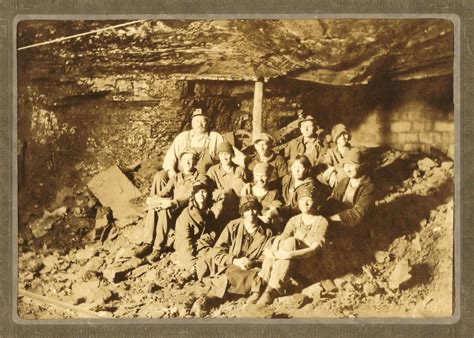
Mount Olive is more than a dot along a famous highway. It’s a town with deep working-class roots, shaped by coal mining and a long history of labor activism. Nearby landmarks like the Union Miners Cemetery and the memory of figures such as Mother Jones speak to a community forged by organizing and resilience. Soulsby’s story fits that arc. A miner turned an injury into entrepreneurship, and a family…
business outlived the industry that brought people here in the first place.
Where Coal, Labor, and Route 66 Collide
Route 66’s 1926 designation brought a wave of optimism to towns like Mount Olive. Paved roads promised commerce and connection. Farmers, miners, and traveling families suddenly shared a common orbit. Soulsby Shell stood right in that current. It provided the practical services travelers needed while grounding the highway’s romance in everyday reality—fuel, directions, small talk, and the comfort of a clean forecourt.
That intersection—personal reinvention, regional grit, and national mobility—is why the station resonates. You can feel the town and the road sharing the same space beneath the canopy. Soulsby Shell isn’t just a backdrop for snapshots. It’s an address where Mount Olive’s story and the Mother Road’s mythology meet, quietly and confidently, at the edge of the pavement.
Stories Carved in Wood and Metal
Echoes in Wood and Steel
The Soulsby Shell Station wears its years with quiet dignity. Its east-facing façade now spends much of the day in shade, thanks to the towering trees that rise behind it and stretch overhead. When light does break through, it glints across the weathered wood and tin. Those flashes remind visitors that this was once a beacon for weary travelers rolling…
down Route 66. Even the modest office windows, shaded most of the time, still frame a view into the past.
A Ramp Reclaimed by Nature
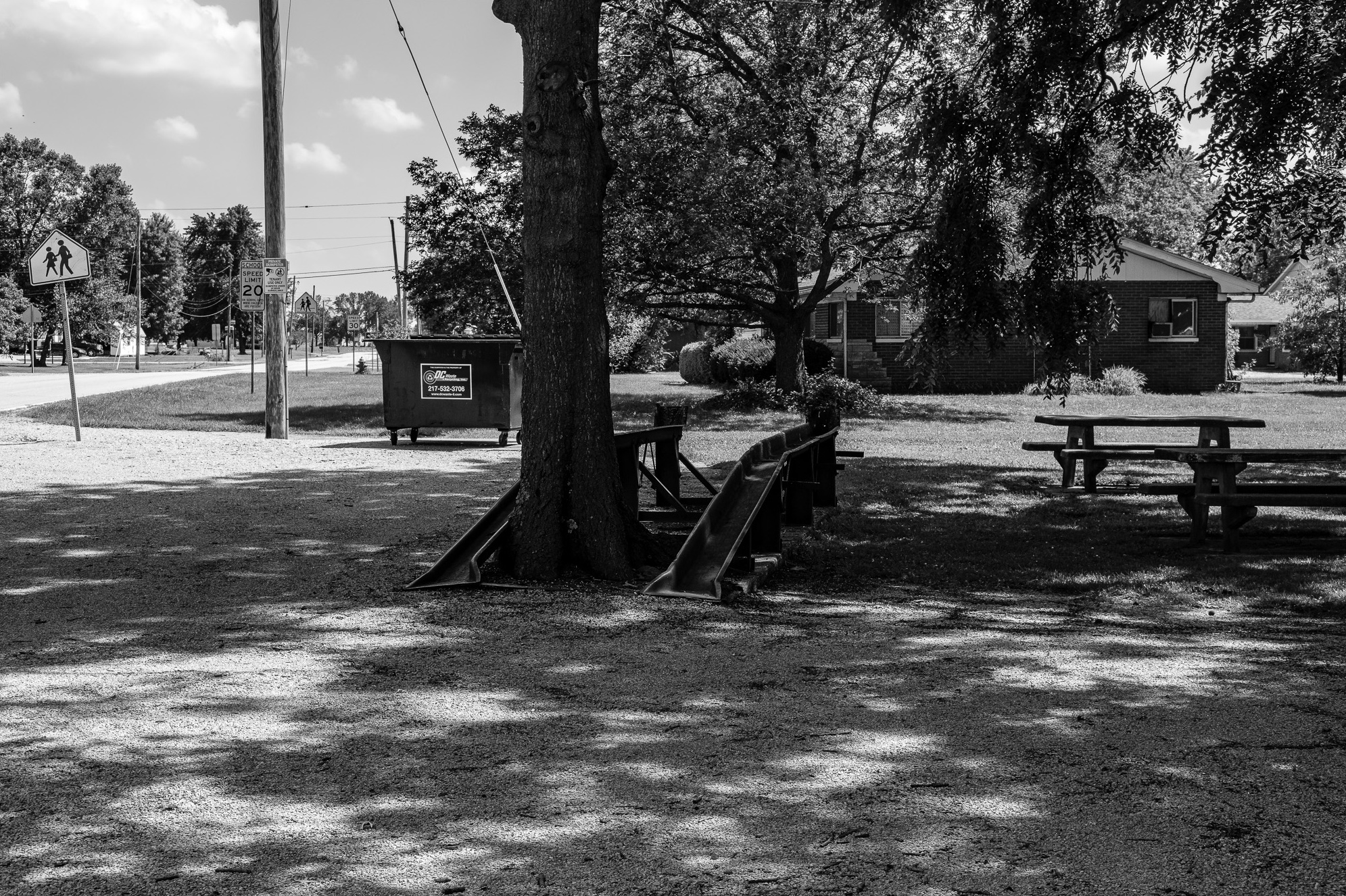
Step around back, and you’ll find one of the most curious survivors of Soulsby’s working days: a simple metal service ramp tilted on a concrete base. Mechanics once used it for oil changes and quick repairs, working in place of a full garage. Today a tree pushes through its center, stubbornly taking the space as its own. Picnic benches nearby invite visitors to pause. It’s easy to picture the chatter of mechanics, the hiss of air hoses, and the laughter of families waiting for cars to be made roadworthy again.
Relic, Park, and Storyteller
The rear lot is gravel now, shaded by the same trees that shelter the station. It feels more like a roadside park than a service yard. The ramp may function as a relic rather than a tool, but its persistence still speaks. Concrete, steel, and roots are locked together here, telling a story every bit as rich as the Soulsby family’s service station itself.
Safe travels, RJ