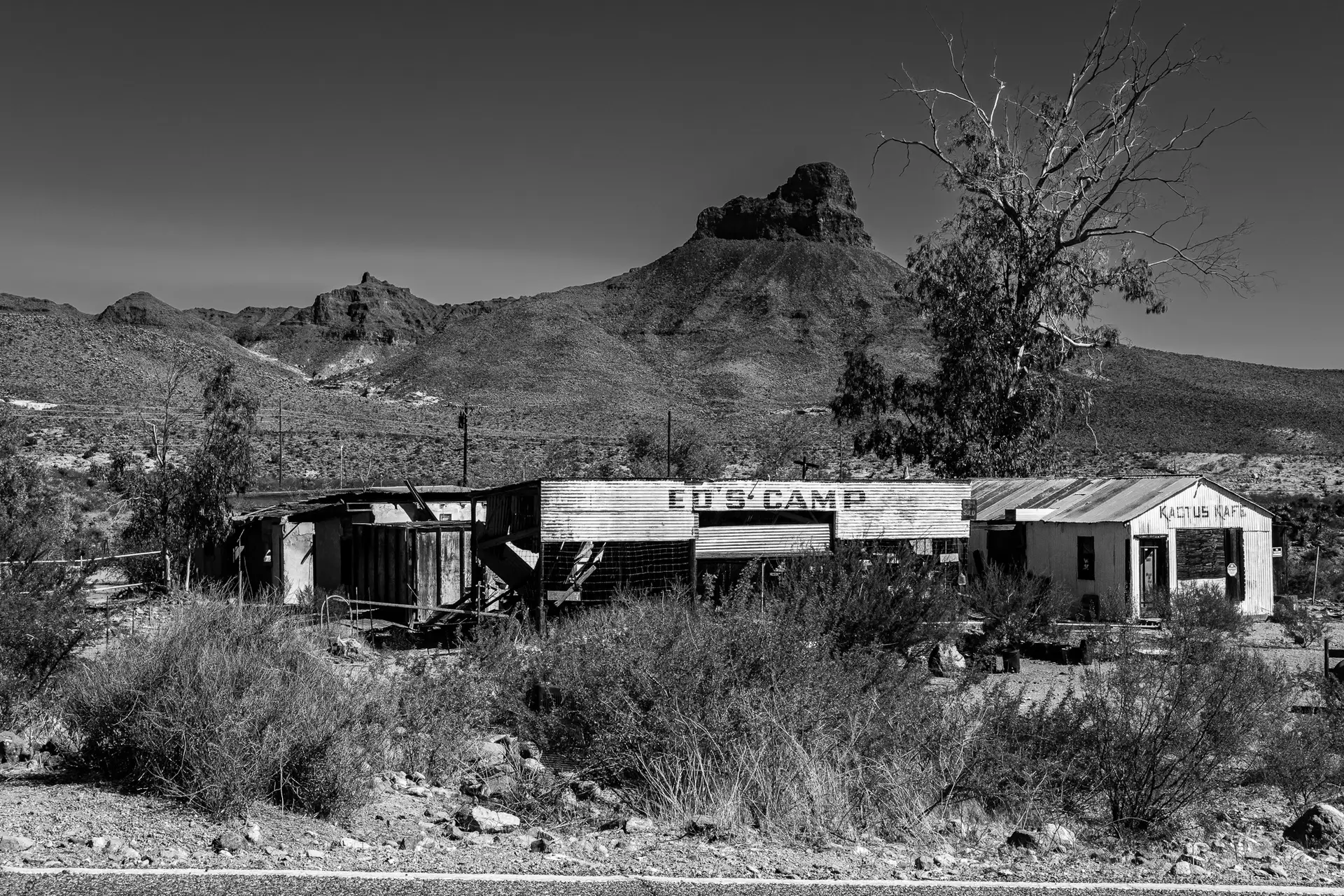
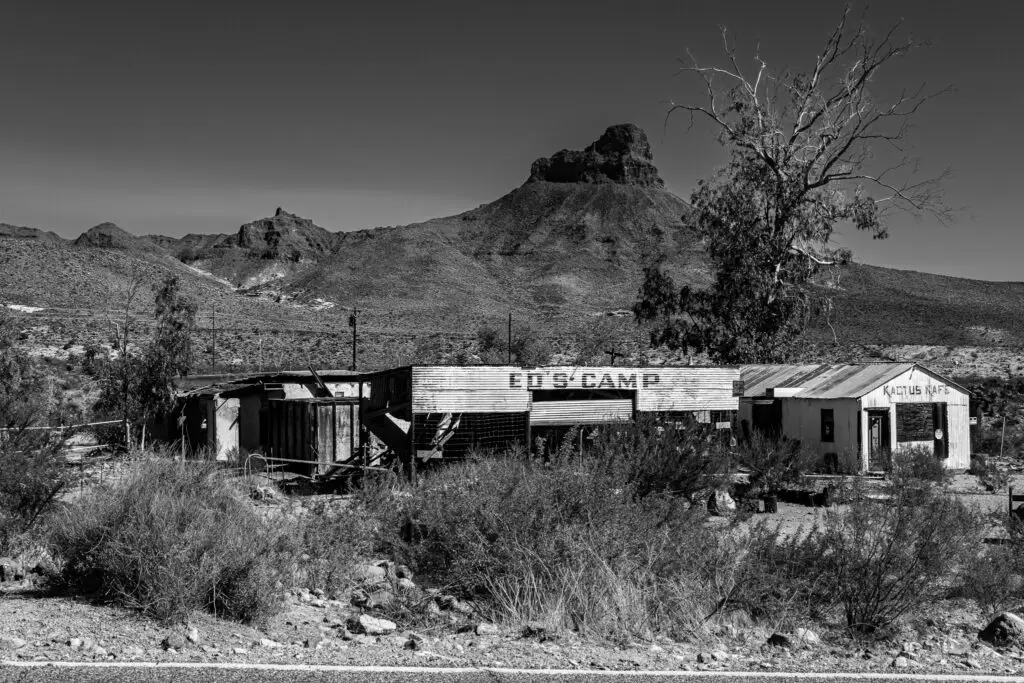
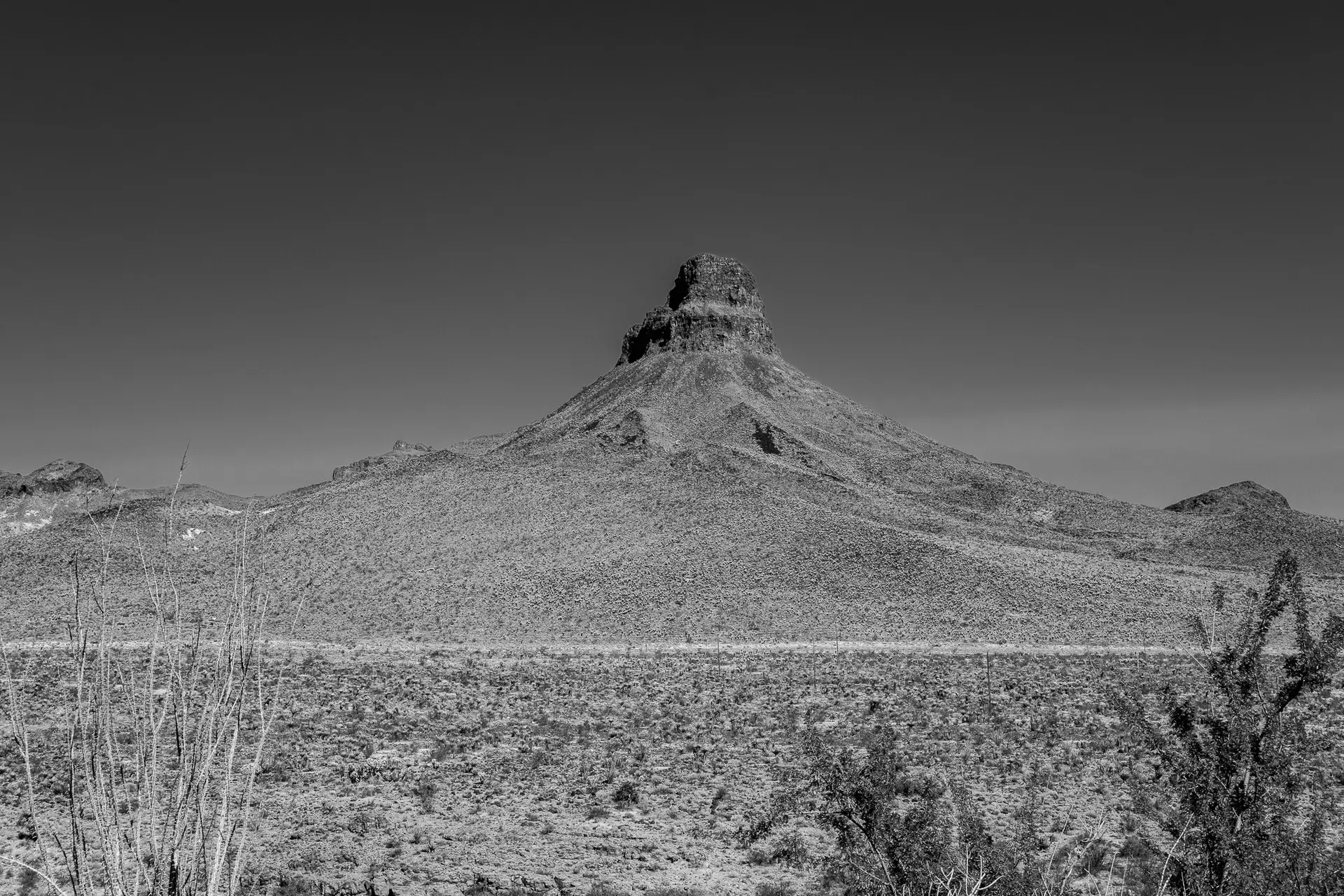
One of my first stops on the morning of October 18, 2020, was in Golden Valley, Arizona, where a mesa rises directly behind Ed’s Camp along the Oatman Highway. The air was hot and smoky from nearby California wildfires, which muted the sky and made it clear that color photographs would be limited. Even so, the desert landscape felt unforgettable in its atmosphere.
What caught my attention most was that this broad mesa does not appear to have a name on any official maps, even though it dominates the background. Travelers on Route 66 often note its presence, but it seems to remain a landmark without an identity. Not far from here sits Cool Springs Station Route 66 Arizona, another stop that helped define travel through Golden Valley and still stands as one of the most memorable sights on this rugged stretch of the Mother Road.
Cool Springs: A Gateway on Route 66
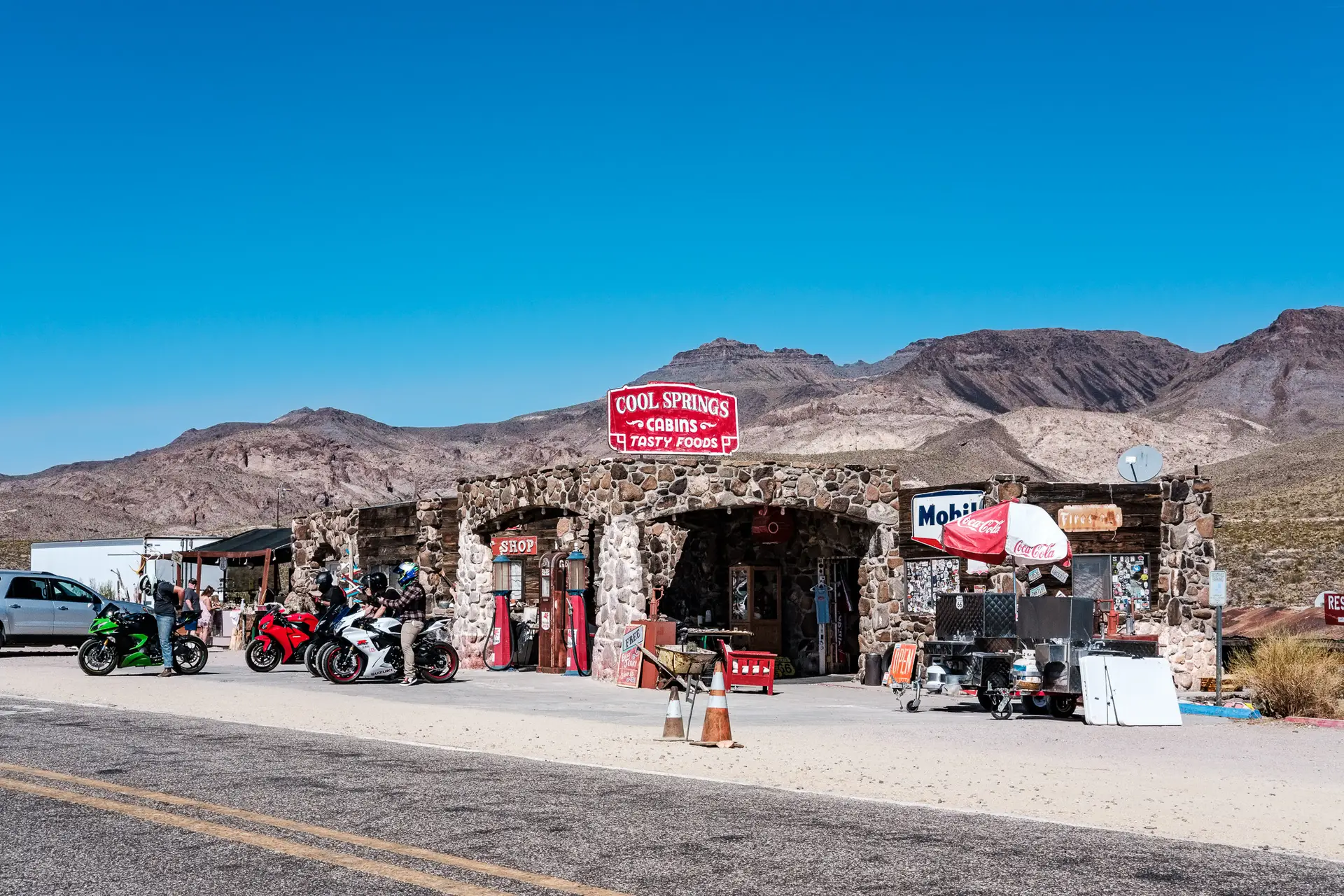
Cool Springs Station Route 66 Arizona has always been more than just a small stone building. Constructed in 1926, the station stood at the very base of Sitgreaves Pass, on the last level ground before the highway began its twisting climb into the Black Mountains. Travelers coming west from Kingman would often stop to refuel, grab a cold drink, or simply rest before attempting the steep grade ahead.
For many families driving in the 1930s and 40s, this short pause could make the difference between finishing the day’s journey or breaking down along the mountain curves. The small station and its nearby cabins gave people a chance to cool down and prepare. This desert outpost became not just a roadside business but a checkpoint of survival for anyone attempting the eight miles of sharp turns and narrow ledges without guardrails.
The Rebirth of a Landmark
Cool Springs declined when Interstate 40 bypassed Oatman in the 1950s, taking most of the traffic and customers with it. In the mid-1960s, a fire swept through the property and destroyed much of the original structure. For decades afterward, only piles of stone and the building’s foundation remained.
The site briefly gained new life in 1991, when filmmakers chose it as a set for Universal Soldier. During production, the station was blown up on screen and later rebuilt. In the early 2000s, local real estate broker Ned Leuchtner took ownership and committed to a full restoration. He carefully studied historic photos and used surviving rockwork to guide the project. By 2004, the station reopened as a visitor stop. It became both a gift shop and a preserved landmark. Today, it is one of the most photographed structures on the highway and an example of what can be achieved when roadside history is restored rather than forgotten.
A Station with Stone Walls
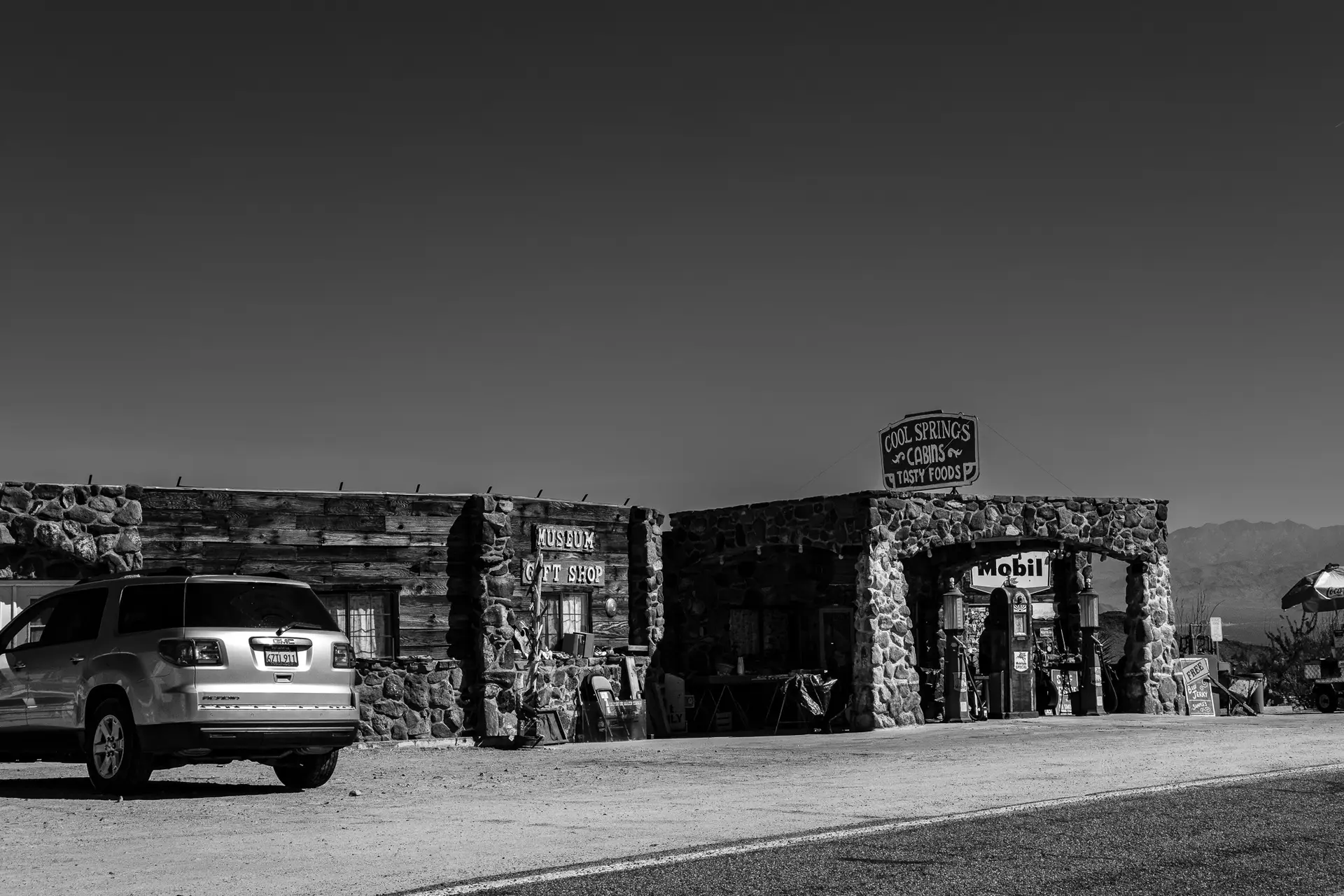
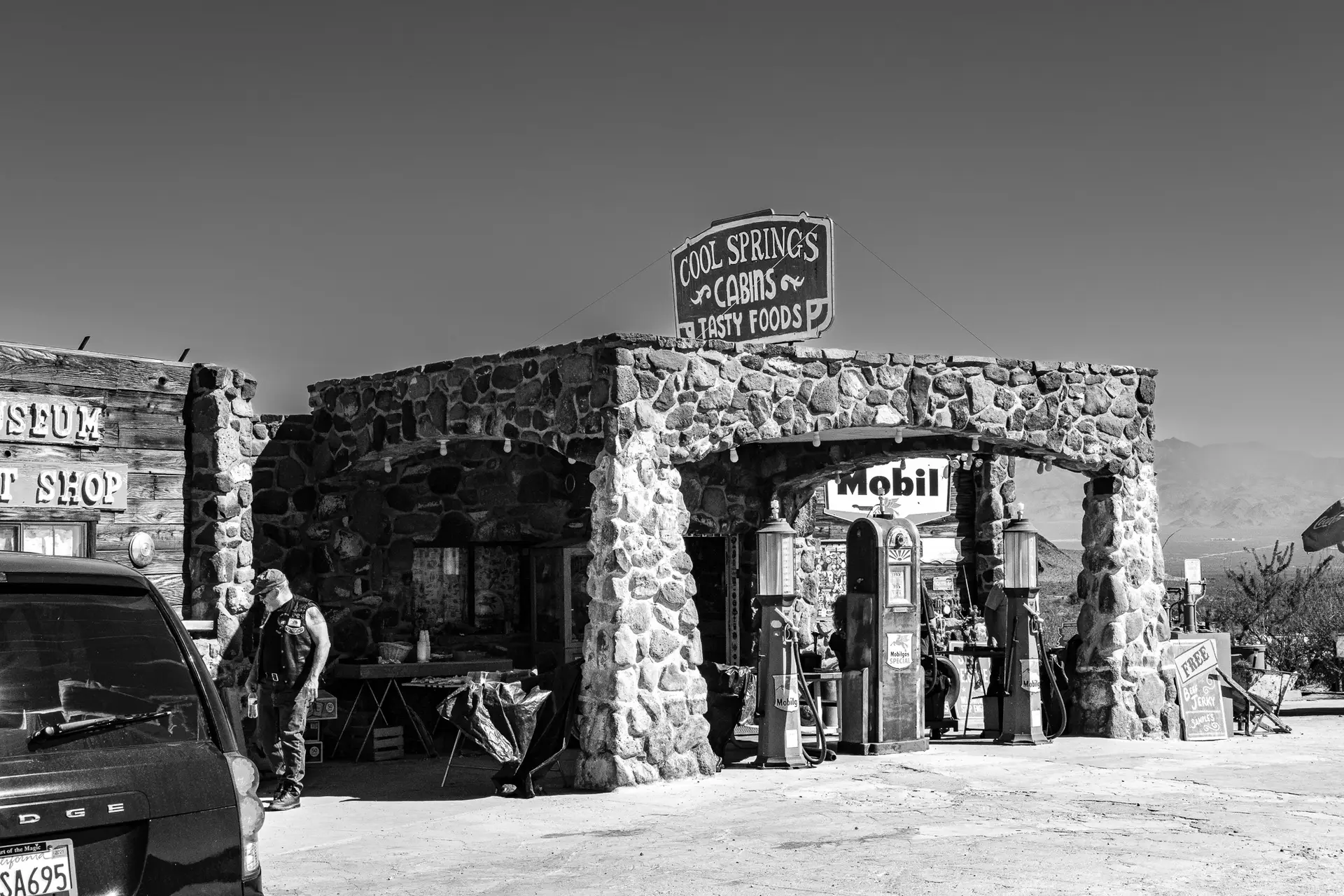
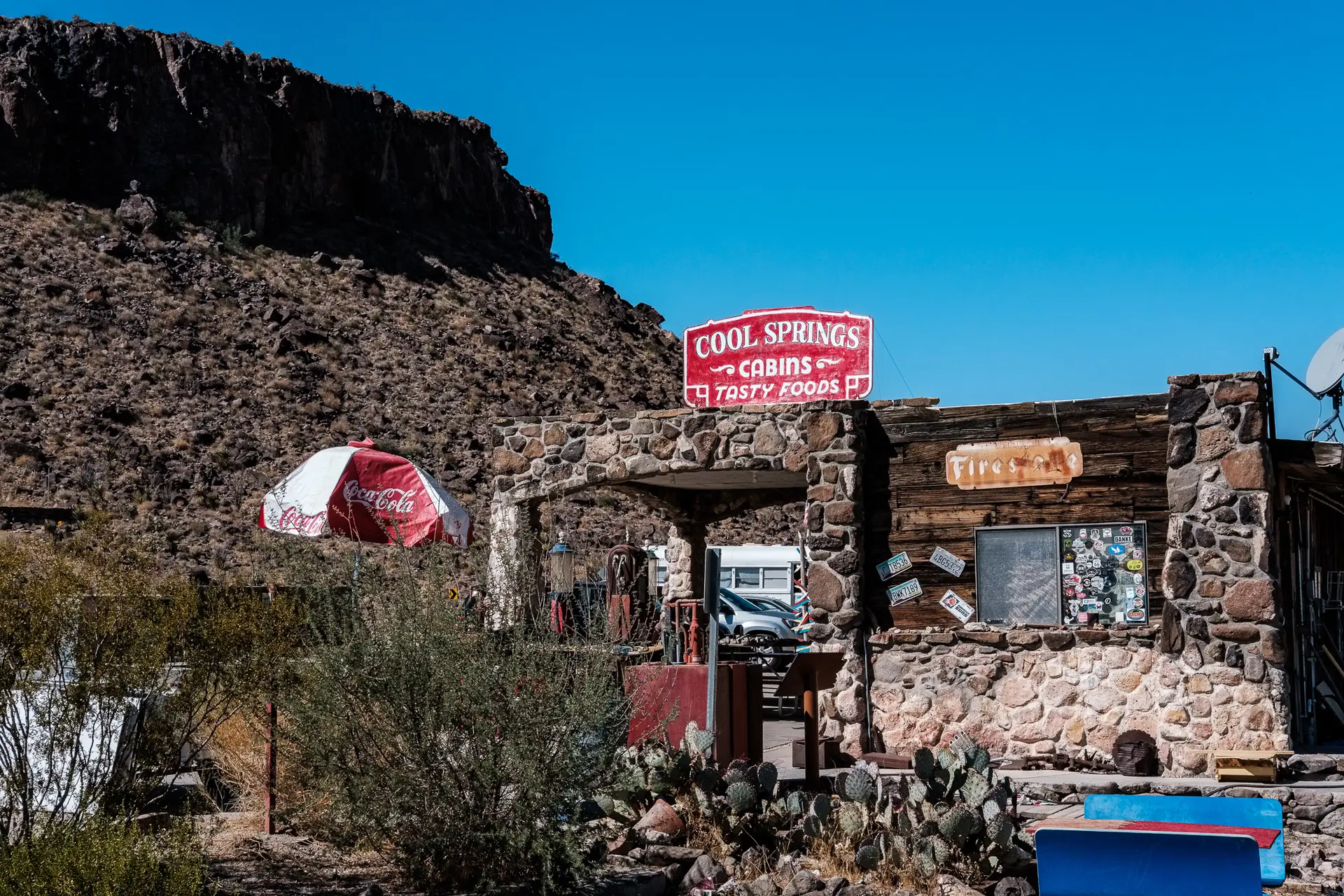
The most striking feature of Cool Springs Station Route 66 Arizona is its stonework. Built from local rock taken directly from the surrounding desert slopes, the walls give the impression that the station was carved out of the mountainside itself. The rugged design was not only durable but also helped the building blend naturally into the landscape.
When viewed in black and white, the textures of the stone stand out sharply against the desert ridges behind it. These same walls endured decades of neglect and even the destruction of fire, only to be rebuilt again during restoration. For visitors today, they provide a sense of continuity. They remind us that Route 66 was about more than travel; it was about endurance, adaptation, and survival in a harsh environment. Standing before the building, one can imagine the countless travelers who once paused here before venturing into the twisting road ahead.
Vehicles Frozen in Time
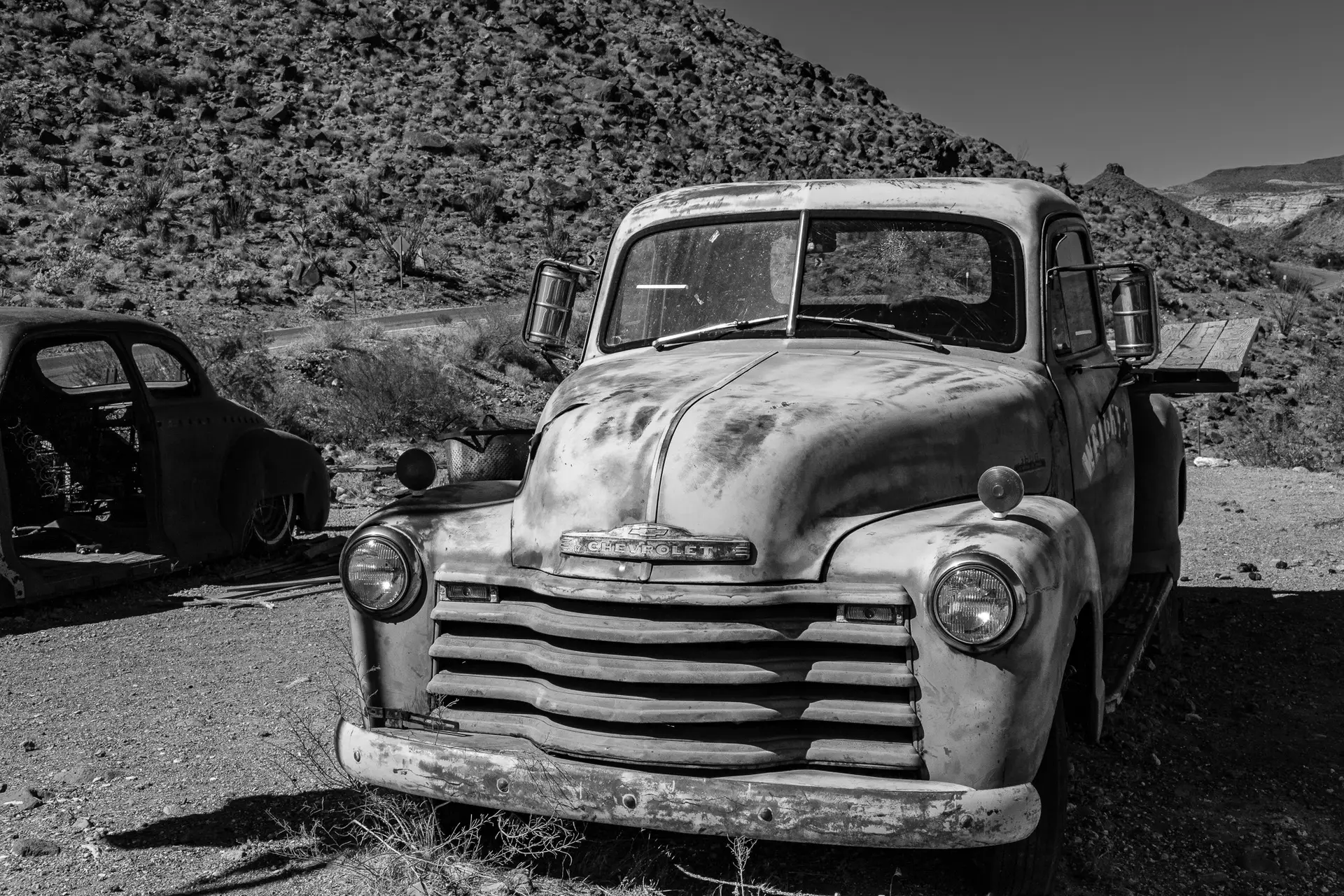
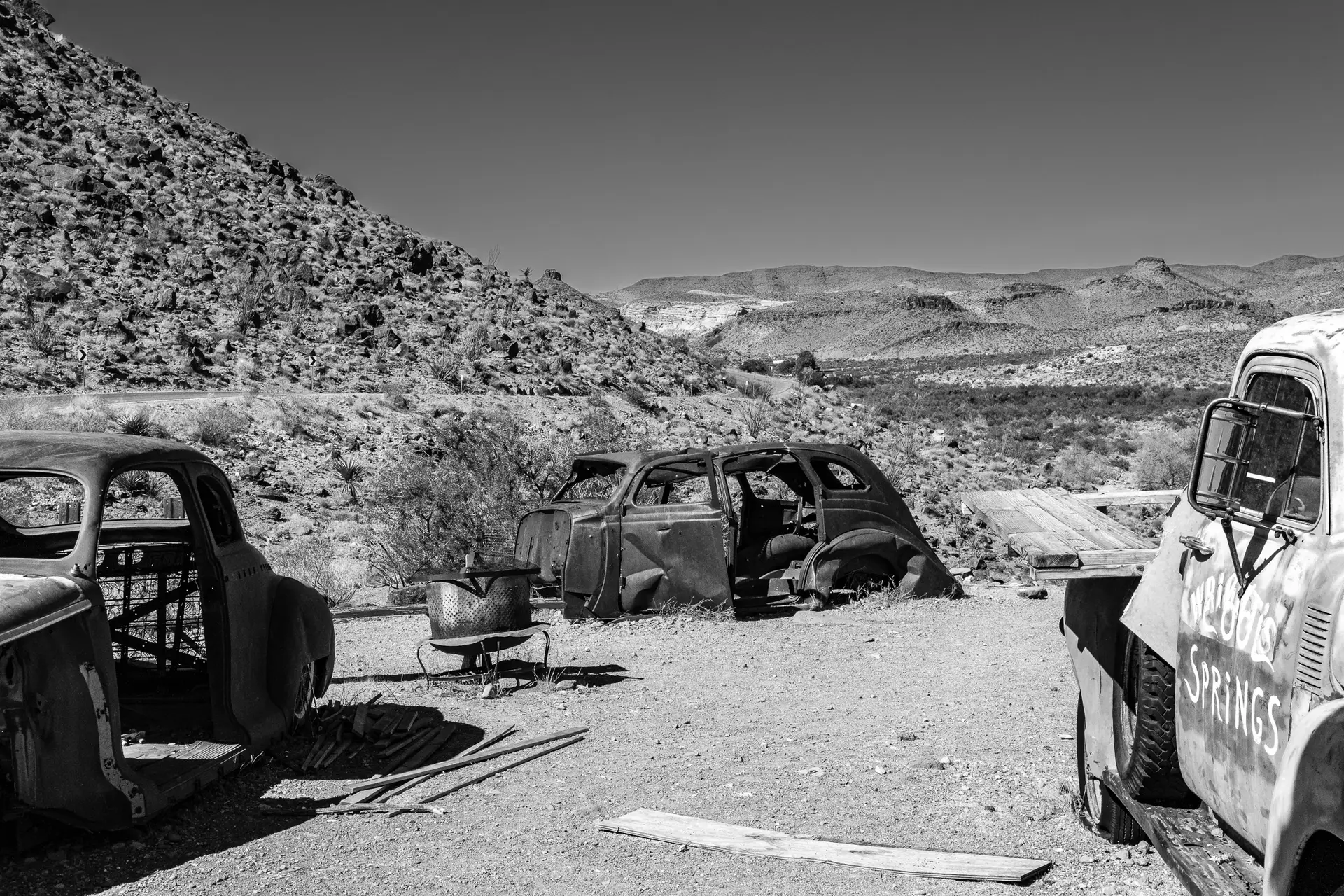
The grounds of Cool Springs hold more than the restored station. Scattered around the property are rusting vehicles that speak to the passage of time. The most notable is an early 1950s Chevrolet pickup, sun-bleached and weathered by the desert air. Despite its condition, the truck remains one of the most photographed objects on the site. Parked near the station, it evokes the years when families relied on vehicles like this to haul themselves and their belongings across the desert. Nearby, the skeletal frame of another stripped-out car rests against the ridge line, its metal slowly breaking down under the relentless sun. These vehicles are no longer tools of transportation. Instead, they have become monuments of memory. Together, they show how the desert can both preserve and consume, freezing a moment in time while slowly reclaiming what was left behind.
A Market on the Honor System
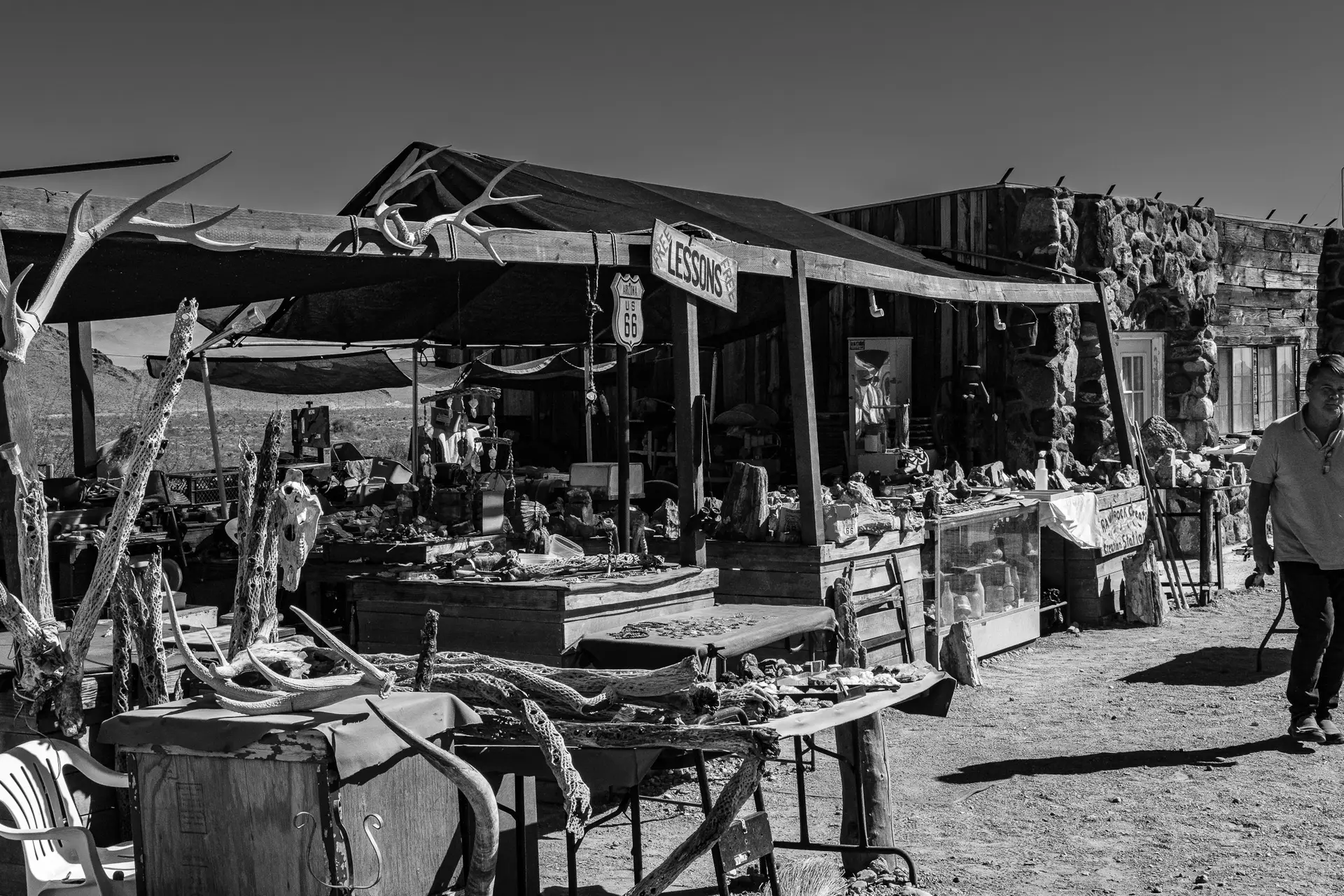
From the beginning, Cool Springs functioned as more than a gas station. It was a gathering point, a supply stop, and a place where travelers could stock up before entering the pass. That tradition continues today in its outdoor market. When I visited, several tables sat outside, filled with Route 66 memorabilia, small antiques, and assorted trinkets.
Some were marked for sale through an honor system, with nothing more than a simple bowl for customers to leave their payment. In an age where such trust is rare, the gesture stands out. It creates a connection between the visitors of today and the travelers of the past. Just as people once trusted that Cool Springs would provide fuel, food, or rest before the climb, modern visitors trust one another to keep the market alive. In this way, the station preserves not only its walls but also its spirit of shared responsibility.
The Famous Warning Sign
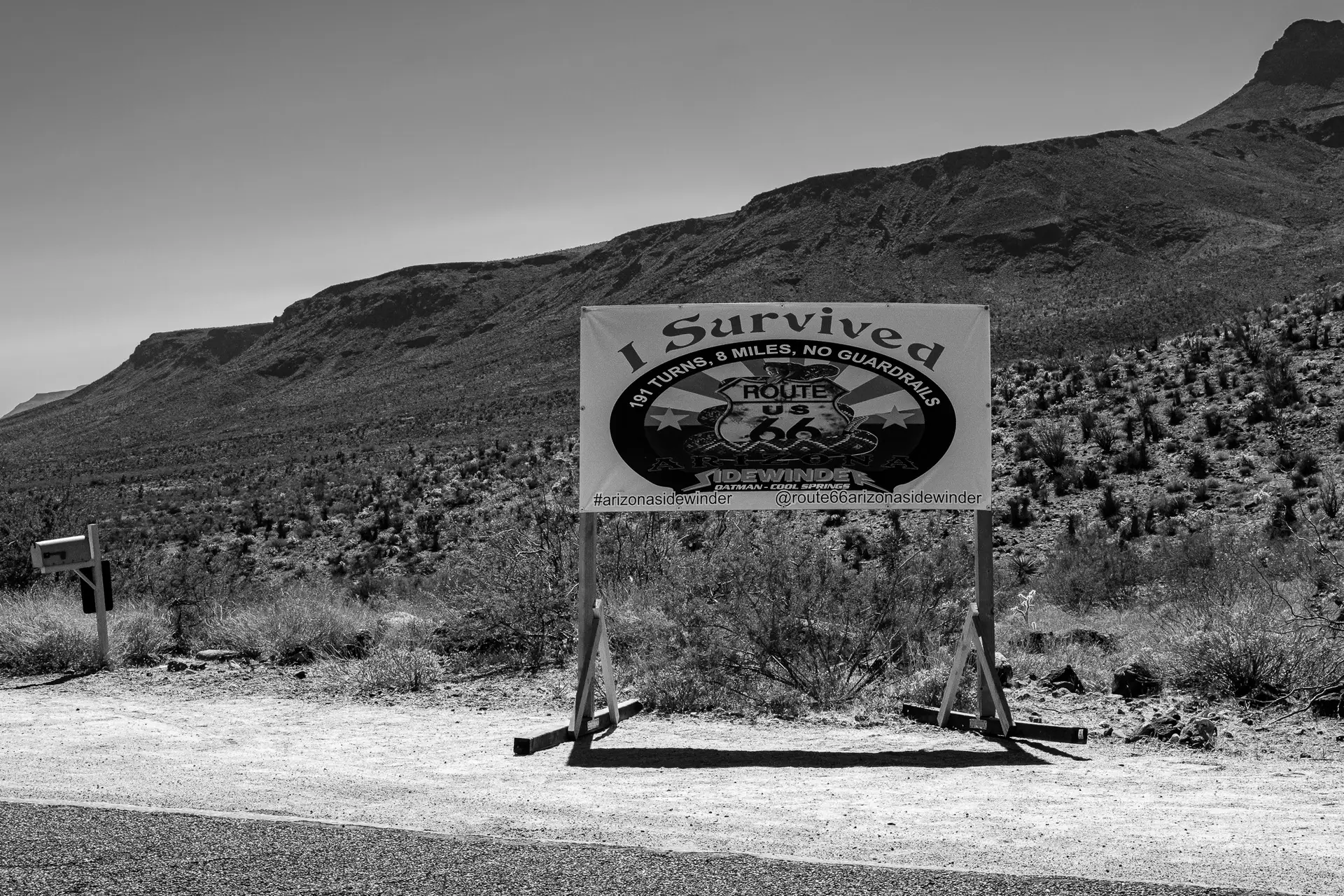
Just past Cool Springs stands one of the most recognizable Route 66 signs in Arizona. Painted boldly on a billboard, it declares: “I survived 191 turns, 8 miles, no guard rails.” The sign faces westbound travelers who have already come down from Oatman, but for those driving east toward the pass, it provides a dramatic preview of the road ahead.
This stretch of Route 66 was feared in its day, with narrow curves, steep drop-offs, and virtually no protective barriers. Families preparing to make the climb often stopped at Cool Springs first to ready themselves. Today, the sign continues that tradition by linking the station directly to the challenge of Sitgreaves Pass. It captures both the excitement and the danger that defined the Mother Road. Positioned so close to the restored station, it remains one of the most photographed warnings on all of Route 66.
Enduring Echoes of Desert Hospitality
While the cabins that once stood beside Cool Springs are long gone, the station itself still represents the hospitality that defined roadside travel. What remains today is not simply a rebuilt gas stop but a landmark that honors the endurance of the people who braved this desert stretch.
The stone walls, the honor-system market, and the scattered vintage vehicles all speak to the history of a place that was always more than a business. Travelers pause here not only to take photographs but also to experience a piece of what road culture once meant. Many linger to share stories, rest in the desert air, or reflect on how far this site has come since its near-ruin. In that way, Cool Springs remains a living link to the culture of trust, perseverance, and community that shaped the early years of American highway travel.stories, and appreciate the effort that went into bringing it back from ruin. In that way, Cool Springs offers more than souvenirs or photo opportunities; it offers a connection to the culture of trust, perseverance, and community that defined early American road travel.
Golden Valley, Arizona
Golden Valley spreads across the basin between the Cerbat Mountains on the east and the Black Mountains to the west. Its name fits the way the ridges catch light at sunrise and sunset, glowing gold against the desert horizon. The area supported small-scale mining and ranching in its early years, but it gained lasting recognition through its role as a corridor for Route 66. Travelers crossing this stretch found it both beautiful and intimidating. The flat basin gave way to sudden climbs, and the road quickly became one of the most demanding in Arizona. Even after Interstate 40 bypassed the region, this part of the Mother Road remained famous for its scenery and its difficulty. For many who seek out Route 66 today, driving through Golden Valley and over Sitgreaves Pass is a chance to reconnect with both the beauty and the challenge of historic highway travel.
Ed’s Camp and the Kactus Café
If Cool Springs represents restoration, Ed’s Camp illustrates decline. Established in 1919 by miner Ed Edgerton, the site began as a rough camp that provided travelers with gas, food, and a place to rest long before Route 66 received its official designation. Over time, Ed added a gas station, small cabins, and the Cactus Café, which became well known for its simple, hearty meals.
Ed had a reputation for humor, famously posting a sign that read, “Free room and board — if you don’t pay in advance.” For decades the camp thrived, serving as a key stop between Kingman and Oatman. But the shift of traffic to I-40 in the 1960s marked its decline. Today, the weathered buildings remain in partial ruin, framed by the same unnamed mesa in the background. The remains of Ed’s Camp stand as both a relic of the past and a reminder of how fragile roadside enterprises could be when travelers moved elsewhere.
The Story These Stops Tell
Together, Cool Springs Station Route 66 Arizona and Ed’s Camp tell two very different stories of life along the Mother Road. One has been restored, preserved, and given new purpose as a stop for modern travelers. The other lingers in ruin, its walls collapsing under the weight of time and neglect. Both, however, remain powerful reminders of what Route 66 once meant to those who traveled it. They highlight how roadside businesses could rise, thrive, and disappear, sometimes within a single lifetime. They also remind us why preserving these sites matters. Without them, much of the human story of Route 66 would be lost to memory. Standing here, you can feel both the resilience and the fragility of American roadside culture, caught between the pull of restoration and the inevitability of ruin.
Safe travels, RJ