Chili, Neon, and a Courthouse Dome: Carlinville, Illinois

Chili, Neon, and a Courthouse Dome: Carlinville, Illinois

I rolled into Carlinville, Illinois, on a bright February afternoon back in 2020. The sky was full of pillowy white clouds and the courthouse dome rose above East Main like a crown. Route 66 once passed through here, but only briefly, from 1926 to 1930. Even so, Carlinville feels like the kind of place where the Mother Road spirit still lingers—tucked into neon, old theaters, and storefronts that have stood for generations.

The Marvel Theatre

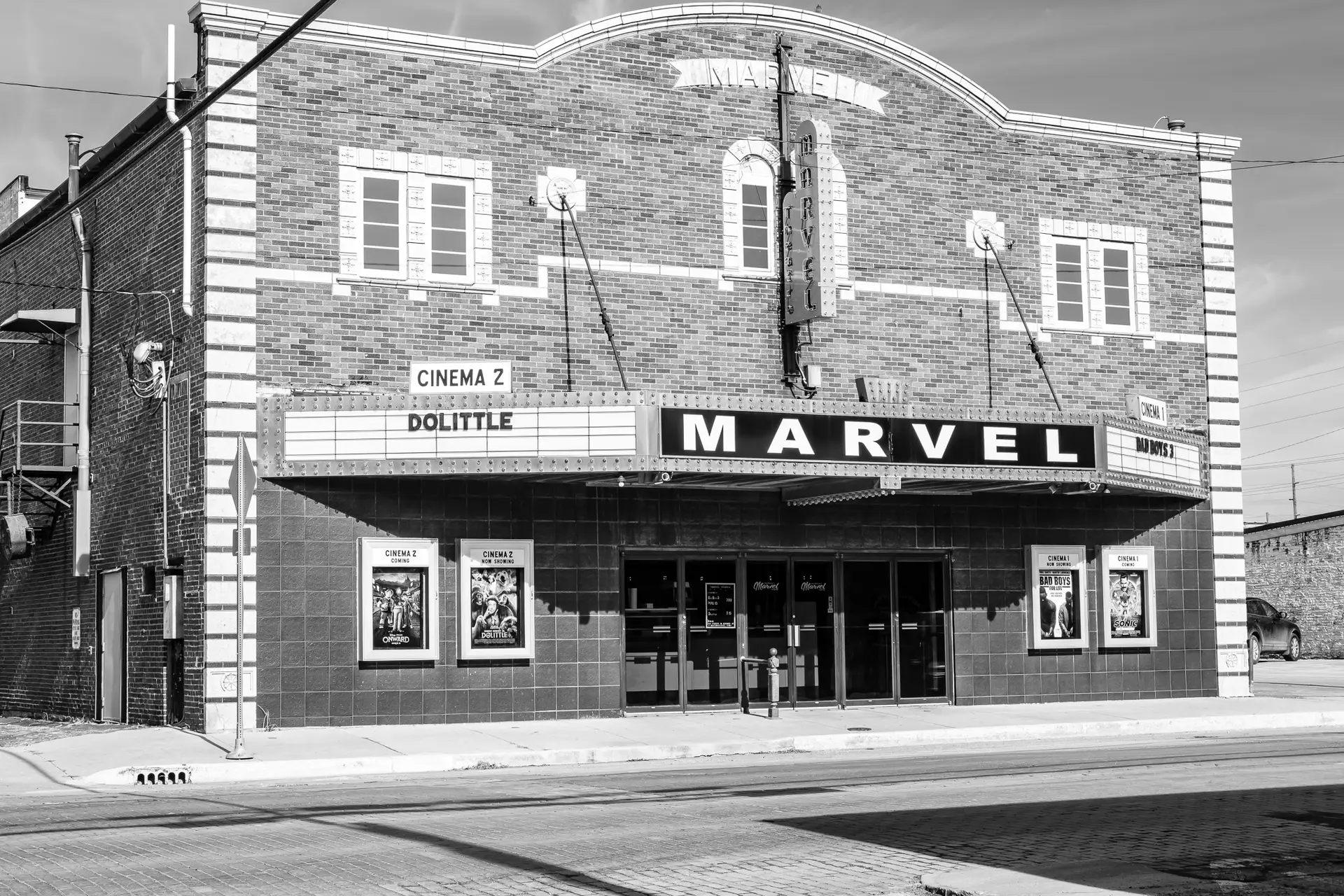
The Marvel Theatre has anchored Carlinville’s Main Street since 1920, surviving fire, remodeling, and near closure to keep its screen glowing. Photographed February 3, 2020 © RJL Creative LLC. Use without permission is strictly prohibited.
Early Years and Fire

On West Main Street, the Marvel Theatre still holds its ground. It first opened in 1920, built by Frank and Frieda Paul as a movie palace for silent films. It could seat almost 900 people and even had room for live music.

In December 1926, fire destroyed the theater and caused $60,000 in damages. The Pauls refused to let it end there. 

They rebuilt, and by January 1928 the Marvel reopened with The Gay Retreat. The new building added a balcony, dressing rooms, and an upgraded projection system.

Rebirth and Survival

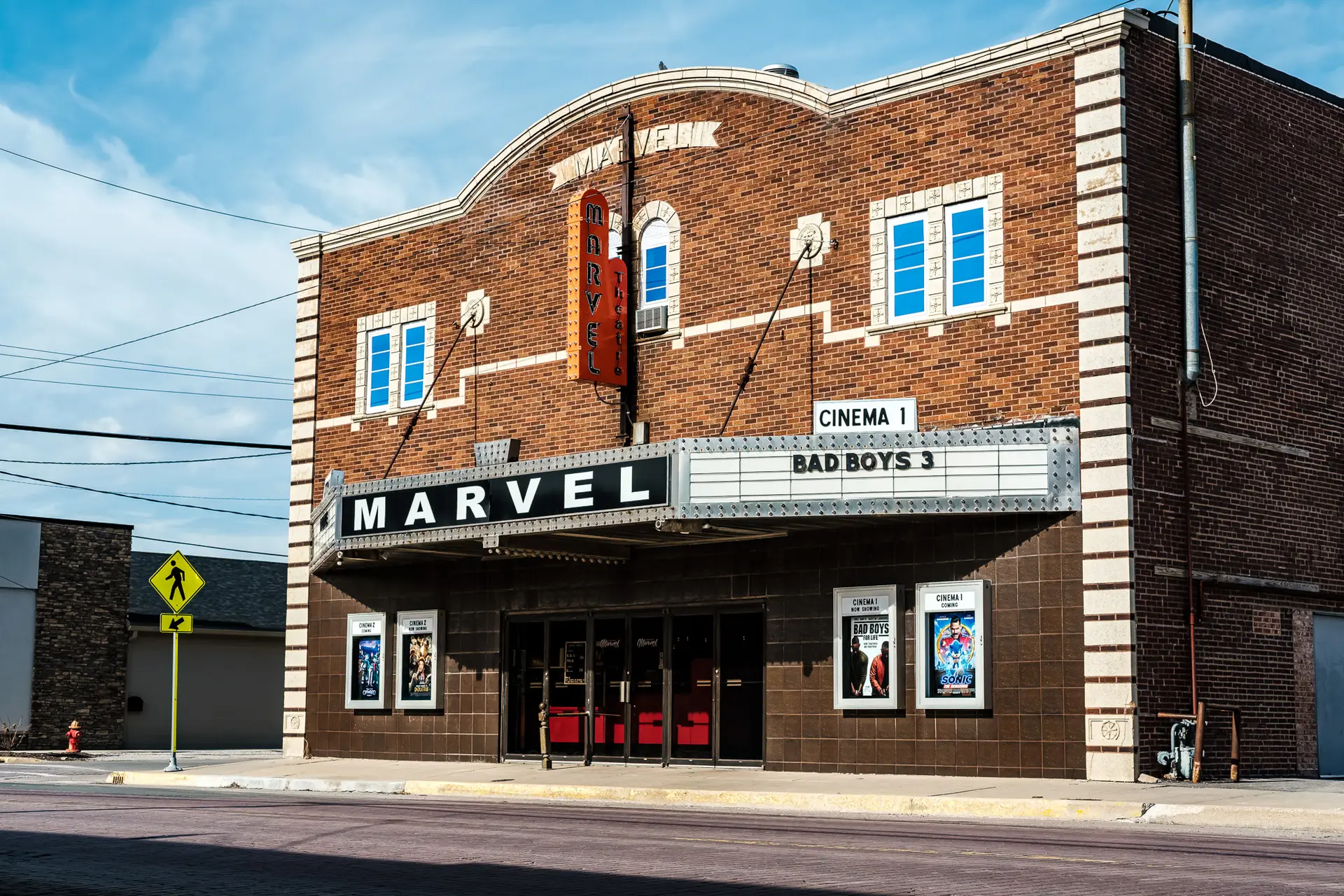
The Marvel continued to adapt as times changed. A bright new marquee arrived in the 1960s. In the 1970s, the single auditorium was split into two screens so the theater could stay competitive.

The doors closed briefly in 2014, but Carlinville wasn’t ready to lose its movie house.

Rebuilt in 1928 after a devastating fire, the Marvel added a balcony and modern comforts. Nearly a century later, it’s still showing first-run films. Photographed February 3, 2020 © RJL Creative LLC. Use without permission is strictly prohibited.
New owners reopened it in 2015, and it continues to show first-run films today. Standing under the marquee today feels like stepping into a scrapbook of small-town America.

Heinz Furniture & the Neon Sign

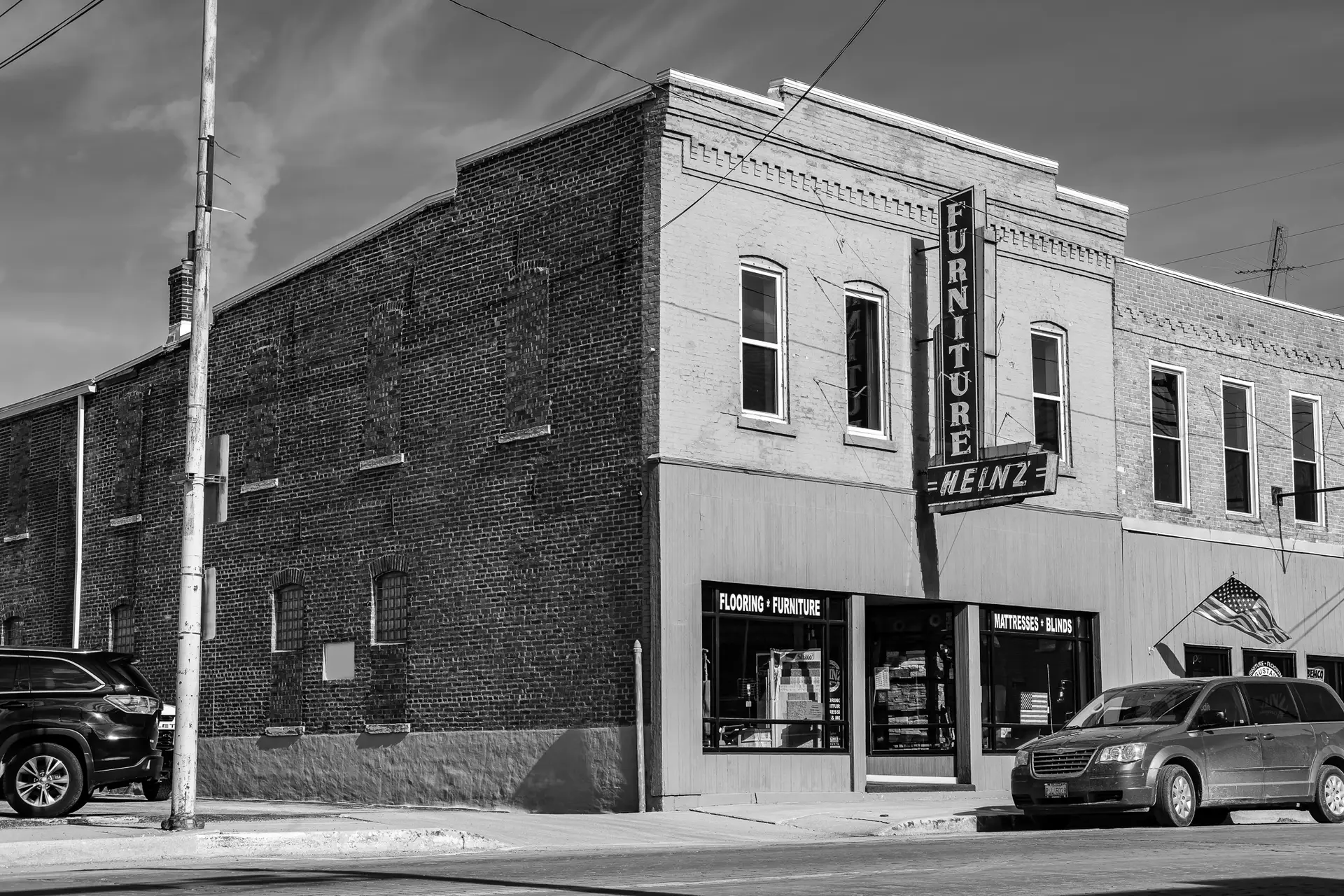
Heinz Furniture has anchored Carlinville’s Main Street since 1854, one of Illinois’ oldest family-run businesses. Photographed February 3, 2020 © RJL Creative LLC. Use without permission is strictly prohibited.
Family Legacy

Heinz Furniture has been part of Carlinville since 1854, making it one of the oldest businesses on West Main. German immigrant Peter Heinz opened the store as a furniture and flooring shop, and his sons later expanded it. The youngest, Gustav, eventually took over and renamed it the Gustav Heinz Company. For a long time, it even handled funerals —

not unusual in small-town America, where one business often wore many hats. That part of the operation spun off in the 1970s, but the furniture store stayed right where it had always been

The Neon Era

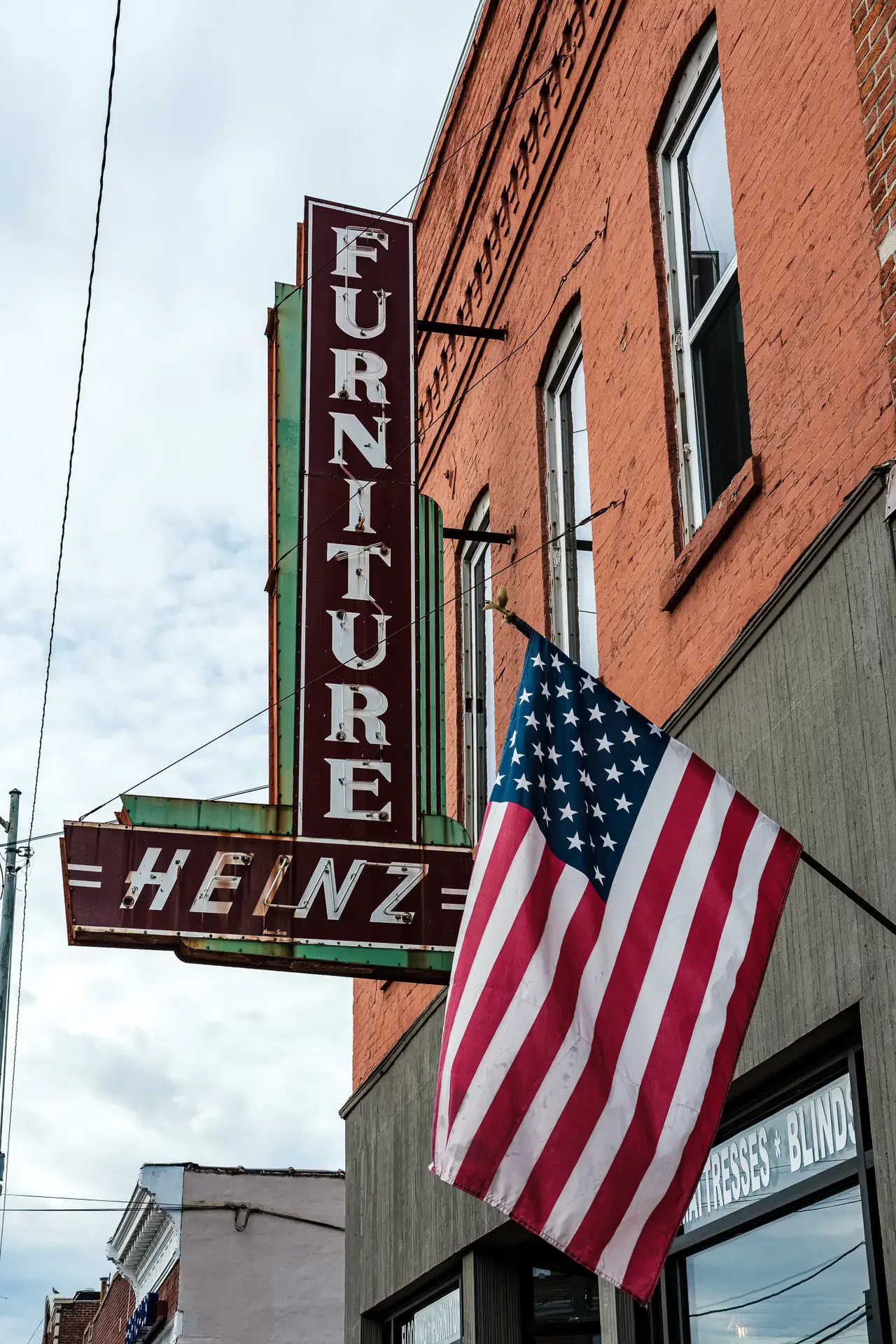
By the middle of the 20th century, the storefront at 208 West Main had gained a bold neon sign. It projected over the sidewalk in bright letters announcing “Heinz Furniture.” For decades it was a beacon on the square, lit or not. Signs like that once defined main streets everywhere, but most have been stripped away.

When I passed through in February 2020, the neon hadn’t lit in years. Even so, it still carried the weight of mid-century character. In the daytime, the tubing and bold letters had the look of something that should buzz back to life at dusk. My black-and-white shots show it in context against the row of storefronts. The color close-up with the American flag feels almost symbolic — a little slice of mid-century America frozen in place.


Restoration and Loss

In 2016, new owners hoped to bring the sign back. For a short while, it flickered again, but in 2022 high winds damaged it beyond repair. One side was salvaged and now hangs on the building’s side wall. The façade was restored to its 1860s appearance, with painted block letters across the front and upper windows uncovered again.

The restoration is handsome, and it reconnects the building to its 19th-century origins. But the neon is gone. I feel fortunate to have photographed it while it still marked the front of the store. These pictures don’t just capture a storefront — they document a moment in between eras, right before a piece of Americana disappeared.

My 2020 photo captured Heinz’s sign with the American flag — a mix of mid-century neon and small-town tradition now gone from the façade. Photographed February 3, 2020 © RJL Creative LLC. Use without permission is strictly prohibited.
Banks, Taverns & the Courthouse Dome

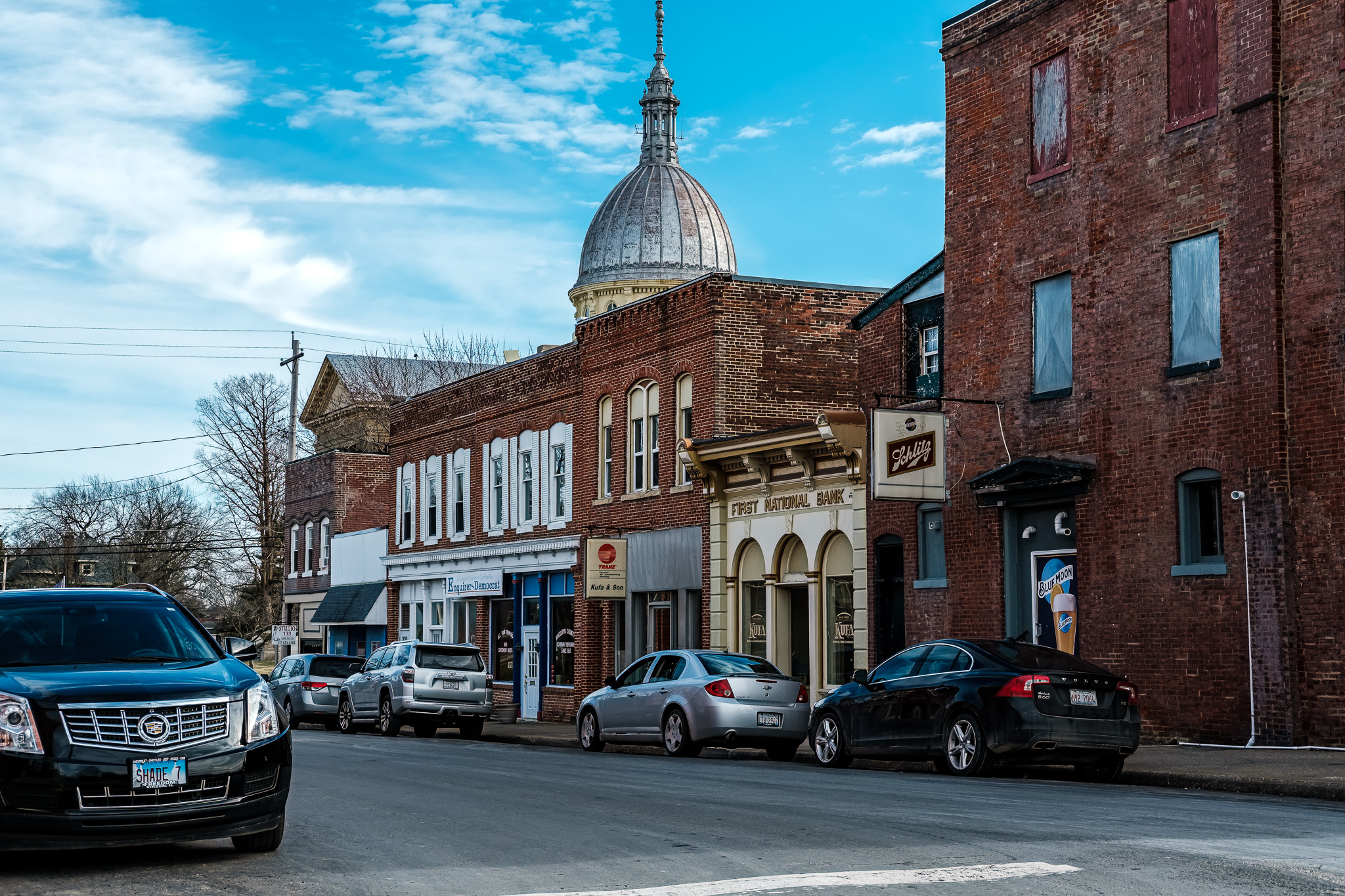
The old First National Bank with the courthouse dome beyond, a Schlitz sign lingering in the frame. Photographed February 3, 2020 © RJL Creative LLC. Use without permission is strictly prohibited.
The only time the courthouse dome entered my frame that day was almost by accident. Off in the distance, it rises above the rooftops on East Main. Carlinville’s “Million-Dollar Courthouse,” finished in 1870, earned its nickname when costs ballooned twenty times over budget. It sits a few blocks east of the square instead of at its center, which sets Carlinville apart from most Illinois county seats.

Closer in, the scene tells a quieter story. The one-story First National Bank building still shows the care of early 20th-century design: a centered doorway with windows on each side, simple but solid. Today it’s part of KUFA Heating & Cooling, but the proportions and stonework remind you of its banking past.

A plastic Schlitz sign hangs on the block too, a remnant of the mid-century tavern era. It may feel out of place today, but it adds another layer of small-town life to the picture. Together, the courthouse dome, the old bank, and that sign make an unlikely trio that captures Carlinville’s mix of civic, commercial, and everyday history in one frame.

Carlinville’s Town Square

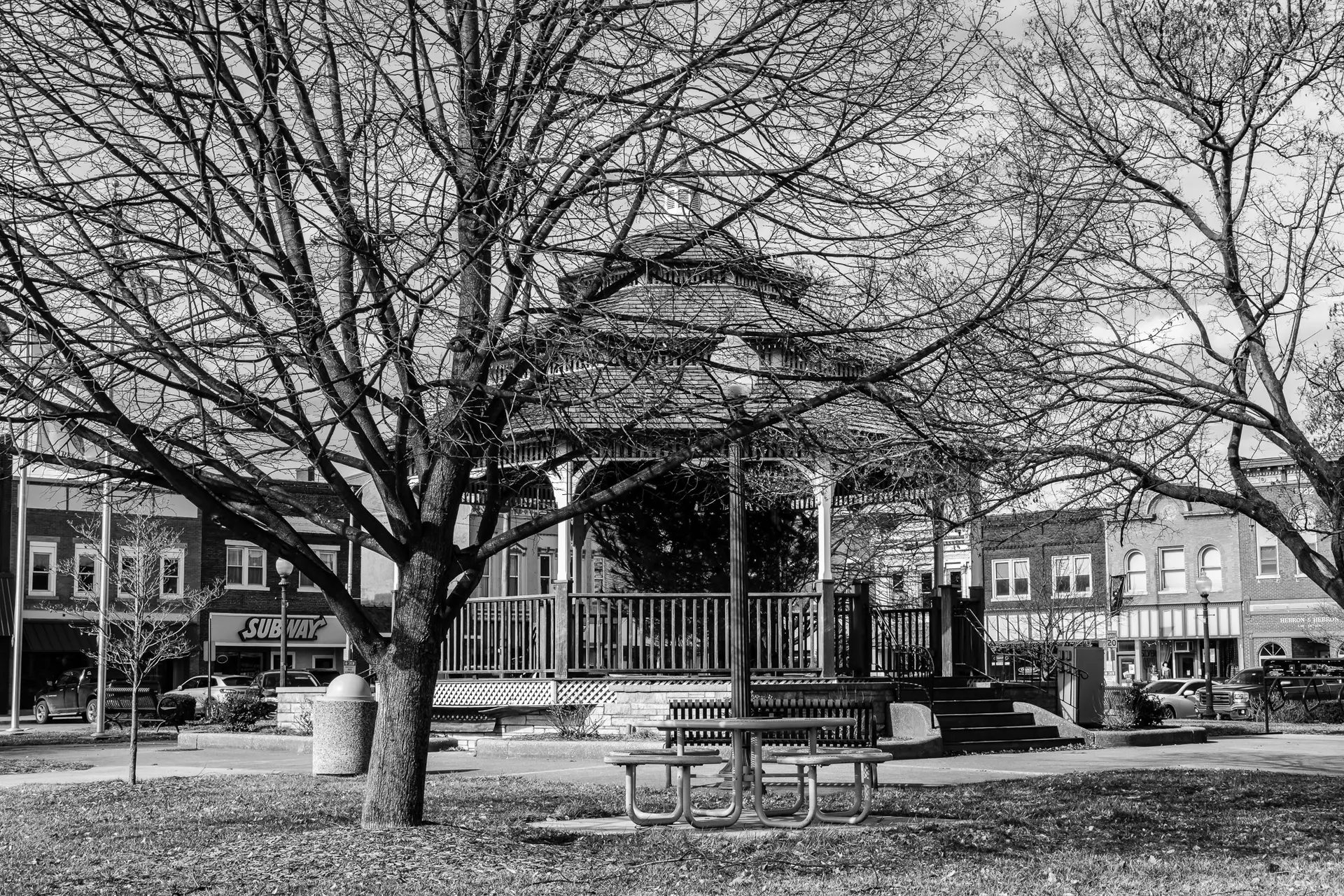
A few steps back from East Main, the mood shifts. Carlinville’s town square isn’t dominated by a courthouse at all. Instead, it’s a shaded park with a gazebo at the center and storefronts standing guard around the edges.

That difference changes the feel. Many Illinois squares have the weight of government in the middle. Carlinville’s has the openness of a commons, a place for concerts, craft fairs, or just a bench in the sun. The surrounding blocks still

Carlinville’s town square, a green commons with a central gazebo and historic storefronts around it. Photographed February 3, 2020 © RJL Creative LLC. Use without permission is strictly prohibited.
show their 19th-century brickwork and cornices, giving the space a backdrop that feels both historic and lived-in.

On that February afternoon, the square looked calm, but it’s easy to imagine it filled with people during a summer event. The gazebo anchors it now, the way the courthouse dome anchors East Main. Each spot plays its own role in Carlinville’s identity.

Taylor’s Mexican Chili Parlor

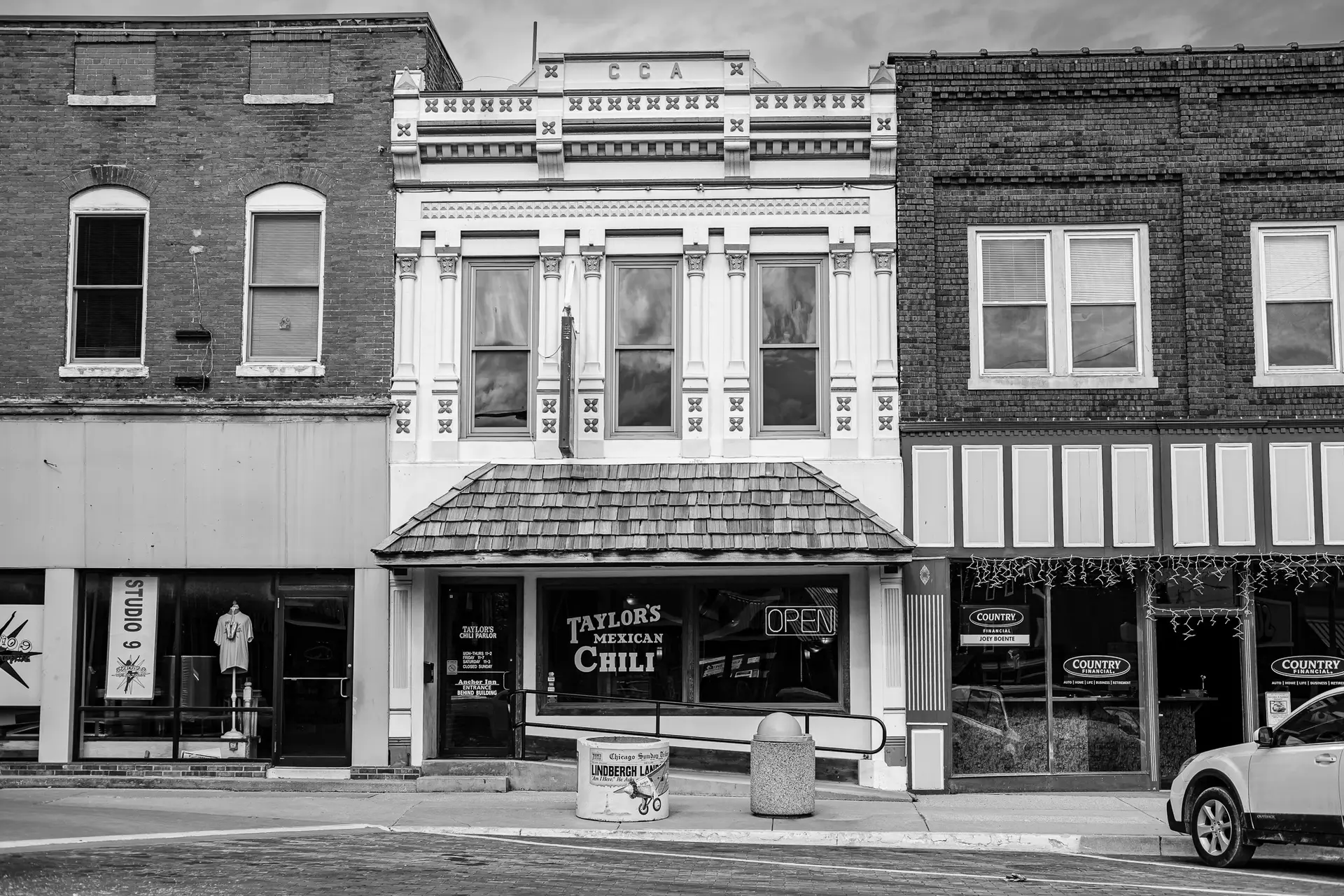
Taylor’s Mexican Chili Parlor has served Carlinville since 1904, now housed in a late-19th-century building on the north side of the square. Photographed February 3, 2020 © RJL Creative LLC. Use without permission is strictly prohibited.
On the north side of the square, Taylor’s Mexican Chili Parlor carries on a tradition that began here in 1904. Charles O. Taylor learned a chili recipe at the St. Louis World’s Fair and brought it home to Carlinville. His parlor became known for fast service, strict rules, and chili that kept people coming back.

In 1982, Taylor’s moved into its current home at 510 North Side Square. The building itself is a late-19th-century commercial block with-

decorative pilasters and tall windows. The parapet bears the initials “CCA”, though no one seems to know exactly what they stand for. Carlinville Commercial Association, perhaps? If anyone knows, I’d love to hear the story.

That mix of quirky rules, family tradition, and ornate architecture makes Taylor’s more than just a place to eat. It’s a Carlinville institution.

The Anderson Bank Building

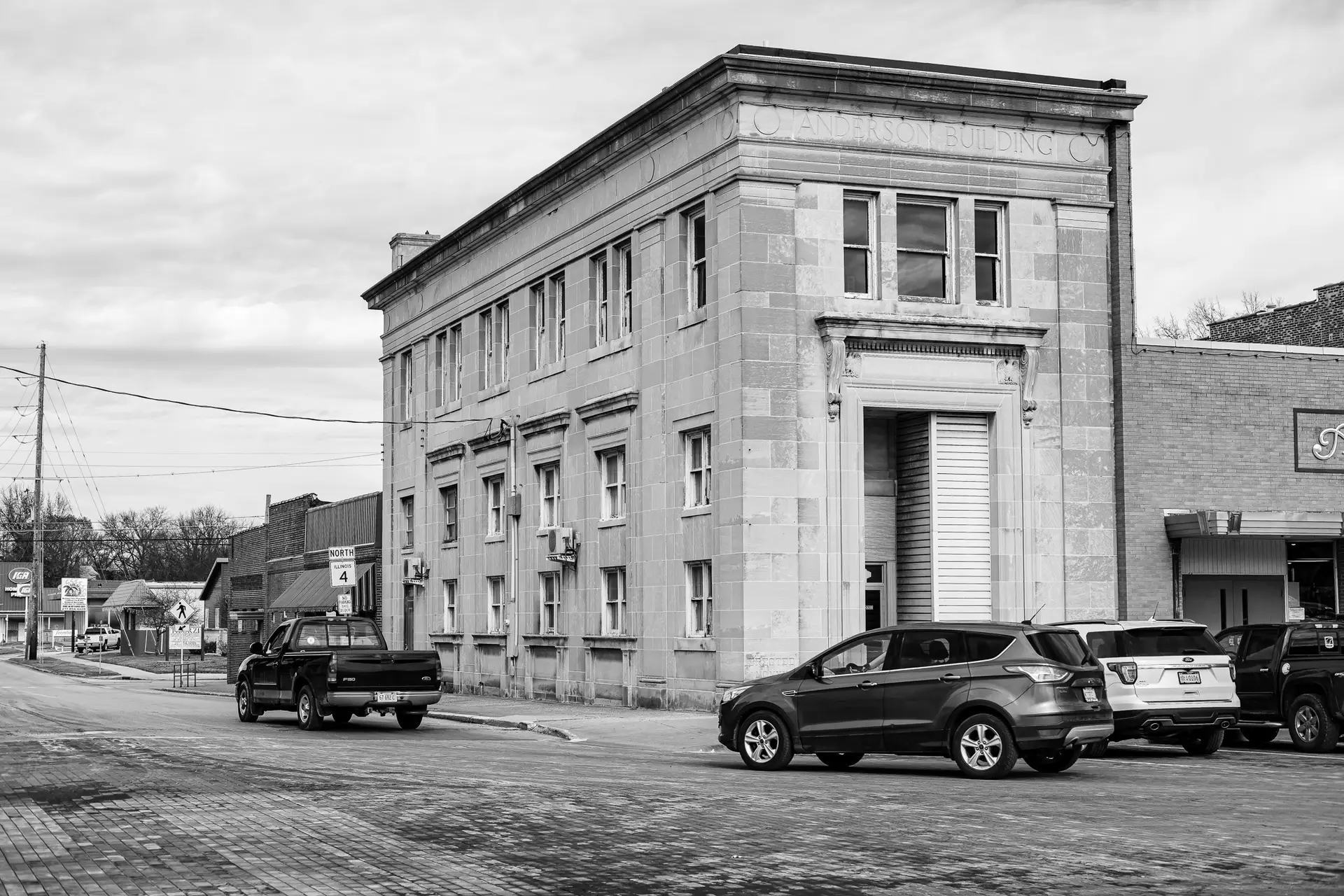
Across the square, the Anderson Bank Building projects strength. Built in 1920 at a cost of $100,000, it housed the C.H.C. Anderson Banking Company. The solid white stone and fortress-like style were meant to reassure depositors during the boom years.

The Great Depression ended that optimism. The bank failed in 1933, and by 1941 it was gone. The building remained, though, and still dominates the block today.

The Anderson Bank Building, built in 1920 for $100,000, still stands like a stone sentinel on Carlinville’s square. Photographed February 3, 2020 © RJL Creative LLC. Use without permission is strictly prohibited.
While changes to its entrance mean it isn’t listed as a “contributing structure” on the National Register, its presence is undeniable. The Anderson Bank Building shows Carlinville’s ambition in the 1920s and its struggles a decade later. It stands as a reminder of how fragile prosperity can be.

Looking Back Down Main

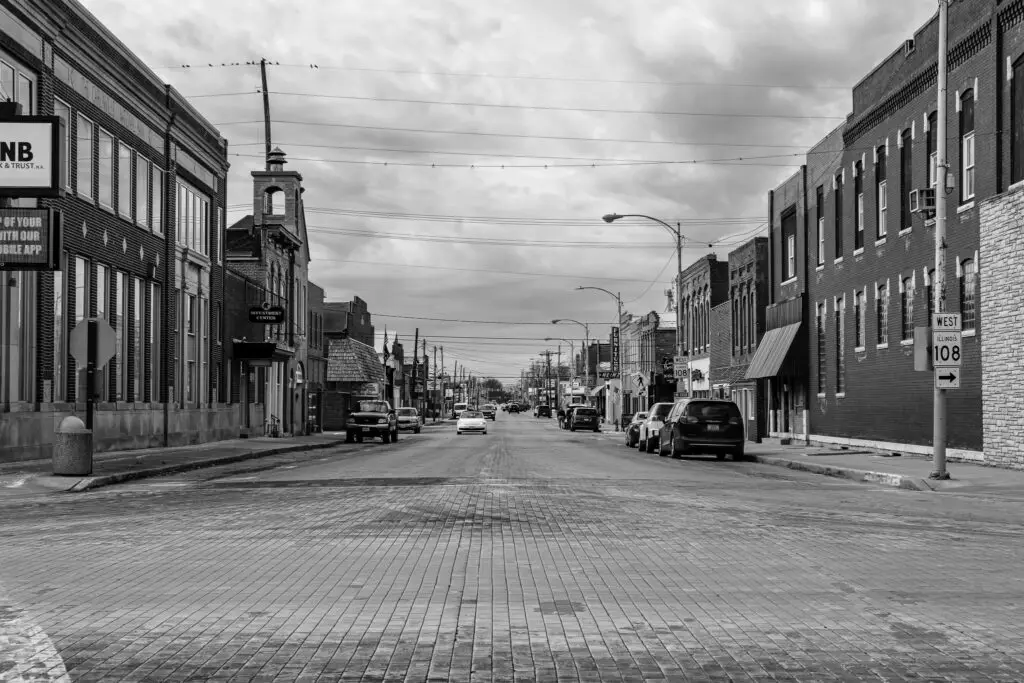
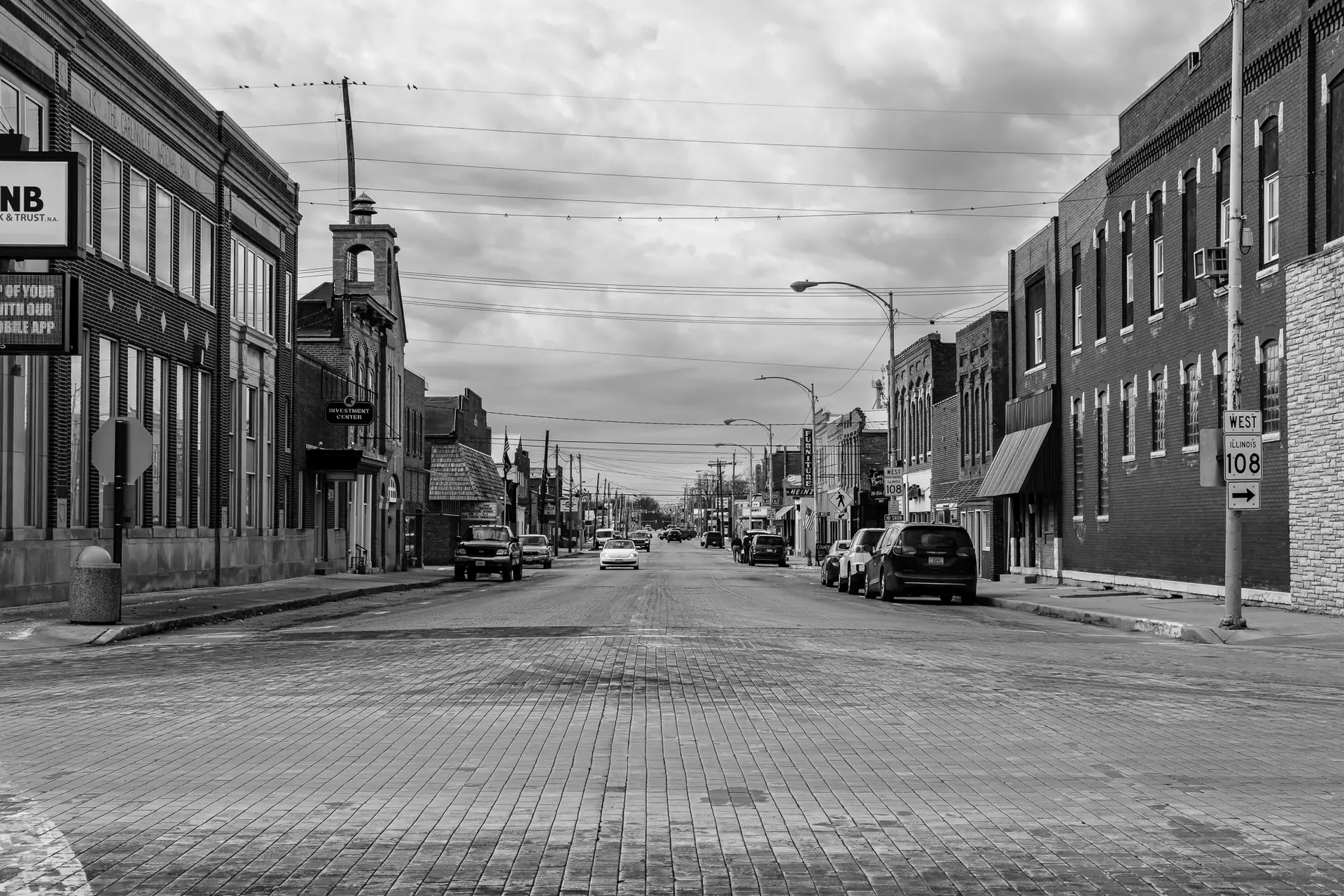
Looking west from Carlinville’s square along West Main: Heinz Furniture and the Marvel Theatre to the right, the old City Hall to the left. Photographed February 3, 2020 © RJL Creative LLC. Use without permission is strictly prohibited.

From the square, West Main stretches out like a timeline. On the right sits Heinz Furniture and the Marvel Theatre. On the left is the old City Hall. Each side of the street carries its own piece of Carlinville’s story.

That view ties everything together. A theater that rose from fire. A furniture store that has endured since the 1850s. A chili parlor rooted in a World’s Fair recipe. And a bank building that-

fell victim to the Depression. Each one adds a layer, brick by brick.

I only spent a short time here on that February day, but Carlinville left a mark. The courthouse dome still catches the light, the square still feels like a commons, and the storefronts still whisper stories if you stop to listen. Not every town lingers in memory after you leave. Carlinville does.

Safe travels, RJ.

Want to explore more retro gems? Stay Connected! 👍 Like and follow on Facebook, and 📸 Follow me on Instagram

As an Amazon associate, I earn from eligible purchases. Prices and availability are subject to change. Check the relevant Amazon site for current details.