The Book That Changed Documentary Photography
This week’s Roadside Reads and Reels spotlight is on American Photographs by Walker Evans. Originally published in 1938 to accompany Evans’ landmark solo exhibition at the Museum of Modern Art, the book remains one of the most influential photobooks of the twentieth century. It is not just a collection of images. Instead, it is a quietly radical portrait of the United States during the Great Depression, revealing the soul of a country through storefronts, faces, signage, and silence.
Evans’ Eye for the Ordinary
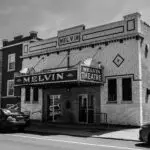
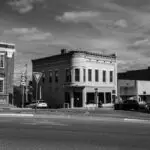
What stands out even now is Evans’ restraint. There is no sentimentality here, no manipulation of emotion. He simply shows a boarded-up façade, a pair of weary eyes, the decaying elegance of small-town architecture. What’s more, the power of the book lies in its sequencing. A steady rhythm builds as one image flows into the next, echoing the way a traveler might take in America from a passing train or a slow-moving car. As a result, the work feels both poetic and unshakably real.
Redefining American Art
Evans was not interested in capturing the spectacular. Instead, he photographed the ordinary. Vernacular buildings, anonymous people, everyday scenes. In doing so, he redefined what American art could look like. Furthermore, he elevated the overlooked. His influence is everywhere today, from documentary photography to minimalist Instagram feeds. Still, American Photographs is the source. It is the blueprint.
A Personal St. Louis Connection
One of the things that initially drew me to this book was learning that Walker Evans was from St. Louis — same as me. That hometown connection made the book feel more personal right off the bat.
I found myself hoping there might be at least a few photos from the city. However, unless I missed something, it looks like St. Louis did not make the cut. At one point, I thought I spotted a local photo: a garage with “Cherokee Parts Store Garage Work” painted on the doors. St. Louis has a Cherokee neighborhood named after the street that runs through it. But as it turns out, that was not taken in St. Louis either. Still, it was fun to imagine the possibility for a minute.
Final Thoughts
The book does include an index — actually two of them. You can look up photo captions and, in some cases, find the location. But you have to flip to the middle or end of the book and match things by page number. Personally, I would have preferred having the information right there on or near the photo. For someone who likes to dig deeper, revisit places, or just know where something was taken, it makes a difference.
That said, none of this takes away from the brilliance of the work. The black-and-white images are timeless, quiet, and deeply human. Consequently, if you have ever tried to photograph a faded sign, a weathered storefront, or an ordinary moment that somehow feels bigger, American Photographs will speak to you.
Safe travels, RJ
American Photographs by Walker Evans (Museum of Modern Art) is available on Amazon. other books by Walker Evans include: Signs, Let Us Now Praise Famous Men, Many Are Called,First and Last, and Polaroids
You might also enjoy: The Americans by Robert Frank, Uncommon Places by Stephen Shore, Sleeping by the Mississippi by Alec Soth, and Roadside America, by John Margolies.