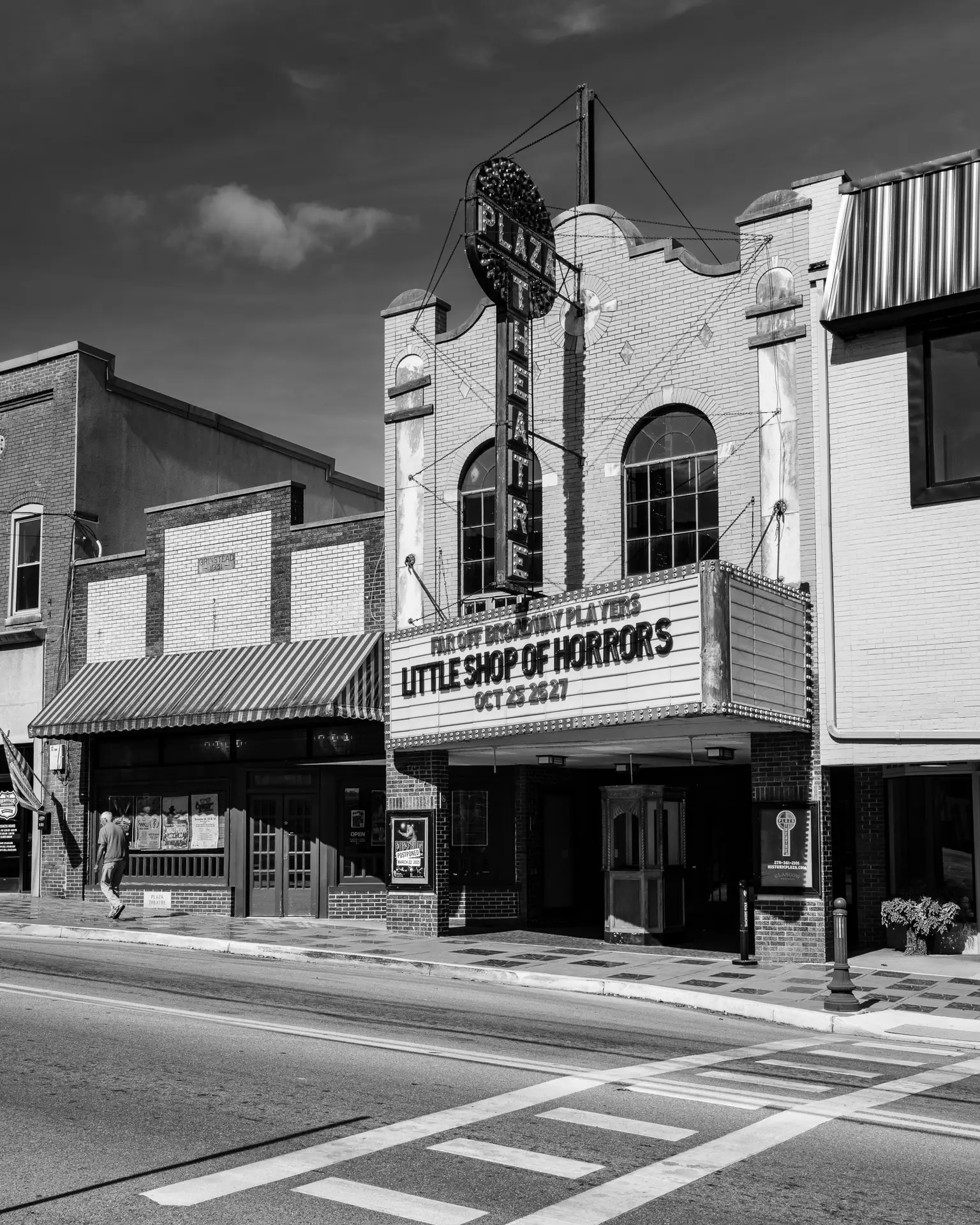
The Plaza Theatre — Glasgow’s Cultural Landmark
The Plaza Theatre is more than just a building. It is a cultural anchor in Glasgow, Kentucky, and a reminder of how entertainment shaped small-town life. Located at 115 East Main Street, the theatre has stood for nearly a century as both a movie house and a live performance venue. Its history mirrors the rise, fall, and revival of many classic theaters across America.
Opening and Early Years
The Plaza Theatre first opened its doors in August 1934. Its debut film was Harold Lloyd’s The Cat’s Paw, a popular comedy of the era. With nearly 1,500 seats and an atmospheric design by architect Dixon Rapp, the building quickly became a centerpiece of downtown Glasgow. During its early years, it hosted a steady stream of films, vaudeville shows, and community gatherings.
A Stage for Music and Stars
By the mid-20th century, the Plaza was known as more than a movie theater. Country music acts such as Minnie Pearl, Loretta Lynn, and the Carter Family performed on its stage.
Touring stars like Roy Rogers and Gene Autry also entertained Glasgow crowds. These performances turned the Plaza into a major stop on the regional entertainment circuit. For many locals, it was their first chance to see national talent in person.
Decline and Closure
The prosperity of the Plaza slowed as new multiplex theaters appeared in the 1970s. The rise of home television also reduced audiences. Ownership changes could not stop the decline, and the building eventually closed to regular films. For years, the once proud marquee stood dark, reminding residents of a more vibrant past.
Restoration and Revival
In 2001, the City of Glasgow purchased the Plaza Theatre. Restoration followed, supported by state tourism funds and local donors. The project modernized the interior while preserving historic details. By 2005, the theatre reopened as a multi-purpose venue –
with more than 1,000 seats. Today, it hosts concerts, musicals, graduations, and community events. Acts such as Chris Stapleton and Loretta Lynn have performed here in the 21st century.
Observations from October 14, 2024
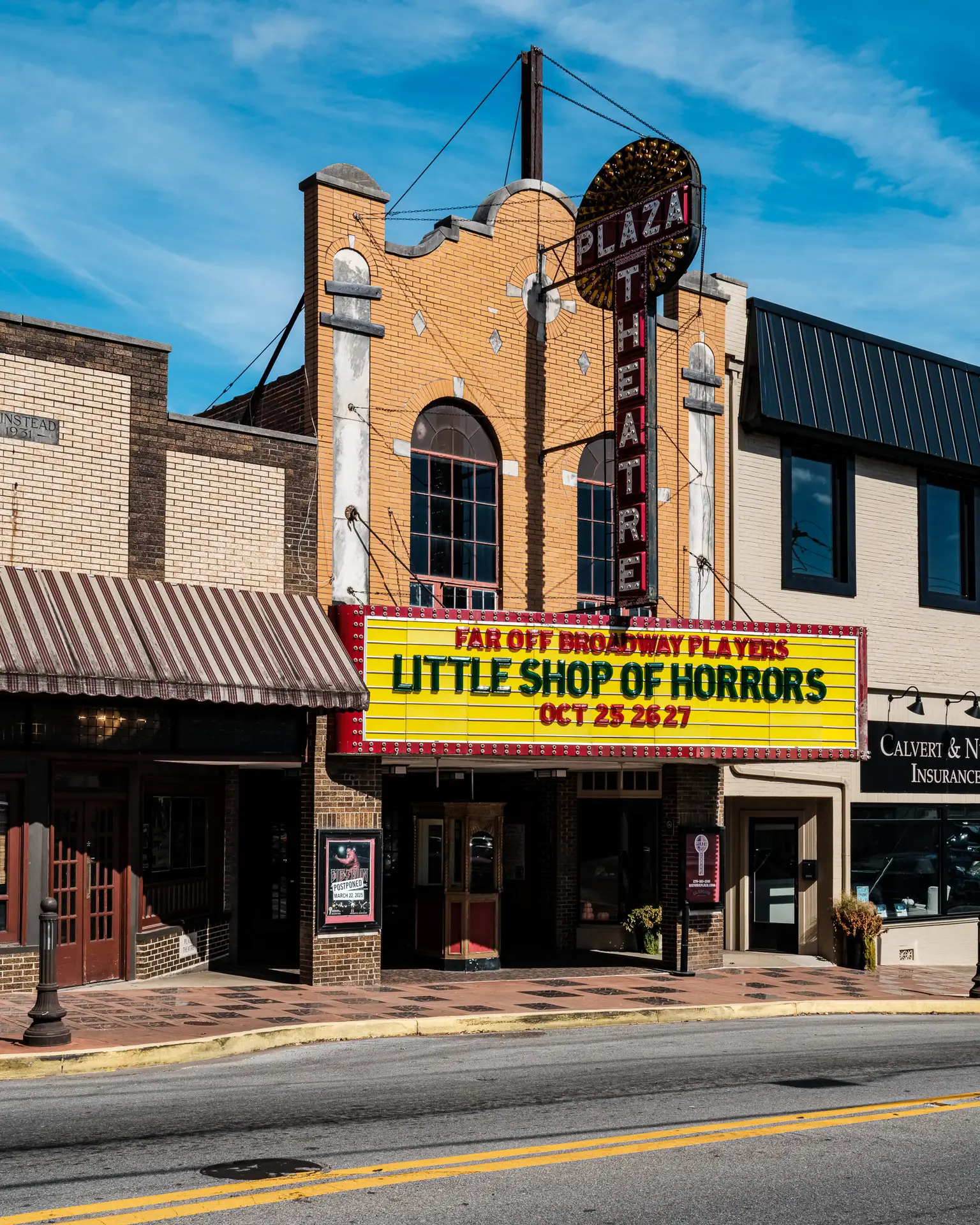
Seen in black and white, the Plaza Theatre takes on the atmosphere of its early years. The marquee reads crisp and white, and the strong contrast draws attention to the vertical “PLAZA” sign and decorative stonework. In color, though, different details emerge. The building’s beige façade softens its presence against the streetscape, while the marquee shows its unusual yellow plastic backing — a clear departure from the white glass panels common to 1930s theaters. The neon lettering on the vertical sign feels every bit like a product of the 1930s, tying the building back to its 1934 opening. Taken together, the two images reveal both the nostalgic drama of monochrome and the lived-in authenticity of color.
The Third National Bank — Glasgow’s Turn-of-the-Century Financial Anchor
Origins & Design
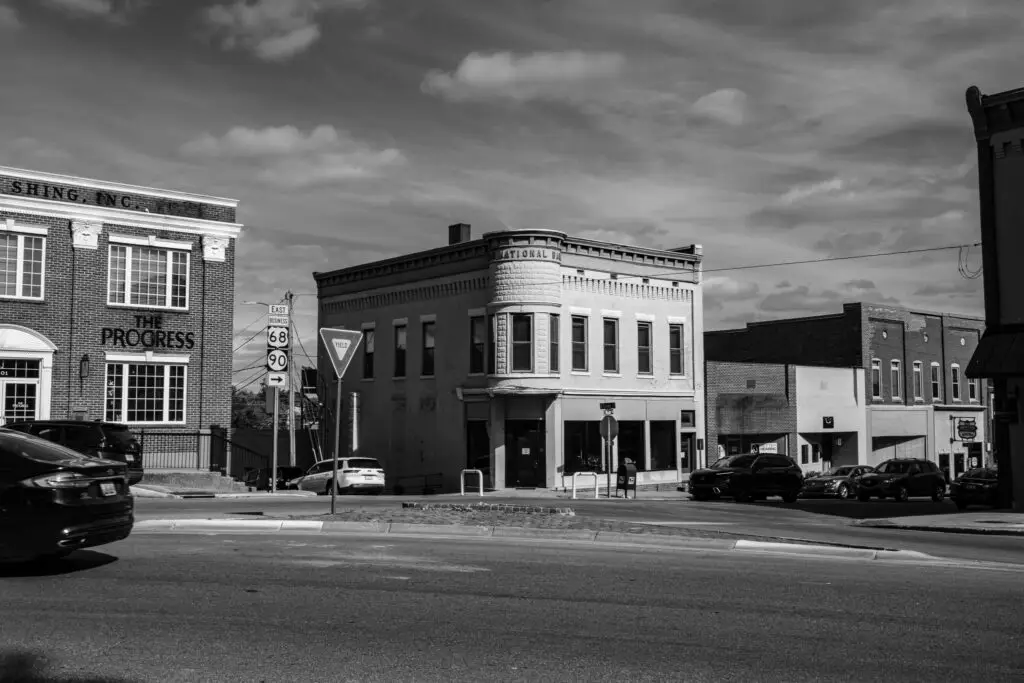
The Third National Bank building was erected in 1903 at the northeast corner of Green and Main Streets in Glasgow. It was built to replace earlier structures lost in a 1900 fire that devastated that block of downtown. The style is Victorian Italianate, marked by brick construction, stone sills and lintels, decorative corbelling, and a bracketed cornice. Above, pressed-tin detailing and porthole windows add visual interest to the façade.
When it opened, the Third National Bank symbolized Glasgow’s growing confidence and aspiration as a commercial center. Banking institutions were key to anchoring downtowns, financing local businesses, and signaling stability in a post-railroad era.
Banking Success, Decline, & Legacy
In the early decades, the Third National Bank stood among a set of stable banking institutions in Glasgow. However, during the Great Depression, the bank struggled like many across the country. Ultimately, both the First National and Third National banks in Glasgow failed in that era.
Despite its financial failure, the physical building remained. In fact, the building is listed as part of the Glasgow Central Business District on the National Register of Historic Places. Over time, changes in use, ownership, and condition have altered its ground floor — but its upper façade shows remarkable integrity of original architectural features.
A fire damaged parts of the structure in 1985, and since then it has been considered vacant in some assessments. This had led to its designation in some documents as non-contributing in parts, even if its historic form remains.
Observations from October 14, 2024
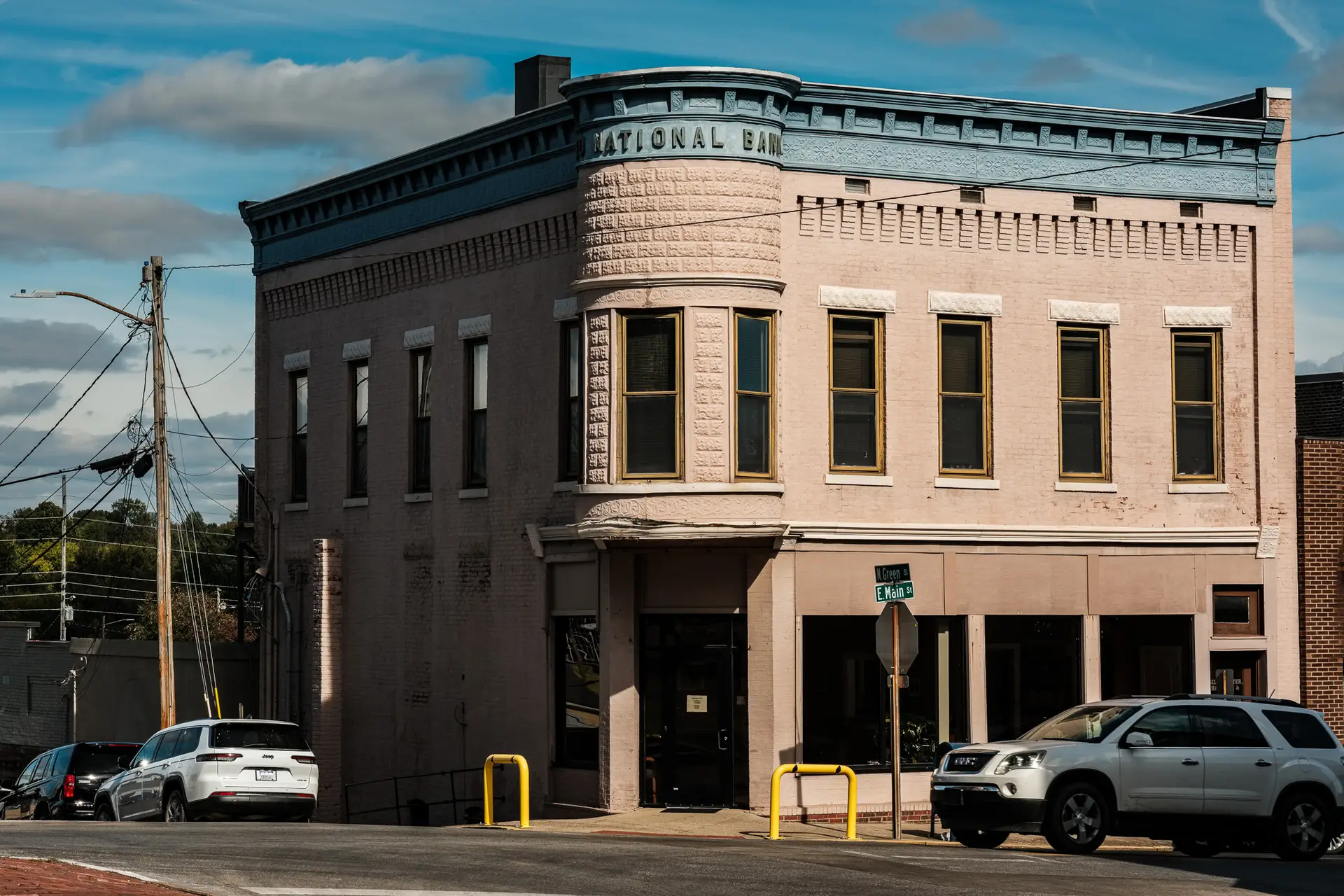
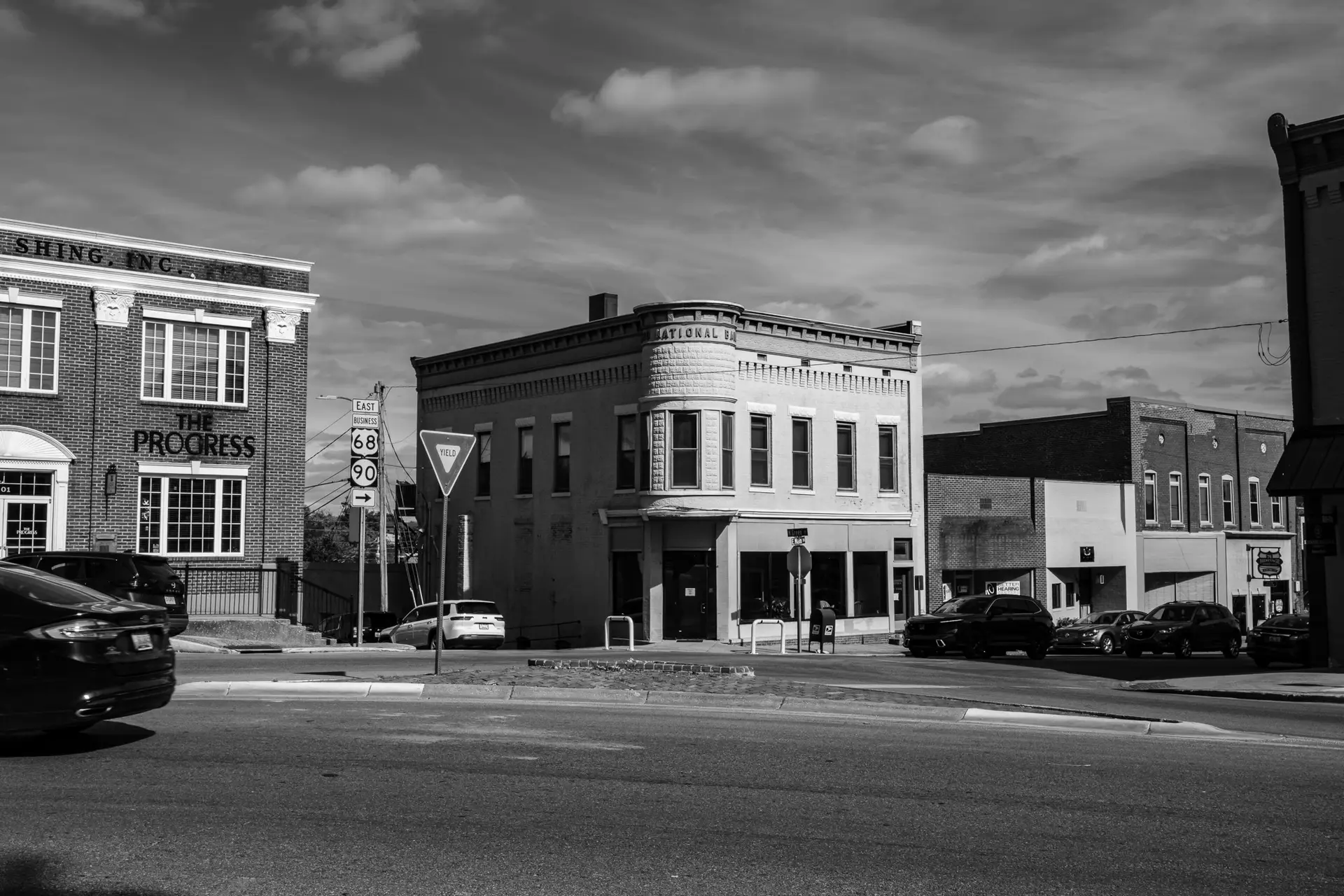
In your color photo of the Third National Bank, the warm tones of red or brown brick (depending on lighting) bring out its Victorian character. The decorative cornice and corbel tables still cast shadows across the façade. In a black-and-white wider view, the building’s silhouette and bracketed cornice become stronger compositional elements. The detail in the upper windows — the lintels, pressed tin-
or ornamental patterns — survives, giving a sense of the building’s original richness. Taken together, your two views (color corner, black and white wide) help the viewer compare the bank’s bold past with its more subtle present.
While you probably shot mainly from street level, the bank looms as a presence, not just a relic. It connects visually to the Plaza Theatre across Main Street and reminds us that commerce and culture strove side by side in Glasgow’s downtown.
Barren County Government Center — A 21st-Century Civic Anchor
Built to Serve in 2001
The Barren County Government Center was constructed in 2001, making it one of the newer civic buildings on Glasgow’s historic public square. (wcluradio.com) At 117 North Public Square, it was designed to consolidate county services into a modern, functional facility. Its construction reflected a need for updated infrastructure while maintaining Glasgow’s tradition of keeping government offices in the heart of town.
Role & Operation
The Government Center houses offices that touch nearly every aspect of daily life in Barren County. The County Clerk’s Office operates here, handling records, marriage licenses, titles, and elections. Other county departments also work from the building, making it a central hub for routine civic interaction.
The structure’s purpose is less about show and more about service, reflecting its role as the engine of local government.
Character & Contrast
Unlike the ornate courthouse nearby or the decorative banks on Main and Green, the Government Center presents a simpler exterior. Its design emphasizes efficiency, with clean lines and straightforward materials. Yet even in its modesty, the building plays an important part in the life of the square. It provides a civic anchor that balances the flashier historic architecture with modern functionality.
Built New, Made to Look Old
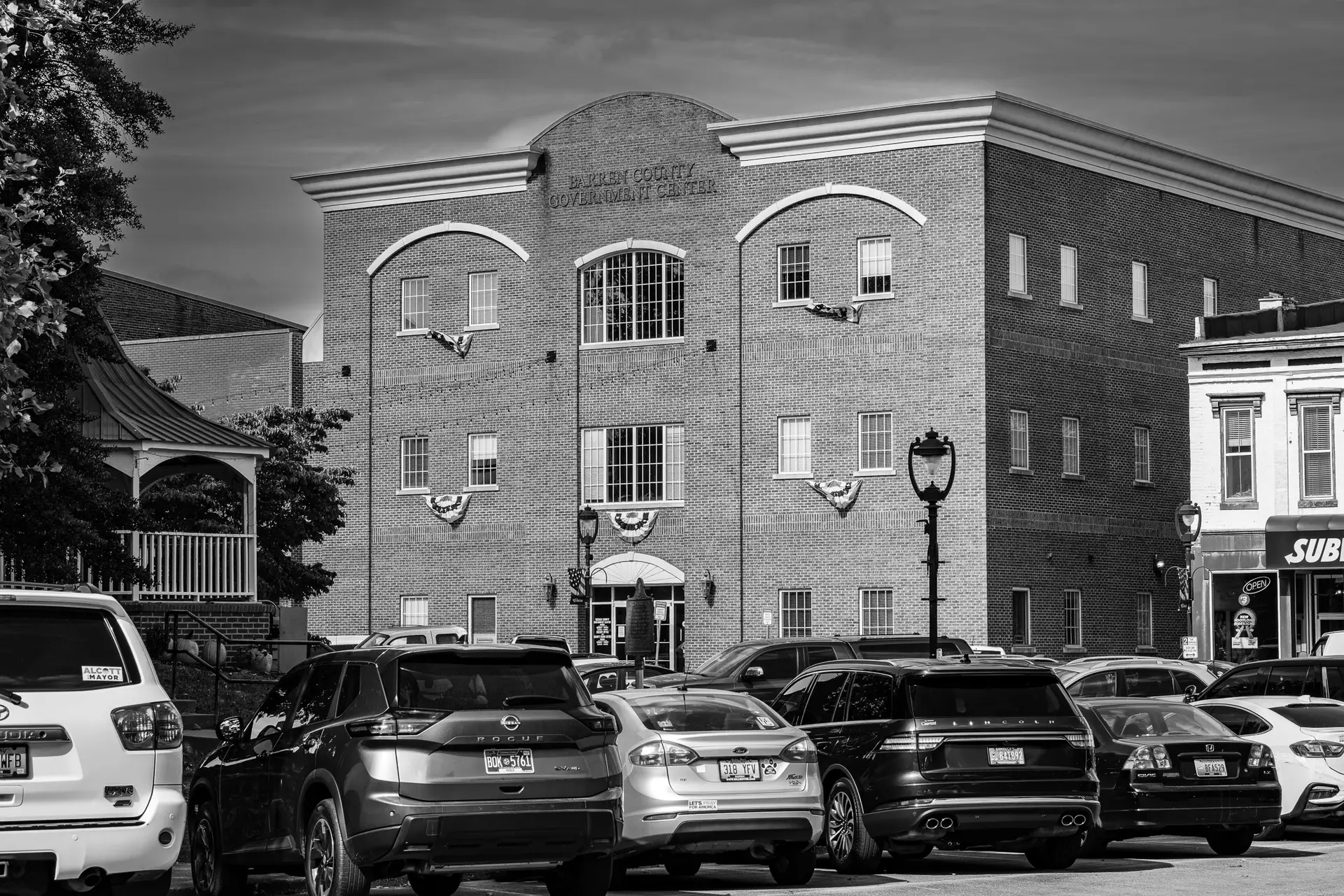
Although it was completed in 2001, the Government Center was intentionally styled to blend into its historic surroundings. Its proportions, façade, and detailing suggest a mid-20th-century building rather than a product of the new millennium. In your photograph, that illusion comes across clearly: it looks like something that could have been constructed in the 1940s or 1950s, sitting comfortably among older neighbors. This design choice keeps the square visually cohesive, ensuring the new building feels like part of Glasgow’s older story. It may be modern at heart, but it wears a face that respects tradition.
Barren County Courthouse — The Civic Heart of Glasgow
A Mid-20th Century Landmark (1965–66)
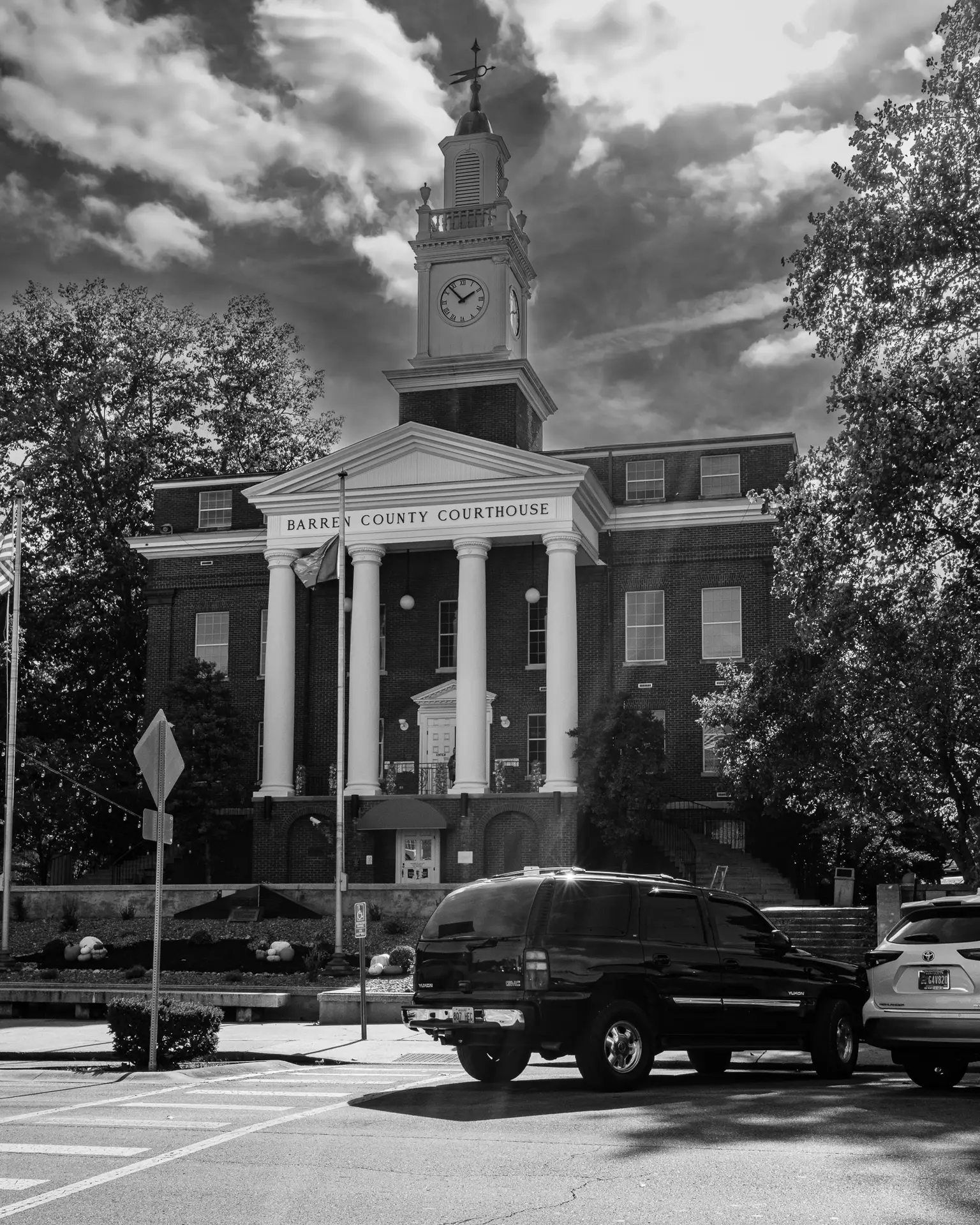
The current Barren County Courthouse was built in 1965–66, replacing the 1896 courthouse that once stood on the same square. Designed by Bayless, Clotfelter & Johnson of Lexington, it became the sixth courthouse to serve Barren County. The 1896 building, though impressive in its time, had become inadequate by the mid-20th century. Space was limited, facilities were outdated, and county officials determined that a new structure was necessary to meet modern needs. The decision reflected a drive toward functionality rather than a disaster like fire or collapse.
Architecture and Presence
Although built in the 1960s, the courthouse carries the appearance of something much older. Its symmetrical façade, lighter stone or concrete exterior, and classical references give it the look of a structure that could have been erected in the late 1800s. The tower element adds vertical authority, while its scale balances the square. This was intentional. Like the Government Center built decades later, the courthouse was designed to fit seamlessly into Glasgow’s historic downtown. It shows the community’s commitment to maintaining an “old-town” atmosphere even in new construction.
A Civic Anchor in Time
In my photograph, the courthouse appears monumental yet approachable. The tower rises above the square, while its stonework and clean lines emphasize permanence. Neighboring landmarks like the Plaza Theatre and the Third National Bank provide cultural and commercial context, but the courthouse is the square’s civic anchor. Though newer than it looks, it continues to embody law, order, and continuity. Its role is not just symbolic; it is still the daily seat of county justice.
Safe travels, RJ