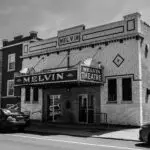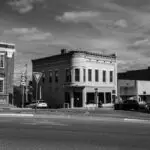
I visited Old Shawneetown, Illinois, on April 7, 2021, during one of my usual road trips in search of places to photograph. It was a beautiful spring day, the kind where big pillowy clouds drift across the sky just the way I like them. This quiet river town once stood as one of the earliest settlements in the state, thriving on Ohio River trade and commerce. However, repeated floods — culminating in the catastrophic flood of 1937 — eventually forced residents to move the community several miles inland. As a result, what remains today feels like a ghost town, scattered with fading storefronts, weathered saloons, and historic banks. The most remarkable of these is the Old Shawneetown Bank, a symbol of prosperity that now looms as a reminder of what the town once was.
The Old Shawneetown Bank
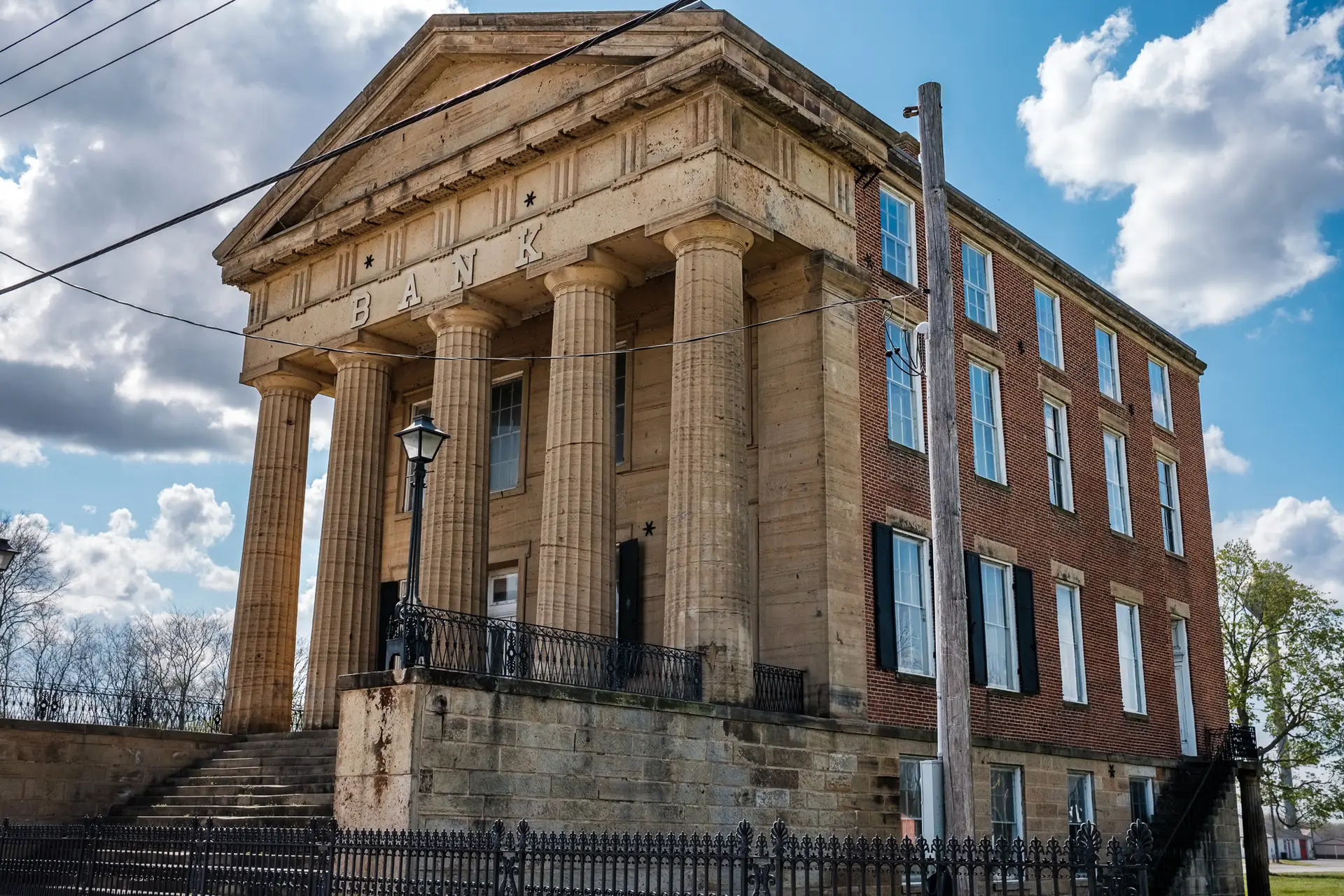
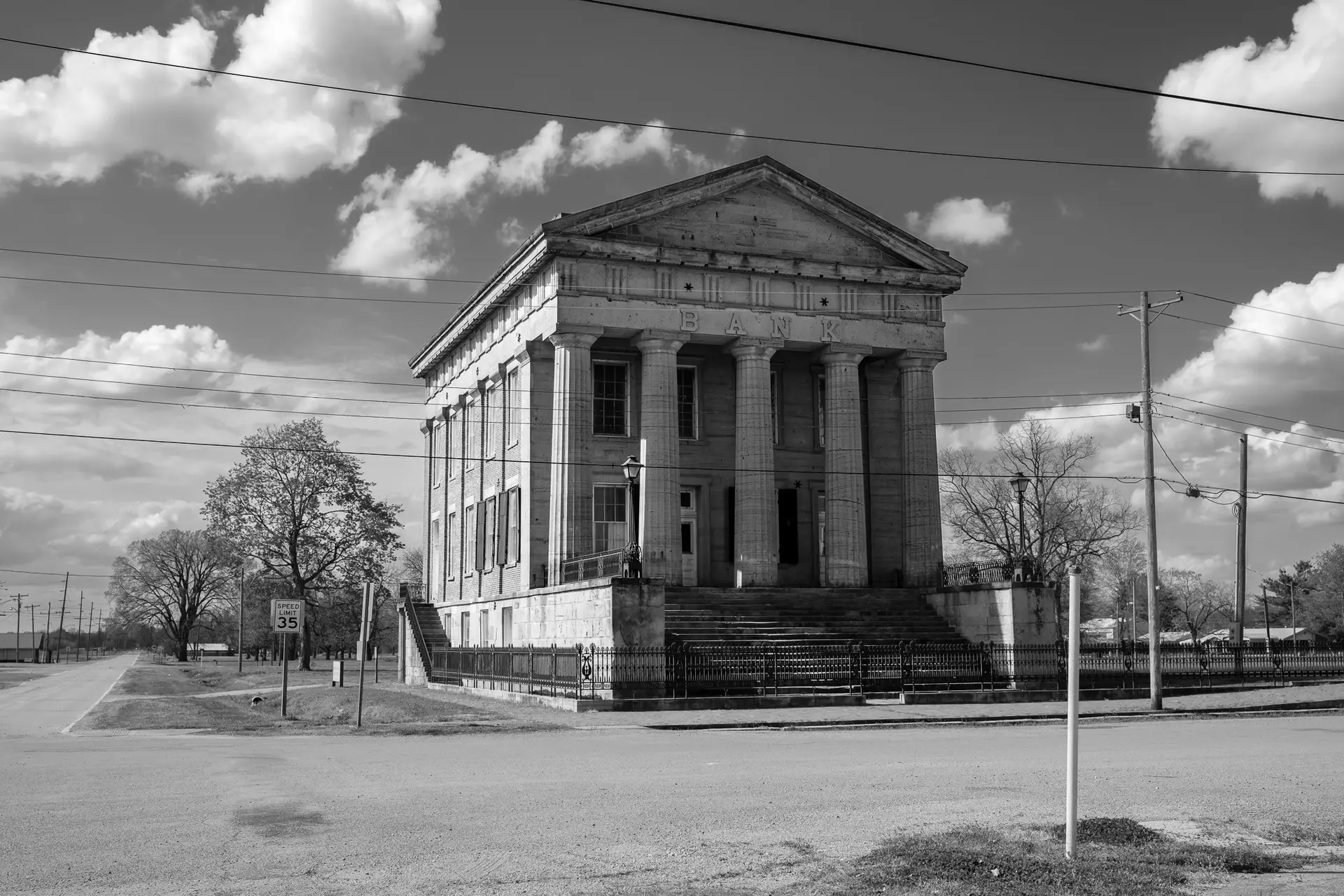
The Old Shawneetown Bank at 280 Washington Street is easily the most recognizable landmark left standing in the original town. Built between 1839 and 1841, it was Illinois’s first structure designed specifically as a bank. Its bold Greek Revival style — complete with limestone columns and sturdy brickwork — signaled wealth and confidence in Shawneetown’s future.
Local lore even claims the bank once turned down Chicago’s earliest bond requests, doubting the city would succeed. At the time, Shawneetown had every reason to believe its future was brighter than Chicago’s. Today, the bank dominates a nearly empty street, a magnificent but weathered shell that speaks to both the ambition and the vulnerability of riverside towns.
Hog Daddy’s Saloon
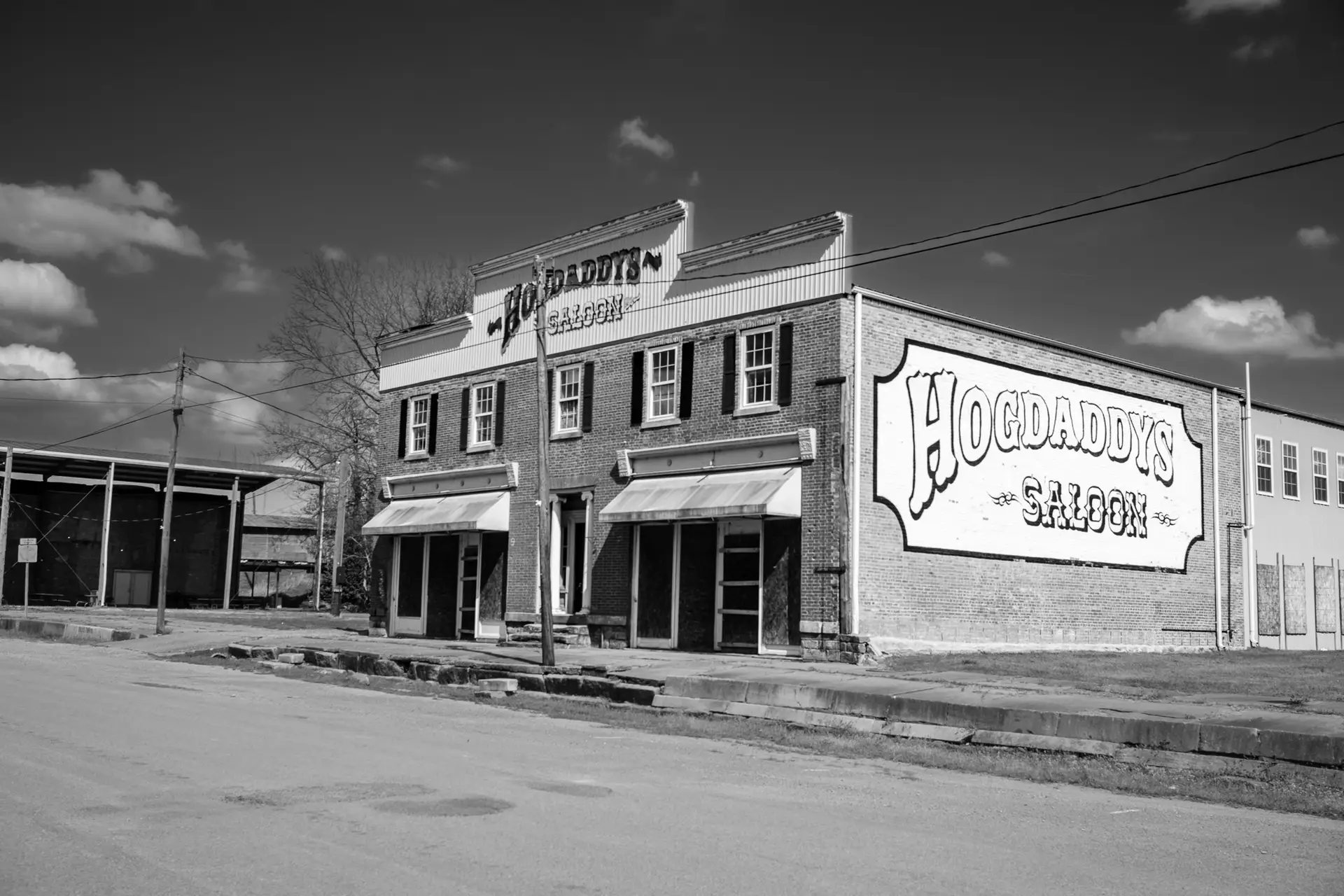
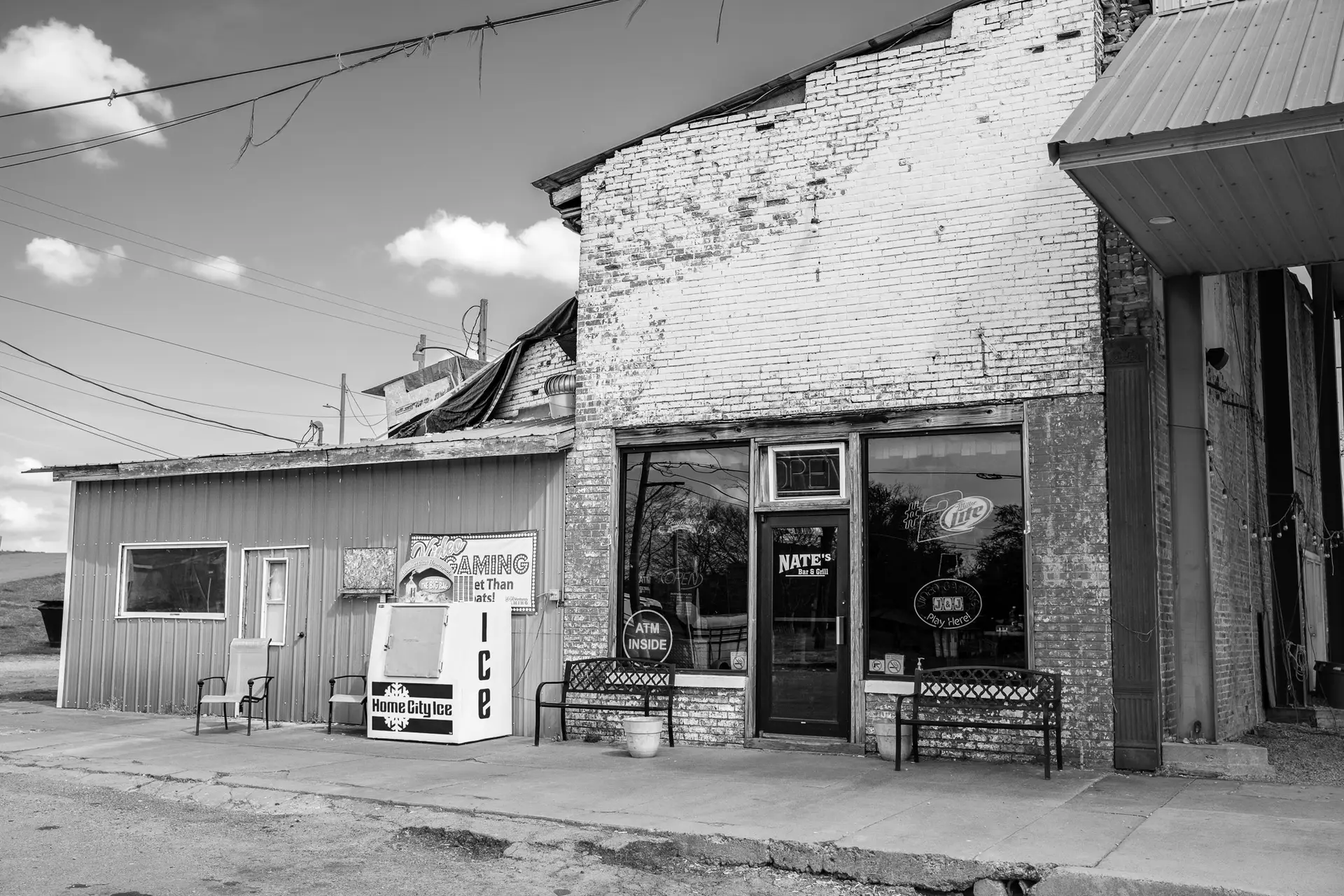
At 640 Main Street sits Hog Daddy’s Saloon, another reminder of Shawneetown’s past life. Saloon culture was central to river towns, offering food, drink, and entertainment to locals and travelers alike. In addition, saloons acted as informal gathering places where business was discussed and news spread quickly. Hog Daddy’s stands in brick and signage, its weathered look telling a story of good times and hard times alike.
Although much quieter now, the building represents the lively spirit that once filled Old Shawneetown’s streets. For photographers and visitors, it is not just a bar front but a symbol of a community that still clings to its identity.
The Texaco Station
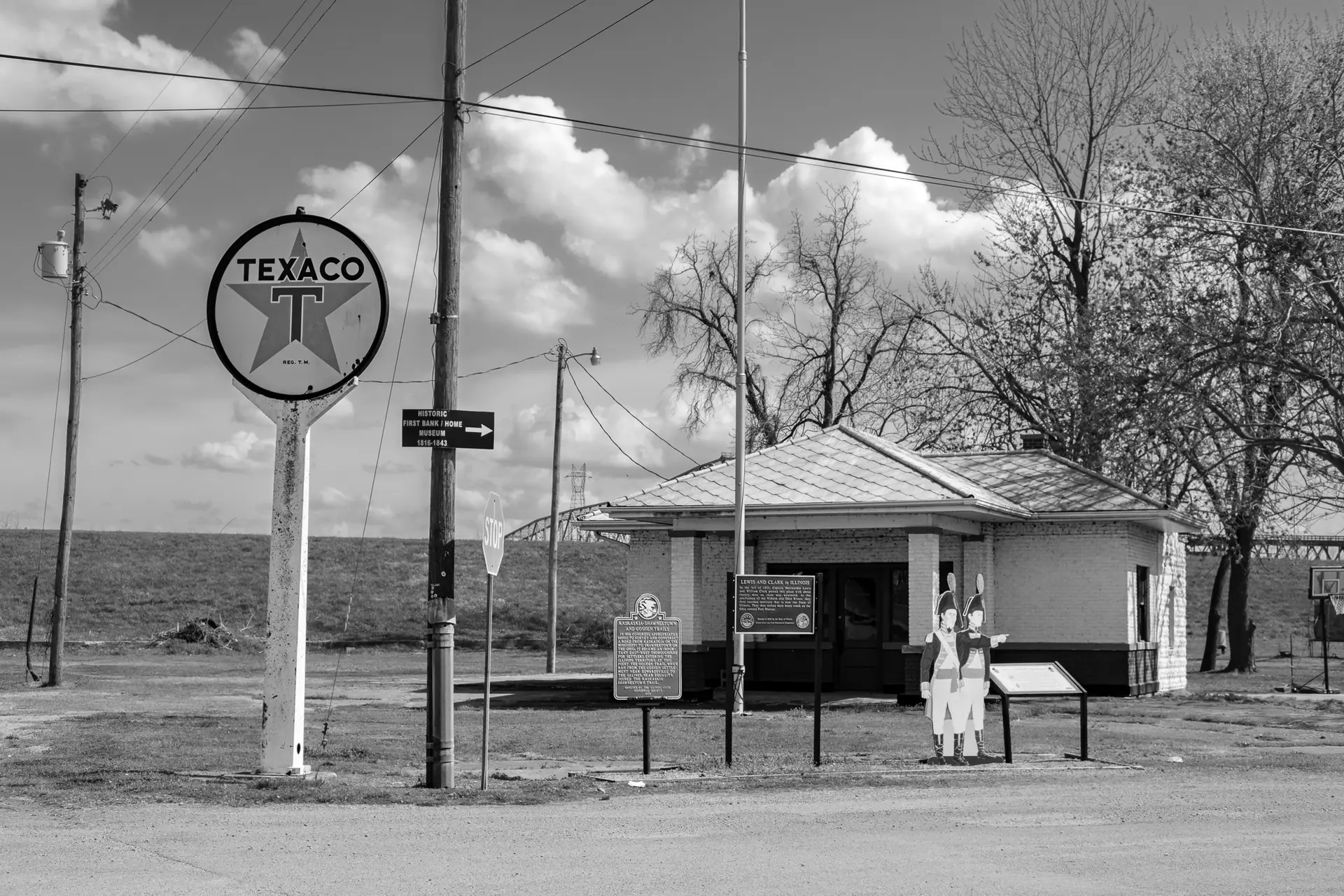
On Washington Street, a former Texaco service station has been preserved, at least on the outside. Some records list its address as both Washington and Main, suggesting it once occupied a prominent corner spot. Service stations like this defined mid-century car culture, built with wide bays and bold branding to invite motorists inside. In Old Shawneetown, the Texaco station has survived long after cars stopped pulling in for gas. Instead, it stands as a-
piece of roadside history, showing how even everyday buildings can become part of the story when a town fades away. Its survival adds texture to a place often remembered only for its floods.
Texaco with the Ohio River Bridge
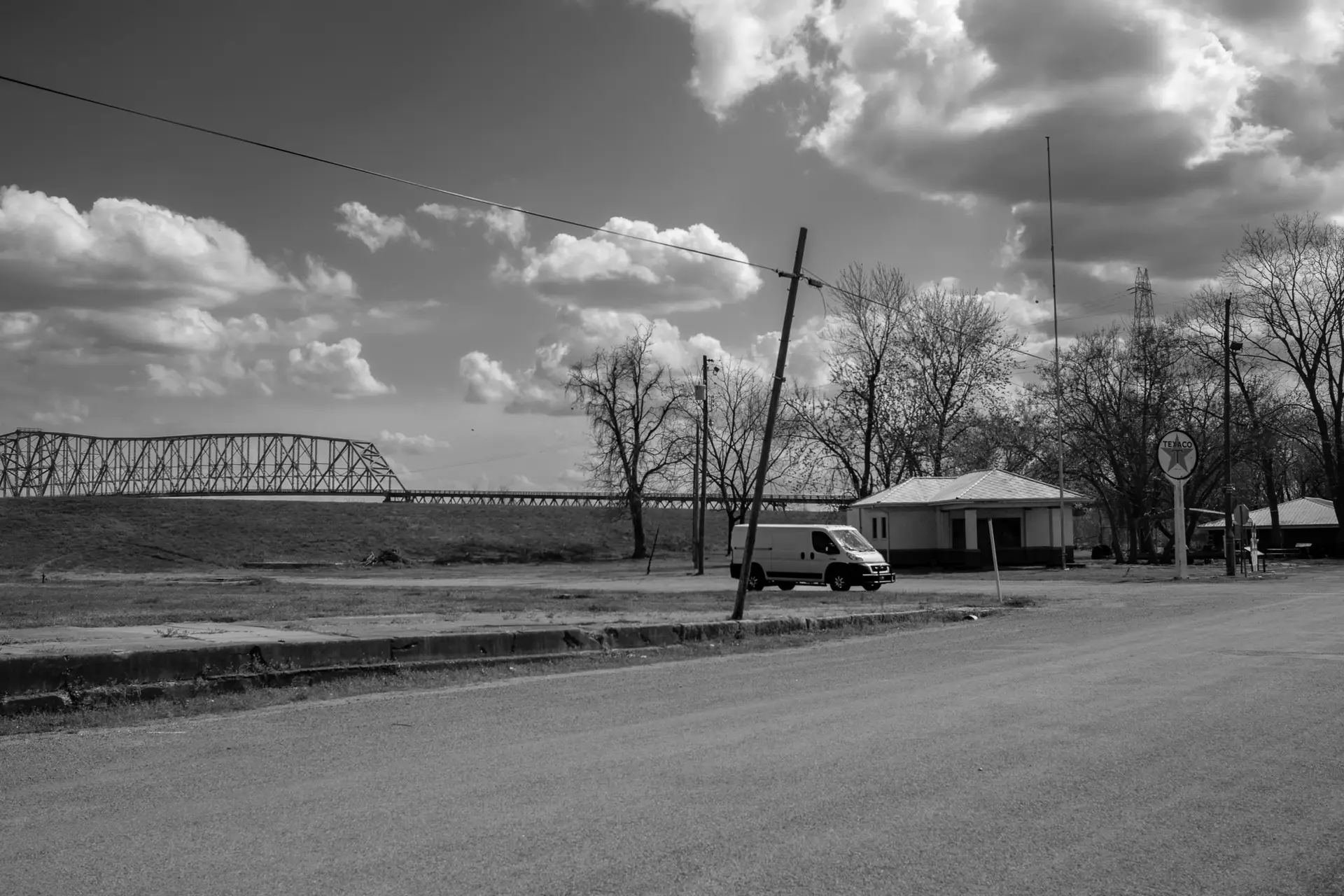
One of my favorite photos pulls back to capture the old Texaco station with the Ohio River Bridge in the background.
The bridge tells its own story, symbolizing progress, transportation, and new ways of travel. However, it also highlights the role the river played in both building and destroying Shawneetown. In the foreground sits a relic of the automobile age; in the distance spans the river that once carried trade and later devastation. Together, the Texaco and the bridge offer a layered view of Old Shawneetown Illinois, reminding us that no single era defined the town. Instead, its history is a series of rises and collapses tied to shifting economies and natural forces.
City National Bank
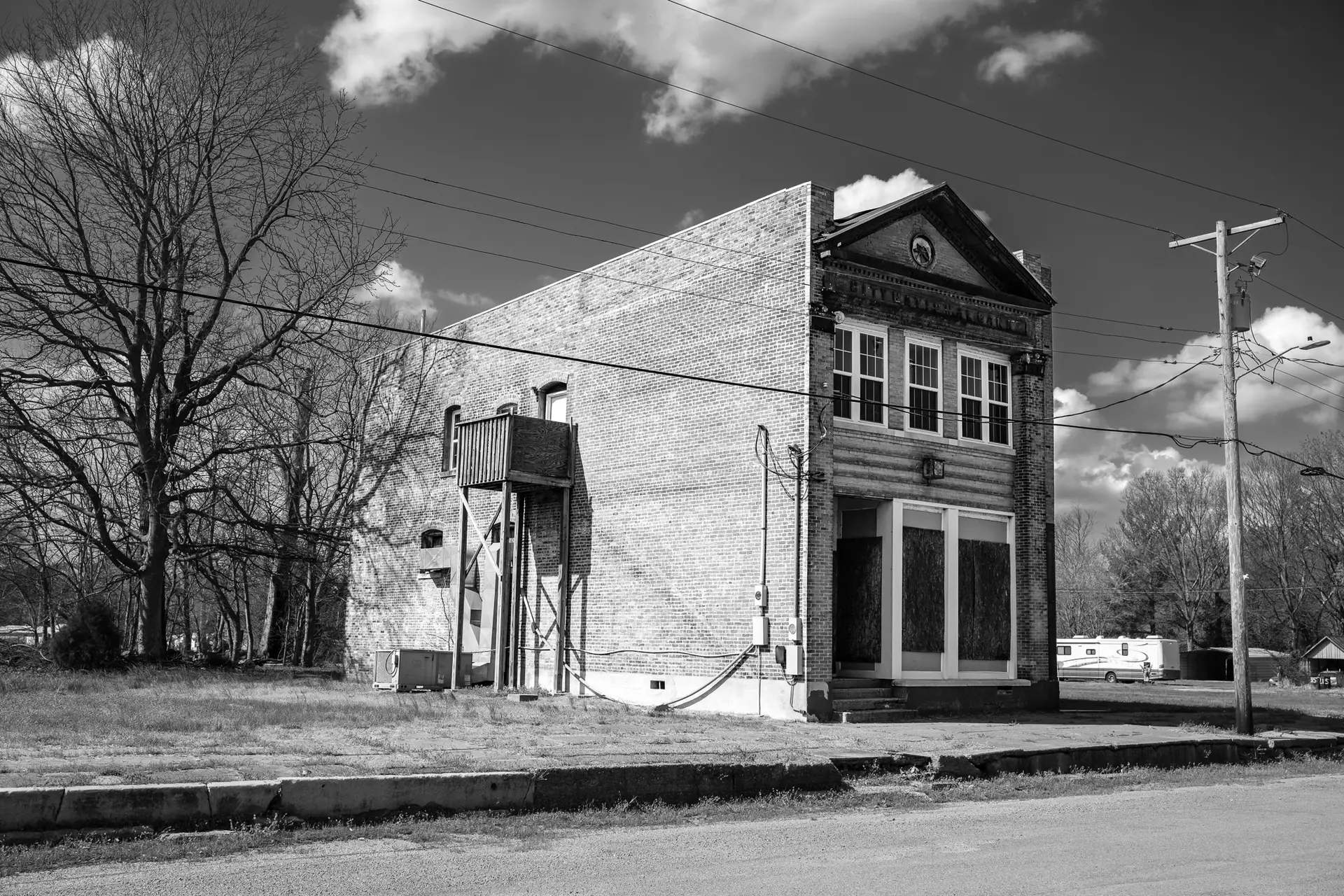
At 681 Main Street stands another reminder of financial ambition: the City National Bank. Some records mistakenly list it as “Sea City,” but the inscription above the doorway clearly reads “City National Bank.” Like the Old Shawneetown Bank, this structure spoke to the prosperity of the 19th and early 20th centuries. Its design may not be as imposing, but the carved stone nameplate and symmetrical façade suggest pride and permanence.
In addition, it reveals how Shawneetown once supported multiple financial institutions, all tied to the wealth that flowed through the Ohio River Valley. Today, the City National Bank sits quietly, its significance often overlooked next to its more famous counterpart. Yet it helps complete the picture of a town that once dreamed big.
Layton’s Old Town Bar and Grill
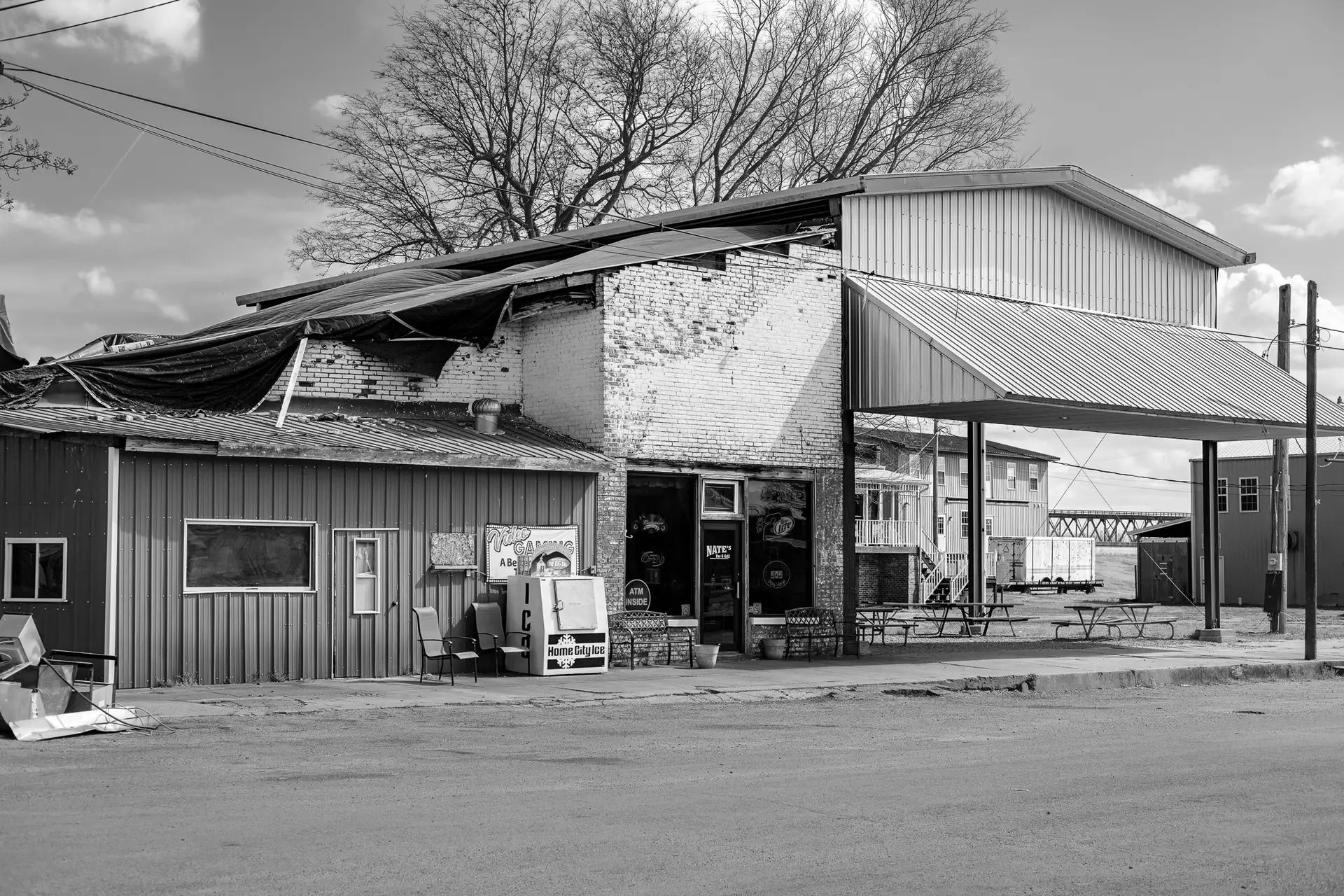
Layton’s Old Town Bar and Grill provides a rare example of a still-operating business in Old Shawneetown. Its name reflects pride in the community’s heritage, even as most of the town has dwindled. Places like this keep memory alive by offering locals and travelers a place to gather, share food, and exchange stories. In addition, its survival contrasts sharply with the abandoned storefronts nearby, showing how Old Shawneetown is not entirely a ghost town.
While much of Old Shawneetown feels silent, Layton’s Old Town Bar and Grill still carries the sound of voices, laughter, and music. Bars like this have long been more than places to eat and drink; they are cornerstones of small-town life where friendships are strengthened and traditions are passed down. In addition, Layton’s presence offers travelers a reminder that the community is not just a collection of abandoned buildings but a place where people continue to gather. Its neon sign and familiar brick front stand as a signal of resilience amid decline.
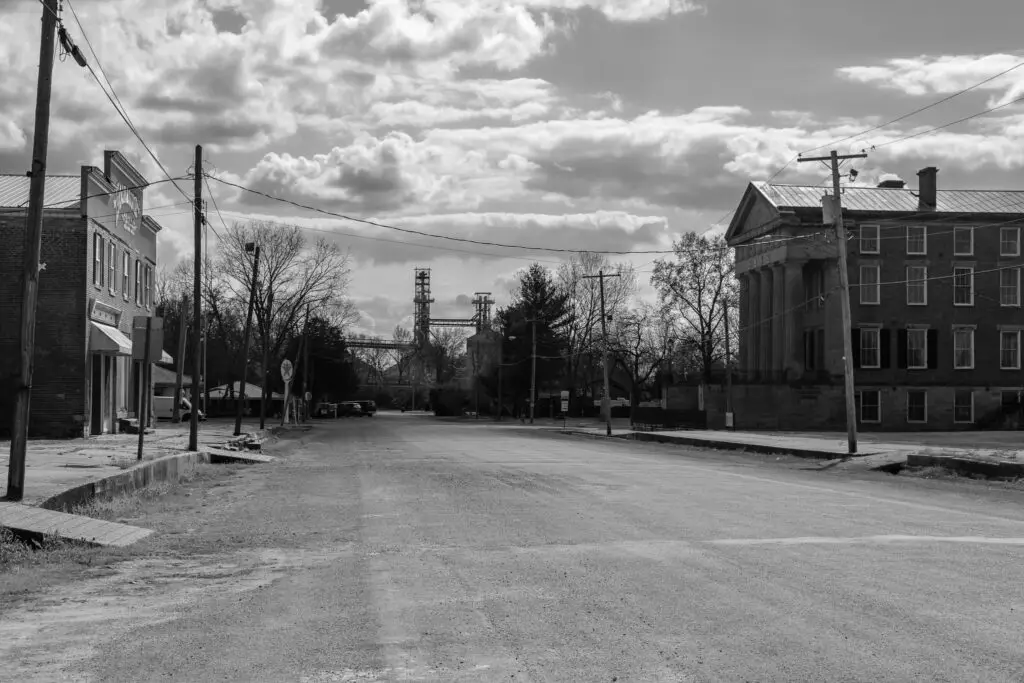
Main Street View
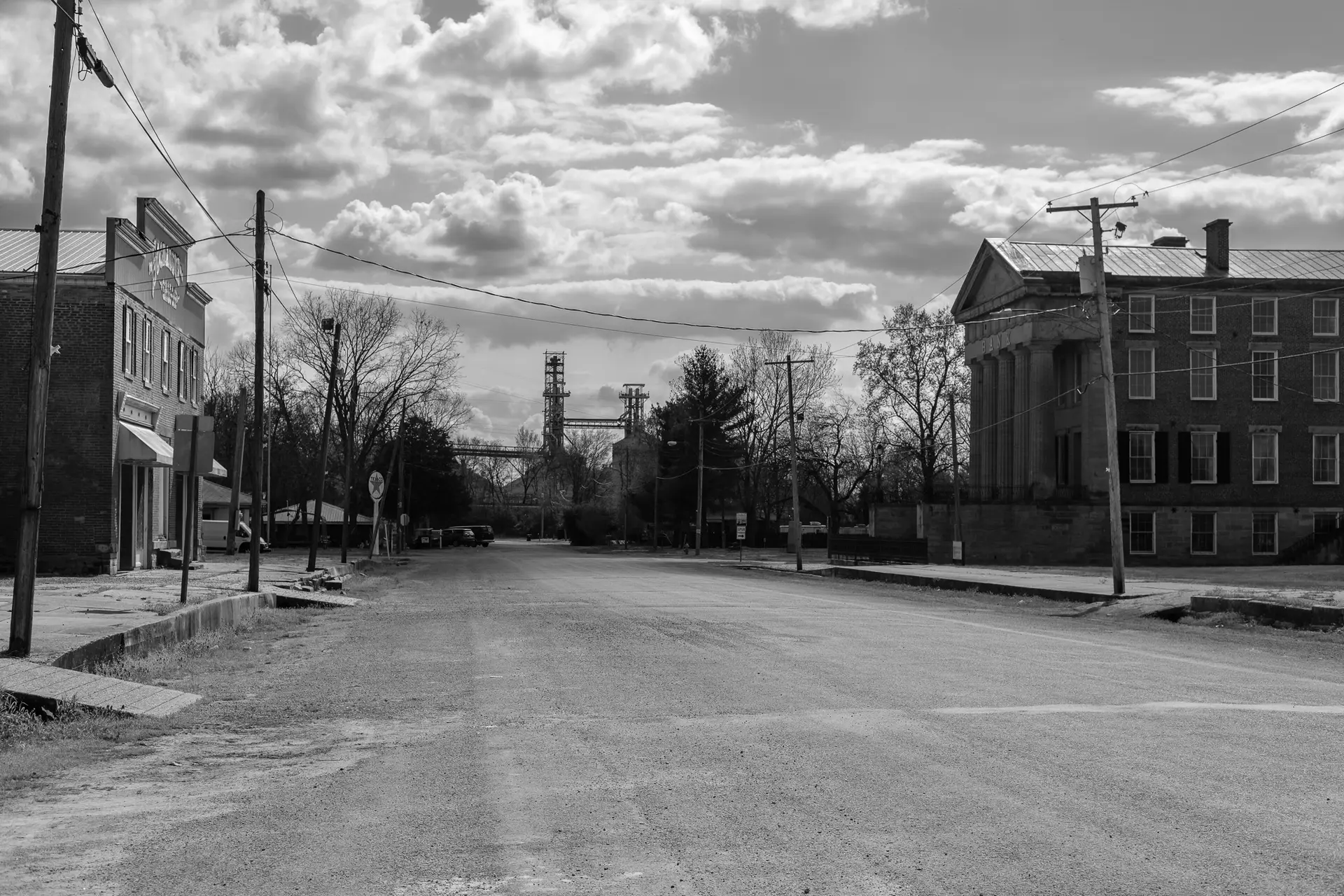
Looking south on Main Street, I captured a scene that sums up Old Shawneetown in a single frame. On the right stands the Old Shawneetown Bank, still towering above its surroundings. On the left sit Hog Daddy’s Saloon and the Texaco station, two reminders of daily life. The street itself is quiet now, its storefronts empty, its sidewalks overgrown. Yet together, these buildings frame the essence of the town: finance, leisure, and travel, all once-
vital but now frozen in time. This view feels like stepping back a century, when the town was alive with business and river traffic. For me, it is one of the most powerful ways to see Old Shawneetown Illinois as both a story of ambition and decline.
Closing Reflections
Old Shawneetown Illinois is not just a town lost to the river. It is also a reminder of how history leaves traces that can still be seen, photographed, and remembered. The Old Shawneetown Bank remains its crown jewel, but the saloons, gas stations, and banks all add pieces to the puzzle. Together, they tell the story of a place that rose with commerce, fell with disaster, and continues to haunt visitors with its silence. For anyone fascinated by ghost towns and roadside Americana, Old Shawneetown is worth the detour.
Safe travels, RJ